
Small bedroom storage ideas without clutter work best when you stop chasing “more space” and start designing fewer, smarter storage zones that match how you actually live.
If your room feels messy even after a tidy-up, it’s usually not a motivation problem, it’s a storage design problem. Most small bedrooms collect a mix of clothes, charging cables, random toiletries, returns you meant to mail, and sentimental stuff that never found a real home.
This guide keeps things practical: you’ll sort what’s worth keeping, pick storage that disappears visually, and set up a few habits that prevent the clutter from sneaking back in. No “Pinterest-perfect” rules, just systems that stay workable on a Tuesday night.
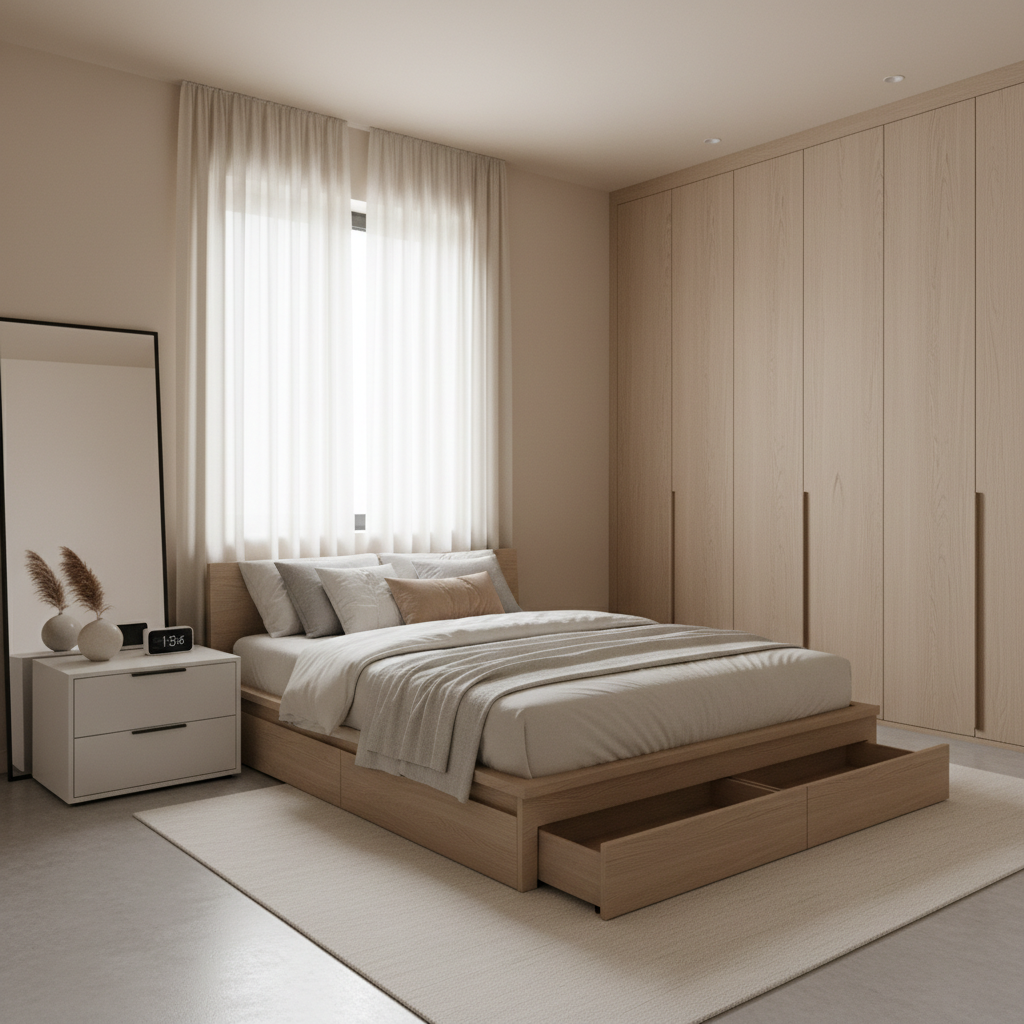
Why small bedrooms feel cluttered (even when you own “organizers”)
In many cases, the mess comes from a few predictable causes, not from owning too much of everything.
- Too many open surfaces: dressers, nightstands, and shelves become drop zones, then visual noise takes over.
- Storage without categories: bins everywhere but no clear “this is where X lives,” so items migrate.
- Furniture that wastes volume: a cute bed frame with no under-bed clearance, a bulky chair you never use, or a dresser that’s half empty but still blocks flow.
- High-frequency items have no landing spot: daily clothes, gym gear, chargers, keys, and skincare need easy access without spreading out.
- Closet is doing too many jobs: wardrobe, linens, luggage, tools, paperwork, seasonal items, all competing for the same limited space.
Once you see the pattern, small bedroom storage ideas without clutter becomes less about buying containers and more about controlling what stays visible.
A quick self-check: what kind of clutter do you have?
Before you reorganize anything, figure out what you’re fighting. Different clutter needs different fixes.
- Surface clutter: stuff always on the nightstand/dresser (charging cords, lotions, receipts).
- Floor clutter: piles near the bed, “clean-ish” laundry, bags, shoes.
- Closet overflow: hangers packed tight, shelves collapsing, you avoid opening it.
- Micro-item chaos: jewelry, hair tools, meds, makeup, batteries, random small things.
- Sentimental backlog: cards, gifts, keepsakes with nowhere intentional to go.
Pick your top two. If you try to solve all five at once, you’ll likely end up shuffling clutter, not removing it.
The “closed storage first” rule (your room looks cleaner instantly)
If you want a bedroom that feels calm, prioritize storage with doors, drawers, lids, or covers. Open baskets can work, but too many reads as clutter, even when it’s “organized.”
What to switch to
- Nightstand with drawers instead of an open table, so your essentials disappear.
- Dresser with deeper drawers rather than extra small bins on top.
- Bed with under-bed drawers or clearance for lidded bins.
- Wall cabinet (shallow) instead of floating shelves, especially above a desk/vanity.
According to the National Sleep Foundation, a comfortable sleep environment includes a bedroom that feels relaxing and supportive of rest; for many people, reducing visual clutter is part of that comfort.
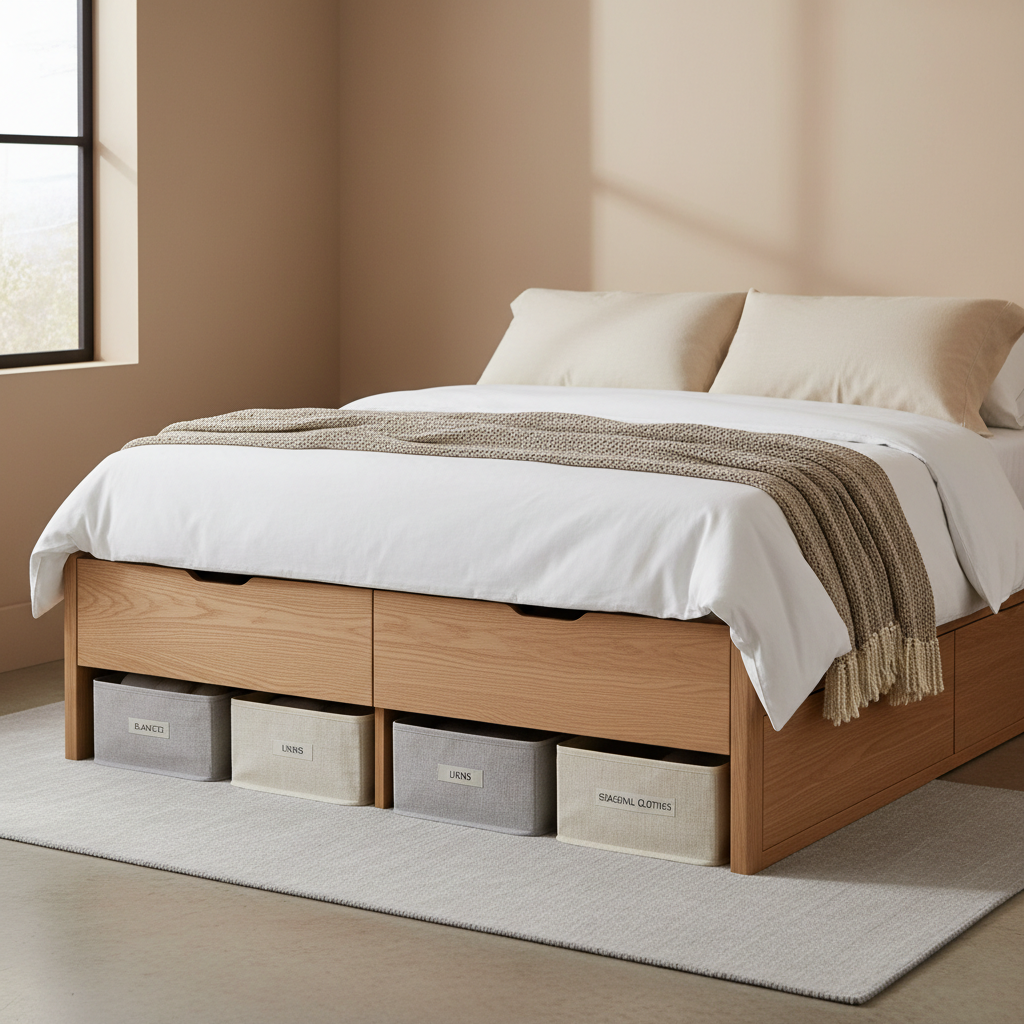
High-impact storage zones that don’t add visual noise
You don’t need more zones, you need better zones. These tend to give the biggest return in small spaces.
1) Under the bed (but do it like a system)
Under-bed storage works when it’s intentional: two to four categories max, and consistent containers so it doesn’t look like a thrift store under there.
- Seasonal clothing (one bin per season)
- Extra linens (one bin)
- Shoes you actually rotate (one bin)
- Memory box (one bin, capped)
If dust or allergies are a concern, covered bins help, and you might want to check with a medical professional if you’re managing asthma or sensitivities.
2) The back of the door (vertical storage without clutter)
Over-the-door organizers can look chaotic when they’re overfilled. Keep it tight: pick one purpose.
- Accessories only (belts, scarves, hats)
- Beauty/hair tools only (with heat-safe handling and cool-down time)
- Shoes only (if it doesn’t crowd the floor)
3) Closet “micro zones” (so it stops becoming a junk room)
Closets feel cleaner when each shelf has a job. A simple approach: top shelf for out-of-season, eye-level for daily, bottom for heavy or bulky.
- Top: labeled lidded bins (seasonal, sentimental, travel)
- Middle: daily clothing with breathing room, not packed tight
- Bottom: shoes in pairs, one row deep
If you’re using hanging organizers, don’t stack more than you can see at a glance, “hidden” piles become forgotten piles.
What to buy (and what to skip) for a clutter-free small bedroom
It’s easy to spend money and still feel stuck. Here’s a practical way to choose items that support small bedroom storage ideas without clutter without overdoing it.
| Problem | Buy/Use | Skip |
|---|---|---|
| Nightstand always messy | 2-drawer nightstand, cable clips, small catchall tray | Extra tabletop bins that live in sight |
| No room for dresser | Under-bed drawers, closet drawer inserts, slim tall dresser | Wide low dresser that blocks walking paths |
| Too many small items | Drawer dividers, lidded boxes, one “misc” box per category | Unlabeled baskets where items vanish |
| Clothes pile on chair | Wall hooks, a single hamper with lid, “wear again” section | Second chair, extra hampers that invite overflow |
A realistic 60-minute reset you can repeat
You don’t need a weekend makeover to see progress. This is the kind of reset that works when your schedule is packed.
Step 1: Clear two surfaces only
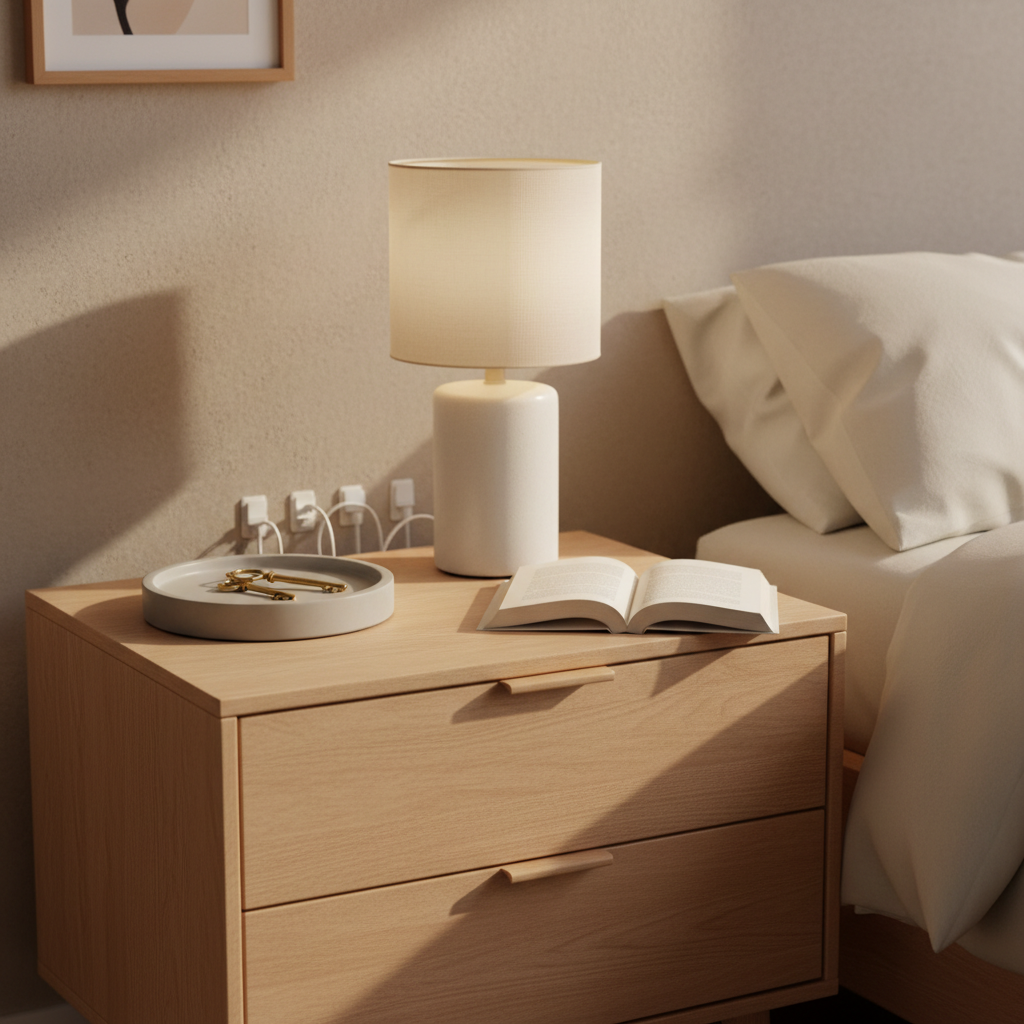
Pick the nightstand and dresser top. Everything comes off, then only essentials go back: lamp, one book, one tray, maybe a plant. The rest gets assigned.
Step 2: Create a “landing zone” on purpose
Most clutter is just homeless. Give daily items one home.
- Keys/wallet: tray or small drawer
- Chargers: one charging station, cords clipped
- Skincare: one bin that goes in a drawer, not on the counter
Step 3: Fix the floor fast
- Dirty laundry goes straight to a lidded hamper
- Clean laundry goes on the bed to force a decision before sleep
- Shoes go to one spot, not under every corner
Step 4: One small purge (not a dramatic declutter)
Choose one category: old tees, duplicate water bottles, or “maybe” items. Remove a small bag. Done. Momentum matters more than perfection.
Common mistakes that create “organized clutter”
Some strategies look tidy for a photo, then fall apart in real life.
- Too many containers: if every category has three bins, you’ll spend your life maintaining bins.
- Keeping donation items in the room: the “to donate” bag becomes a permanent resident. Put it by the exit or in the trunk.
- Overstuffing the closet: when you can’t see items, you buy duplicates, then the cycle continues.
- No buffer space: leaving 10–20% empty space in drawers and closet shelves often prevents rebound clutter.
- Storing rarely used items at eye level: daily items should be easiest to reach, not your old ski goggles.
When it’s worth getting extra help (or changing the layout)
Sometimes the issue isn’t storage, it’s that the room is doing too many jobs. If your bedroom is also an office, gym corner, and laundry station, it may need a different layout or fewer categories living in the room.
- If you can’t open drawers/doors without bumping furniture, consider swapping one large piece for a slimmer vertical option.
- If you’re constantly overwhelmed by the amount of stuff, a professional organizer can help create categories and limits that fit your habits, not someone else’s.
- If clutter is tied to stress, attention challenges, or hoarding behaviors, support from a qualified mental health professional may be more effective than any storage product.
Key takeaways to keep your small bedroom calm
- Closed storage beats open storage for a visually quiet room.
- Give high-frequency items an intentional home, or they’ll live on your surfaces.
- Under-bed storage works when categories stay limited and containers match.
- Leave buffer space, your system needs room to breathe.
If you want to start today, pick one surface to clear and one storage zone to define, then stop. Small wins make small bedroom storage ideas without clutter stick because you can repeat them without burning out.
FAQ
What are the best small bedroom storage ideas without clutter if I rent?
Focus on reversible upgrades: under-bed bins, over-the-door organizers with one purpose, tension rods, and drawer inserts. Avoid adding lots of wall shelves that turn into display clutter.
How do I store clothes in a small bedroom without a dresser?
Use a combo: closet drawer inserts for folded items, matching under-bed drawers for overflow, and slim vertical storage if you have a narrow wall. Keep daily clothing easiest to reach, so you don’t create piles.
Do storage bins make a small room look more cluttered?
They can. The trick is consistency and containment: fewer bins, same color/shape, and preferably behind a door or under the bed. Mixed bins in open sight usually read as mess.
What’s the fastest way to make my bedroom look cleaner?
Clear one surface completely and remove floor piles. Even if nothing else is perfect, empty surfaces and a visible floor change the room’s “signal” immediately.
How can I organize a small closet so it stays organized?
Assign each shelf a category, leave some empty space, and avoid stacking too high. If you can’t see it, you won’t use it, and that’s how closets quietly become storage for everything.
Where should I put “wear again” clothes so they don’t become a chair pile?
Give them a rule-based home: a single hook row, one basket in the closet, or a dedicated hanger section. The constraint matters, unlimited space turns into clutter fast.
Is it okay to store things under the bed?
Usually yes, especially for seasonal or bulky items, as long as you use covered containers and keep it limited. If you have allergies or asthma concerns, covered bins and regular cleaning may help, and a clinician can advise for your situation.
If you’re trying to simplify a cramped room and you’d rather not guess what to buy, a quick checklist of your clutter type, your available zones, and your “closed storage first” priorities can make shopping and setup far more straightforward.