
Balcony furniture small space ideas usually work best when you stop trying to “furnish a balcony” and start designing a tiny outdoor zone with one clear purpose, coffee spot, reading nook, dinner-for-two, or plant lounge.
If your balcony feels awkward, it’s rarely because you lack taste, it’s because the footprint, railing, door swing, and building rules quietly limit what can fit and what can stay outside year-round. The good news is that small-space balconies are predictable, once you measure a few things and pick the right formats, the space becomes easier to plan.
This guide focuses on practical 2026-ready choices, foldable pieces that actually hold up, slim profiles that don’t block airflow, and layouts that keep a usable walkway. I’ll also point out the mistakes that waste money, like buying “bistro sets” that look small online but eat the entire balcony once chairs pull out.
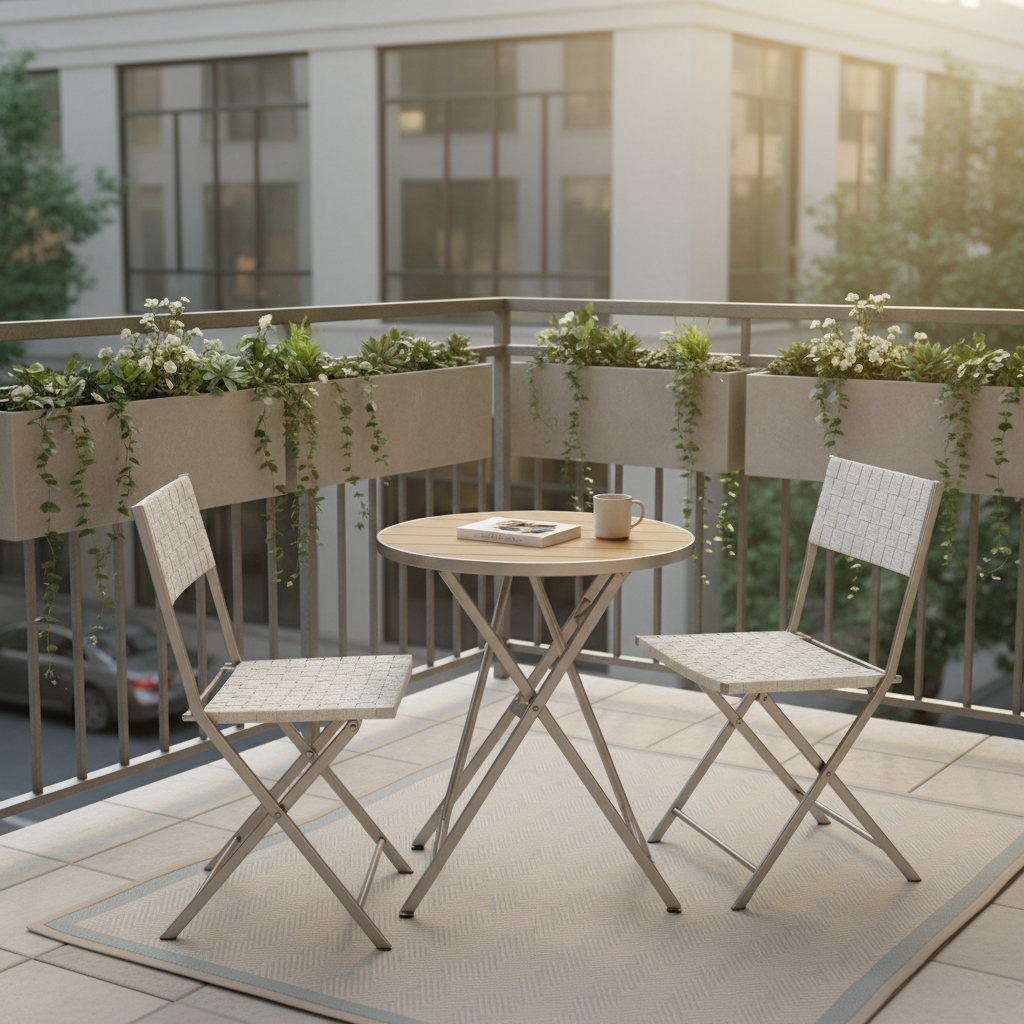
Start with the “non-negotiables” (measurements and rules)
Before shopping, lock down constraints. This sounds boring, but it prevents the classic small-balcony problem: you buy cute furniture, then realize the door can’t open fully or you’ve created a dead-end path.
- Clear walkway: try to keep a pass-through lane so you can step outside without side-stepping chairs. Many people aim for roughly 24 inches, but your comfort matters more than a perfect number.
- Door swing and threshold: mark the arc of the door and avoid placing table corners in that zone.
- Railing height and privacy panels: these affect whether a bar-height ledge table works.
- HOA or building policies: rules may limit grills, hanging items, or what can be attached to railings. According to the U.S. Fire Administration, balcony grilling can create fire risk, so many buildings restrict open-flame grills; if you’re unsure, check your lease or ask building management.
- Weather exposure: full sun vs. shade changes what materials survive without constant fuss.
Quick tip that saves headaches: tape the furniture footprint on the ground with painter’s tape, then “use” the balcony for a minute, open the door, sit down, stand up, walk past. You’ll feel what works faster than you can imagine it.
Pick one priority use-case, then let it dictate the furniture
Most balconies fail because they try to be a dining room, a living room, and a garden at the same time. Choose your primary job, then make everything else secondary. That decision is where balcony furniture small space ideas stop being Pinterest inspiration and start becoming a plan.
Common small-balcony “jobs” that work
- Morning coffee for one or two: micro bistro table or rail-mounted ledge, two foldable chairs.
- Reading nook: one comfortable chair plus a tiny side table, add a footrest only if it nests.
- Casual dinner for two: narrow rectangular table pushed to a wall or railing, stackable seating.
- Plant-first balcony: vertical planters + one slim perch seat, keep the center open.
- Work-from-balcony setup: weather-safe folding table, supportive chair, glare control with shade.
If you can’t pick, choose the one you’d use 3+ times a week. Frequency beats fantasy.
Furniture formats that actually save space (and what to avoid)
Small balconies reward “thin, fold, stack, hang, and store.” Here are the formats that tend to deliver in real apartments, not just in staged photos.
Space-smart winners
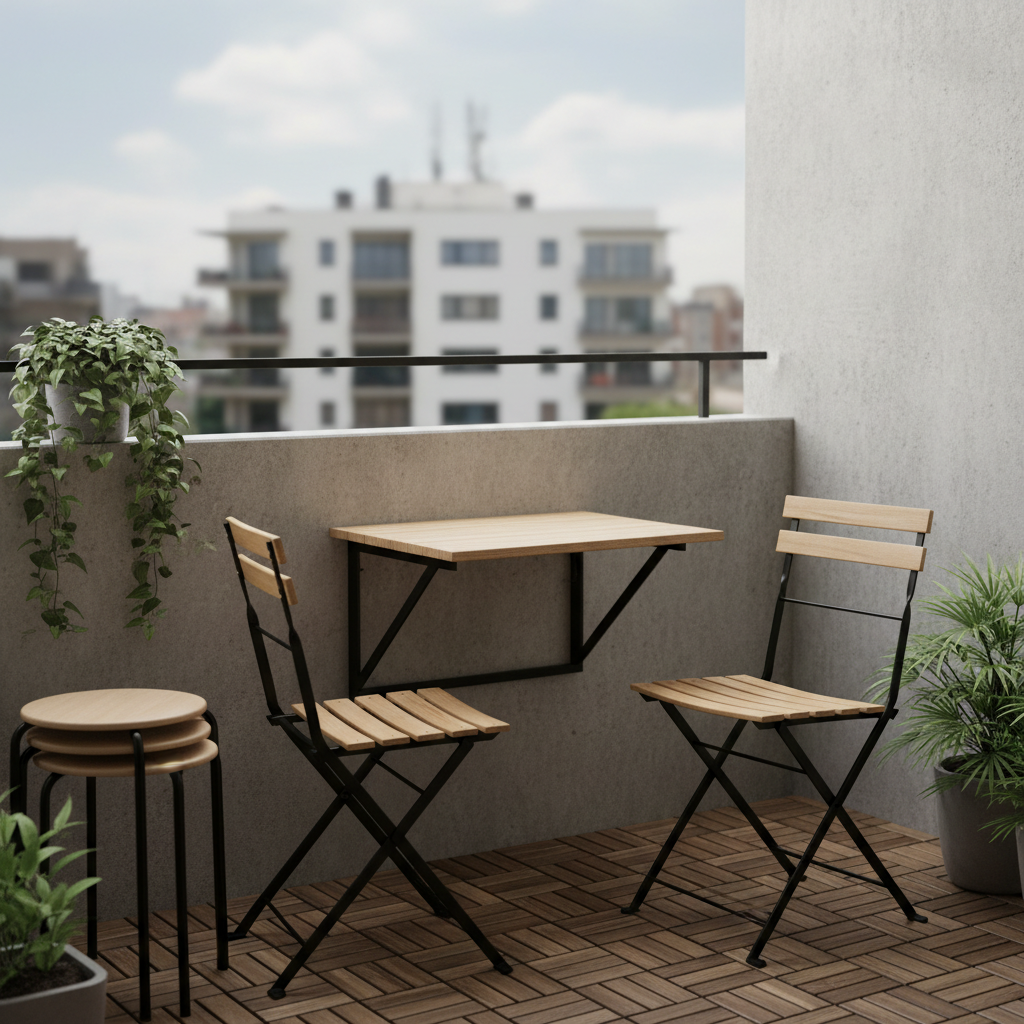
- Folding bistro chairs: easy to tuck against a wall, and you can bring them indoors fast when storms roll in.
- Wall-mounted or railing ledge tables: great for coffee and laptops, but confirm your railing type and weight limits before you commit.
- Nesting side tables: one becomes two when needed, then collapses back down.
- Storage bench (slim depth): seating plus cushion storage, but only if it’s truly weather-rated.
- Stackable stools: surprisingly useful for guests without living permanently in your way.
Usually not worth it in tight balconies
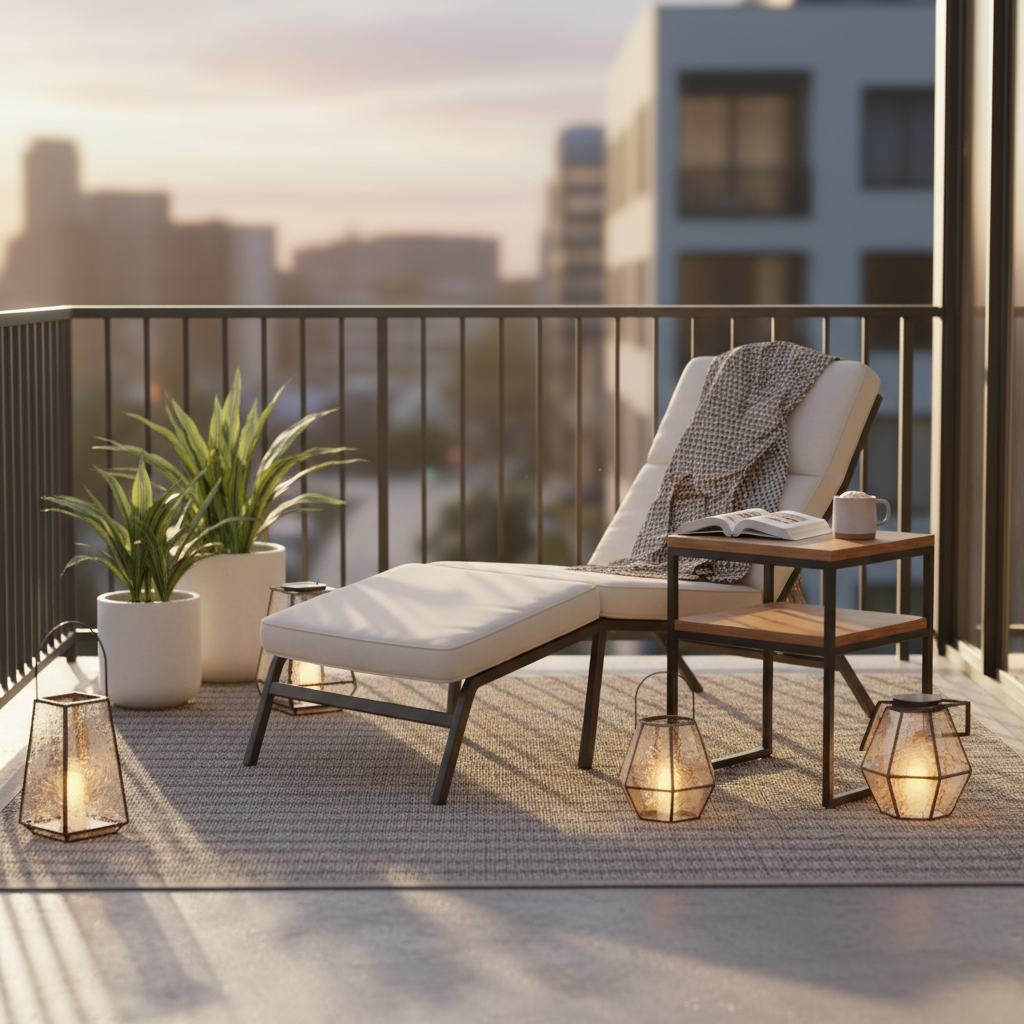
- Deep lounge chairs: they “look” comfy but steal the walkway and make the space feel blocked.
- Bulky sectionals: even “apartment-size” versions often dominate under 60–80 sq ft.
- Round tables over 24–28 inches: chair pull-out space adds up fast.
Material choices for 2026: what holds up with less maintenance
In the U.S., balcony exposure varies wildly, coastal salt, desert sun, Midwest freeze-thaw, humid summers. Materials matter more than trendy silhouettes, especially in small spaces where you touch everything.
- Powder-coated aluminum: light, rust-resistant in many environments, easy to move for cleaning.
- All-weather resin wicker (quality varies): comfortable look, but cheaper versions can fade or get brittle in strong sun.
- HDPE lumber: heavier, often very durable outdoors, good if your balcony gets intense sun and you don’t want to baby it.
- Acacia/teak (real wood): can last, but you’ll likely need periodic oiling or accept natural graying.
- Steel: can be sturdy, but watch for chips in the coating, exposed steel plus moisture can turn into rust spots.
Cushions are the hidden time sink. If you hate bringing cushions in and out, prioritize quick-dry foam and removable covers, and consider a small waterproof storage box or bench.
Layout ideas that make a small balcony feel bigger
The trick isn’t stuffing more furniture in, it’s making the remaining open space feel intentional. Many balcony furniture small space ideas depend on how you place items along edges so the center stays calm.
Three layouts that fit many apartments
- The “perimeter frame”: seating on one side, plants on the other, table near the railing, center stays open.
- The “one-anchor” plan: one comfortable chair as the hero, everything else folds or nests.
- The “rail ledge + stools” setup: bar ledge plus two stools, turns awkward narrow balconies into usable spots.
Make it feel less cramped
- Use vertical space: tall slim plant stands, wall hooks where allowed, railing planters if permitted.
- Keep legs light: furniture with open bases reads less heavy than solid panels.
- Limit the palette: two main colors + one accent usually looks cleaner than five competing “cute” items.
Quick decision table: match your balcony type to furniture
If you want a fast shortcut, this table helps you choose pieces that tend to work by balcony shape.
| Balcony shape | What usually works | Watch out for |
|---|---|---|
| Narrow “hallway” balcony | Railing ledge table, foldable chairs, stacking stools | Deep seating that blocks the path |
| Square small balcony | Small bistro set, nesting side tables, storage bench | Oversized round table, chairs that don’t tuck |
| Corner balcony | L-shaped bench (slim), one lounge chair + side table | Bulky sectionals that trap airflow and movement |
| Covered balcony | More cushion-friendly seating, outdoor rug, small lamp | Mold/mildew if cushions never dry |
A practical 60-minute setup plan (so you actually finish)
Buying stuff is easy, finishing the balcony is where people stall. Here’s a realistic flow that tends to work, even if you’re doing this after work on a random Tuesday.
- Minute 0–10: measure, tape the footprint, confirm door swing.
- Minute 10–25: place your “anchor” item, table or chair, then test the walkway.
- Minute 25–40: add lighting or shade (string lights where allowed, solar lantern, compact umbrella if space permits).
- Minute 40–55: add one comfort layer, cushion, outdoor rug, or throw, but only one if the balcony is tiny.
- Minute 55–60: set a storage habit, where do cushions go, where does the folded chair live, what comes inside during storms.
Key takeaway: a “finished” balcony usually has one seating moment, one surface to put a drink, and one small touch of greenery or texture. Anything beyond that is optional.
Mistakes that waste money (and how to sidestep them)
A few patterns show up again and again with small balconies. Fixing them is less about style and more about not fighting physics.
- Buying before measuring: even a “small” chair can become huge once you account for sit space and pull-out.
- Ignoring wind: light furniture can slide, and loose cushions can blow off. If your balcony gets gusty, consider grippy pads, heavier bases, or storing cushions inside.
- Assuming everything is weatherproof: “outdoor” can still mean “covered patio.” Read care notes and consider a cover.
- Over-decorating: too many small items create visual clutter, and clutter makes the balcony feel smaller than it is.
- Blocking drainage: rugs and planters can trap water; make sure water can flow to drains, if your balcony has them.
If you’re unsure about load, mounting, or railing attachments, it’s safer to ask building management or a qualified handyman, especially in older buildings where railings may not be designed for extra weight.
Conclusion: a small balcony can feel “done” with fewer pieces
The most reliable balcony furniture small space ideas come down to one honest decision about how you’ll use the space, then choosing slim, foldable, or stackable pieces that respect the walkway and the weather. You don’t need a full patio set to make the balcony feel like a real room.
If you want a simple next step, measure your usable floor area today and pick one anchor item to buy or reposition this week, then add a small surface and one comfort layer. That’s usually enough to turn “dead space” into a place you actually step outside.
FAQ
What are the best balcony furniture small space ideas for renters?
Look for foldable chairs, a compact bistro table, and freestanding vertical plant stands. Renters usually do best with pieces that don’t require drilling or permanent railing attachments, since policies vary by building.
How do I choose a table size for a tiny balcony?
Start from the chair pull-out space, not the tabletop. Many people find a 18–24 inch wide table works for coffee, while narrow rectangles can work for meals if chairs can tuck fully under.
Is it okay to put a storage bench on a balcony?
Often yes, but confirm your balcony drainage and exposure. If rain hits the bench directly, choose a truly outdoor-rated box and avoid storing anything that can mold, and if weight limits are unclear, ask building management.
What if my balcony is too narrow for chairs?
A rail-mounted ledge or a slim console table against the wall can create a standing or stool-height setup. Another option is one foldable chair you bring out only when you use it, so the balcony stays passable.
How can I make my balcony feel private without taking up floor space?
Privacy screens, outdoor curtains, or tall planters can help, but rules vary. If you’re attaching anything to railings, check what your building allows and consider wind exposure so panels don’t become a hazard.
Which materials handle full sun the best?
Powder-coated aluminum and HDPE lumber often tolerate sun with less fuss, while some cheaper resin wicker and fabrics may fade faster. If your balcony gets intense sun, plan on rotating cushions and using UV-resistant covers.
Do outdoor rugs work on apartment balconies?
They can, as long as water can drain and the rug can dry. In humid areas, a breathable mat or rug tiles may reduce trapped moisture, and it’s smart to lift and air out the rug occasionally.
If you’re trying to set up a balcony quickly and want fewer wrong purchases, it can help to start with a small-space checklist and a measured layout plan, then shop for pieces that match your exact balcony shape and weather exposure rather than copying a staged photo.