
Best compact dish racks for small kitchens are the ones that dry fast, don’t hog counter space, and don’t turn into a rust-and-puddle situation after a few weeks.
If your kitchen feels like it has one usable square foot of counter, a dish rack can either help you stay sane or quietly make everything messier, water marks, soggy mats, and that one glass that never feels stable.
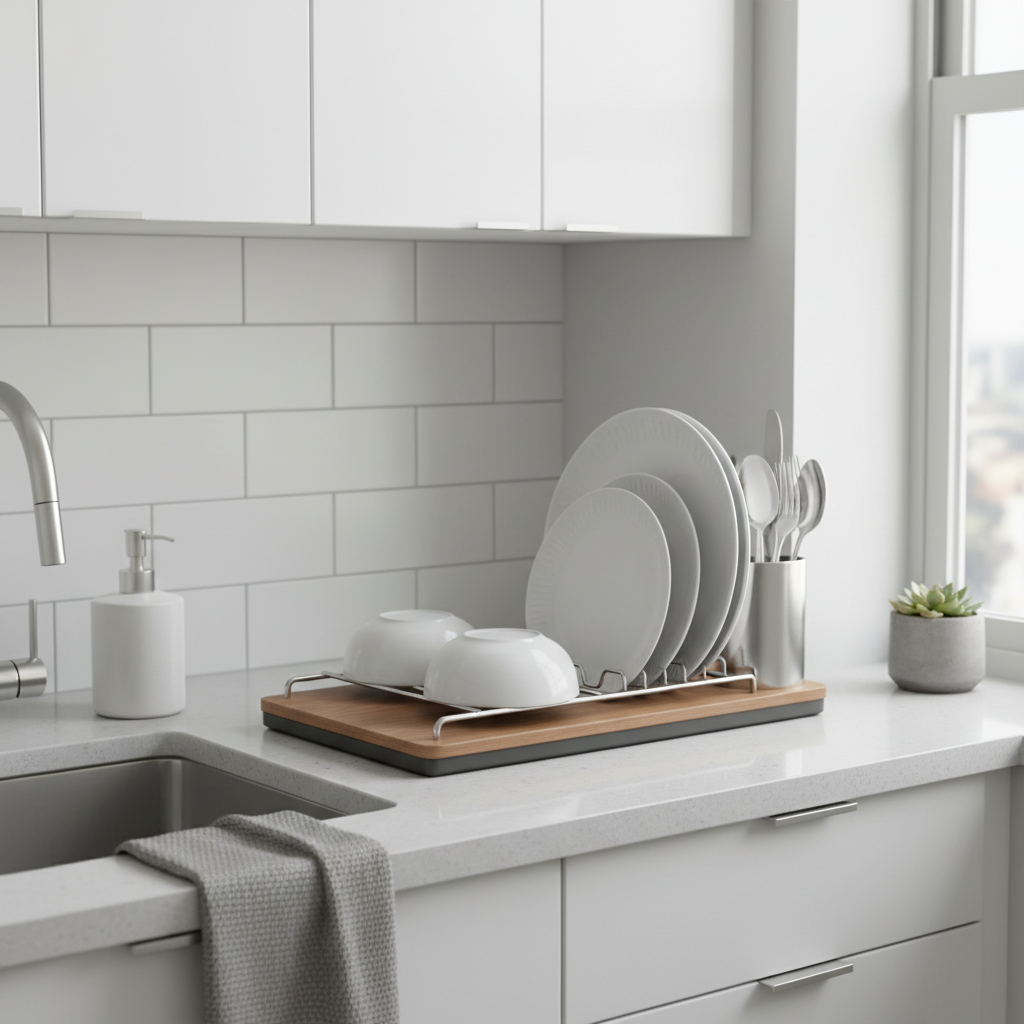
This guide breaks down what actually matters, size, layout, drainage, materials, and then helps you pick the right style for your sink and habits, without pretending there’s one rack that fits every kitchen.
What “compact” really means in a small kitchen
“Compact” gets slapped on a lot of racks that still sprawl once you add a utensil cup, a cutting board slot, and a drip tray that extends past the base. For most small kitchens, compact means the rack stays inside a predictable footprint, even when it’s loaded.
- Footprint: roughly 12–18 inches wide for single-tier countertop racks, smaller if it’s an over-the-sink style.
- Capacity that matches reality: 2–4 place settings is often the sweet spot for apartments and couples, bigger racks tend to invite pileups.
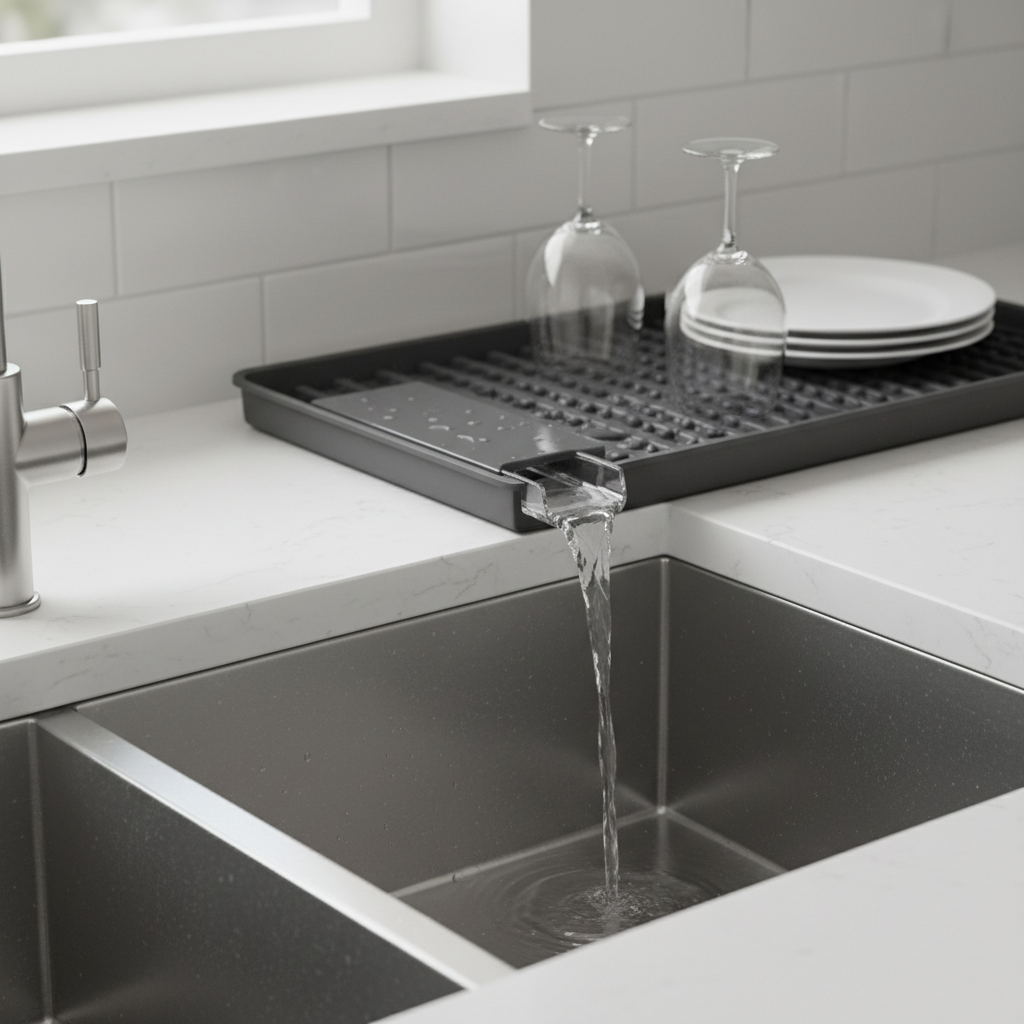
- Drainage control: a spout that aims into the sink, or a base that won’t trap water under plates.
If you’re searching best compact dish racks for small kitchens, you’re usually trying to solve one of two problems, too little counter, or too much water lingering where it shouldn’t.
Quick comparison: common compact rack types
Before you browse product pages, pick a category. You’ll save time and avoid buying a “nice” rack that fights your sink setup.
| Type | Best for | Tradeoffs |
|---|---|---|
| Compact countertop (single-tier) | Most small kitchens, simple routines | Uses counter space, needs good drainage |
| Over-the-sink | Zero-counter footprint, frequent handwashing | Must match sink width, can block faucet access |
| In-sink rack/grid | Very tight counters, minimal dishes | Occupies sink basin, limits soaking space |
| Collapsible / roll-up | Ultra-small kitchens, occasional drying | Lower capacity, not great for tall items |
How to choose the best compact dish rack (features that matter)
A dish rack’s “smallness” only helps if it stays clean and functional. Here’s what tends to separate a good one from an annoying one.
Drainage that actually drains
Standing water is the quiet killer of small-kitchen setups, because there’s nowhere for mess to hide. Look for a tray with a defined slope and a spout you can aim into the sink, or a design where water falls straight into the basin.
According to NSF (NSF International), food equipment materials and designs should support cleanability, which is a good mindset here too: fewer crevices, fewer trapped puddles, less gunk to scrub.
Materials: stainless vs coated metal vs plastic
- Stainless steel: often the safest bet for longevity, still check welds and joints where rust can start in lower-quality builds.
- Powder-coated metal: looks great, but chips can expose metal underneath, watch for sharp edges and thin coating.
- Plastic: lightweight and usually cheaper, but can stain and warp if it lives near heat.
If you’ve had rust before, pay attention to the small stuff: fasteners, seams, and the bottom feet. Those spots sit in moisture the longest.
Plate spacing and stability
Many compact racks claim “high capacity” by squeezing slots close together. That can backfire, plates touch, airflow drops, and drying slows. A stable rack has slots deep enough that plates don’t tip forward when you add a pan.
Utensil holder design
A huge utensil cup can double the footprint, which defeats the point. Better options are slim holders that hang on the side, or removable cups you can toss into the dishwasher.
Self-check: which compact rack style fits your kitchen?
If you’re stuck between styles, use this quick checklist. It’s not glamorous, but it avoids returns.
- Your counter space: If you can’t spare a 14-inch by 10-inch rectangle near the sink, consider over-the-sink, in-sink, or collapsible.
- Your sink size: Measure the inner width if you want over-the-sink, don’t guess from “standard.”
- Your dish volume: If you cook daily, a tiny rack may force stacking, which slows drying and creates chips.
- Your drying preference: If you hate towel-drying, prioritize airflow and plate spacing over “extra attachments.”
- Your cleaning tolerance: If you won’t regularly wipe a tray, pick designs that drain into the sink and minimize pooling.
Many people hunting best compact dish racks for small kitchens are really looking for “least maintenance per square inch,” and that’s a fair goal.
Practical setup tips that save space immediately
You can improve almost any rack with small adjustments, especially in tight kitchens.
Place it where water can escape
- Angle the spout directly into the sink, test with a small pour before you load it up.
- Keep at least an inch of clearance behind the rack so air can move and the wall stays dry.
- If your counter slopes away from the sink, an in-sink rack may be less annoying than fighting runoff.
Use a “drying limit” rule
Compact racks work when you treat them as a drying station, not storage. A simple rule helps: once the rack is full, you either put dishes away or towel-dry a few items to reset space.
Make the rack modular
Removable parts matter in small kitchens. A detachable utensil cup, a removable knife slot, even a separate glass stand can let you reconfigure based on what you washed that day.
Common mistakes (and how to avoid them)
A lot of frustration comes from buying “feature-heavy” racks that don’t match how you actually wash dishes.
- Buying tall when you need flat: A tall rack can block upper cabinets in small kitchens, then you stop using it where it belongs.
- Ignoring drip-tray cleaning: If the tray needs daily scrubbing to avoid slime, it’s not the right design for your routine.
- Overestimating attachments: Cutting board slots and knife towers sound helpful, but they can force weird loading and eat space.
- Forgetting about hands and elbows: In a narrow galley kitchen, a rack that sticks out becomes a constant bump hazard.
According to CDC, cleaning and sanitizing food-contact surfaces helps reduce the risk of foodborne illness. A dish rack isn’t exactly a cutting board, but the same idea applies: if a rack is always damp and grimy, it’s worth changing the setup.
Key takeaways and a simple buying plan
Key points to remember:
- Measure first, especially for over-the-sink racks and racks placed between sink and stove.
- Prioritize drainage over “extra capacity,” pooled water becomes odor and buildup.
- Pick the style that fits your workflow, not the one that looks most impressive online.
- Keep it easy to clean, removable parts and fewer seams usually win.
If you want a low-stress approach, pick a rack type from the table, set a max footprint, then filter products by material and drainage design. That’s typically faster than comparing ten nearly identical listings.
In the end, the best compact dish racks for small kitchens are the ones you can load quickly, wipe down easily, and forget about the rest of the day.
Conclusion: choose for your space, not for the photos
A compact rack should make your counter feel bigger, not busier. Measure your real “usable rectangle,” choose the rack style that matches your sink, and be picky about drainage and cleanability.
If you take only two actions, do this: measure the footprint you can spare, then choose a design that drains into the sink with minimal trapped water. Those two choices usually eliminate most small-kitchen dish rack regret.