
Home organization works best when you stop chasing a “perfect” house and start building a few repeatable systems that fit your real week, your storage, and your tolerance for visual mess.
If you’ve ever done a big purge only to watch clutter creep back in, you’re not failing, your setup probably asks too much from you. Most homes need fewer decisions, clearer “homes” for common items, and realistic reset routines that take minutes, not hours.
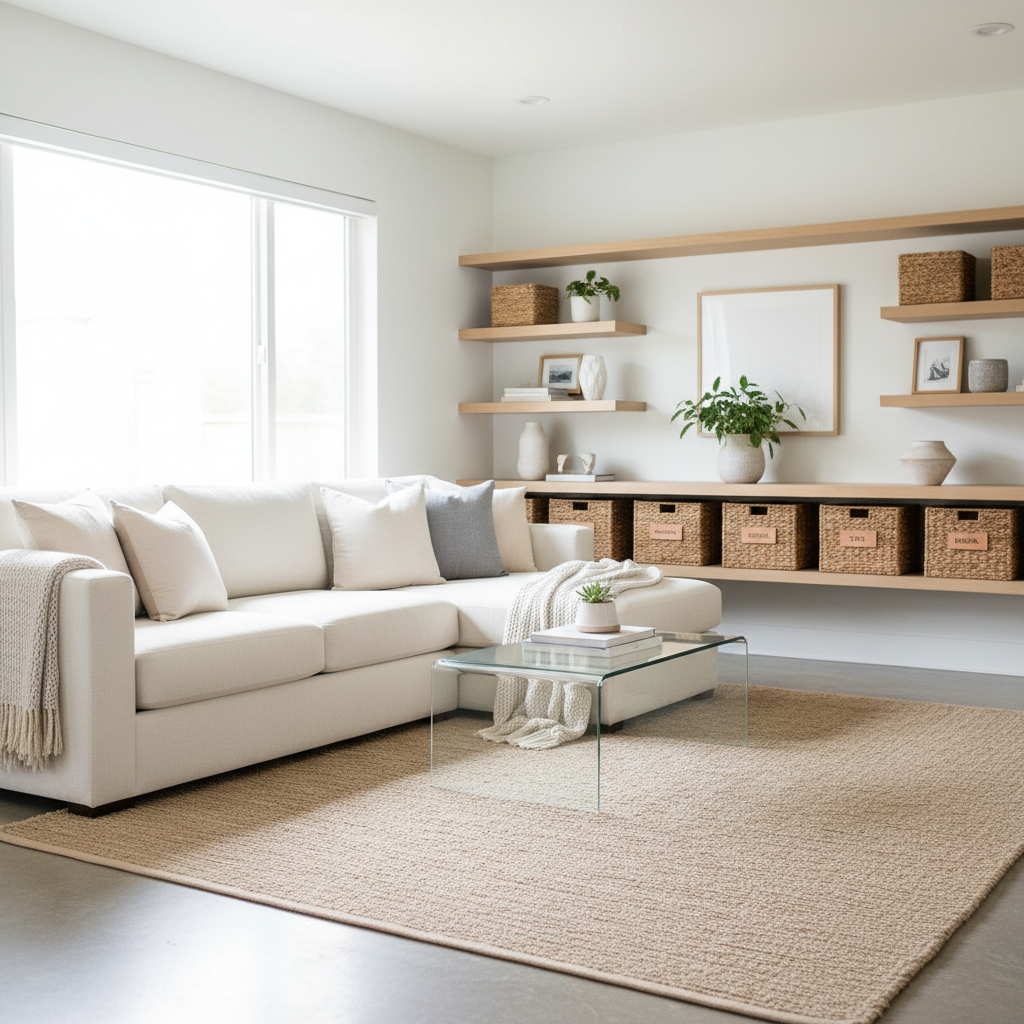
Below is a room-by-room approach with practical routines, plus specific ideas like kitchen cabinet organizers, a paper management system, and small space storage ideas that actually hold up when life gets busy.
Start with the “why clutter happens” (so your fixes stick)
Before you buy bins, it helps to name the friction points. In many homes, clutter is less about “too much stuff” and more about too many decisions and no landing zones.
- Homes without rules: items don’t have a clear category or a clear container, so they float.
- Storage mismatch: you store daily-use items in hard-to-reach spots, then they pile up on counters.
- Fantasy organizing: you organize for your best day, not your normal day.
- Invisible overflow: closets, drawers, or the garage become “black holes,” then you rebuy duplicates.
According to the National Association of Productivity & Organizing Professionals (NAPO), good organizing often centers on creating simple systems you can maintain. That idea matters more than any product recommendation.
A quick self-check: what type of clutter are you dealing with?
Use this short checklist to decide where to focus. You’ll get faster results if you fix the highest-impact pattern first.
- Drop-zone clutter: piles form near the entryway, kitchen counter, or bedroom chair.
- Container clutter: drawers and closets look “organized” until you open them.
- Project clutter: half-finished crafts, returns, donations, or repairs linger for weeks.
- Inventory clutter: pantry, bathroom, or cleaning supplies multiply because you can’t see what you have.
If you nodded at drop-zones and inventory, prioritize entryway organization ideas and pantry/bath resets. Those two changes usually reduce daily mess the fastest.
Decluttering tips that don’t require a whole weekend
These decluttering tips are designed for momentum. The goal is to reduce “deciding fatigue,” not to create a marathon sorting session.
The 10-minute “category sweep”
- Pick one category (mail, shoes, water bottles, toys), not a room.
- Set a timer for 10 minutes, gather every item in that category into one spot.
- Keep what you use, donate what you don’t, and relocate strays to their home.
The one-touch rule for micro-clutter
When you pick something up, aim to move it to its final destination. If it doesn’t have one, that’s your organizing problem to solve, not your willpower problem.
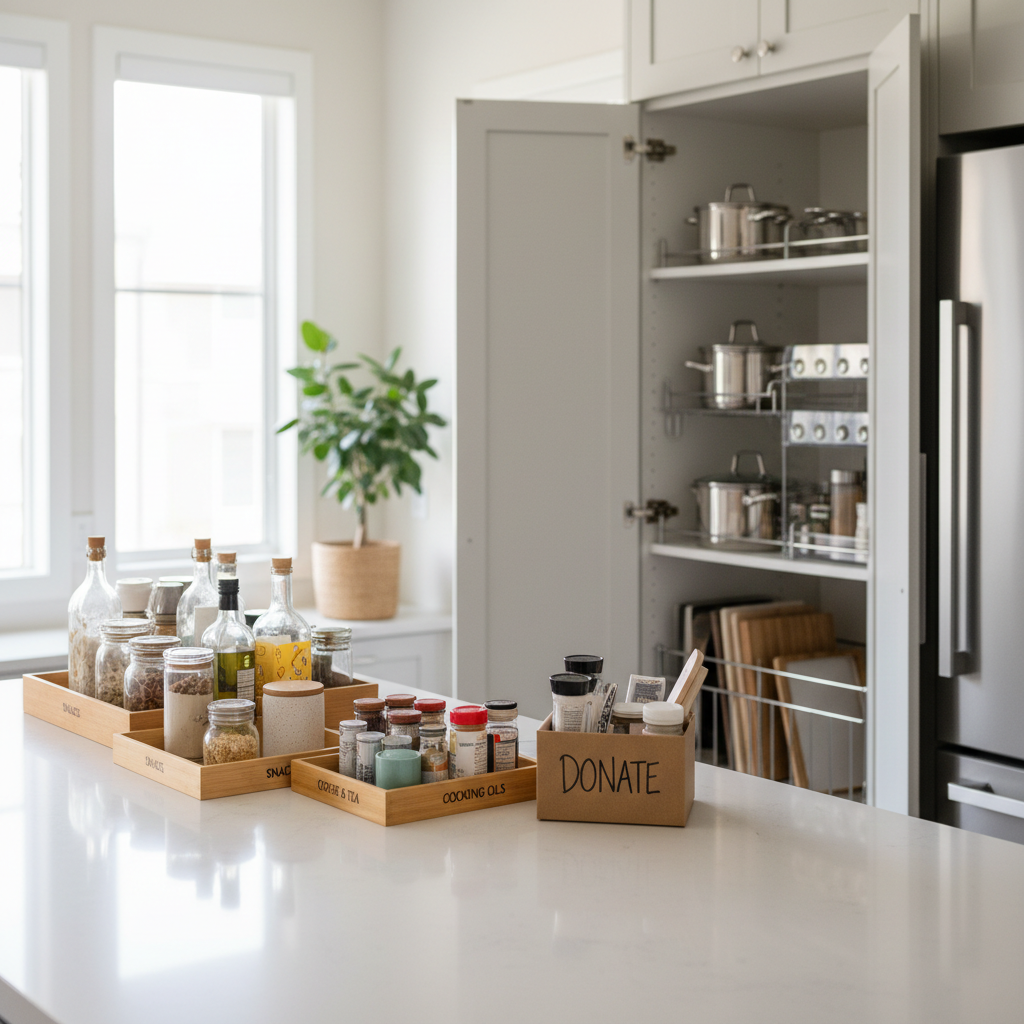
The “outbox” that prevents re-piling
Keep one bin or tote in a closet for items leaving the house (returns, donations, recycling). If you can’t see a path out, clutter tends to boomerang back onto surfaces.
Room-by-room home organization: what to set up first
Room-by-room works when you lead with daily pain points. Here are setups that stay tidy without constant maintenance.
Entryway organization ideas (reduce daily drop-zone mess)
- One tray for smalls: keys, earbuds, lip balm, badges.
- Hooks at realistic height: backpacks and purses where they actually get dropped.
- Shoe limit by container: one mat or one rack, when it’s full, something rotates out.
Closet organization ideas (make getting dressed less chaotic)
- Hang “repeat outfits” at eye level, store occasion wear higher.
- Use matching hangers to reduce visual noise and snagging.
- Give each category a boundary: one drawer for tees, one bin for workout gear.
Kitchen cabinet organizers (protect your counters)
- Vertical storage for cutting boards, baking sheets, and pans.
- Turntables for oils, sauces, vitamins, so you can see inventory.
- Clear bins for snack categories, especially if you have kids.
Pantry organization solutions (stop buying duplicates)
- Create “zones”: breakfast, lunch, dinner helpers, snacks, baking.
- Keep backstock separate so it doesn’t crowd daily-use items.
- Label with plain language, not “Pinterest labels” you’ll ignore.
Bathroom storage hacks (tame the tiny stuff)
- Use drawer dividers for skincare and grooming, one category per section.
- Store backups in a single bin, add a sticky note for “open first.”
- If medications are involved, follow label guidance and consider child-safe storage; when in doubt, ask a pharmacist.
Toy storage ideas (keep the system kid-proof)
- Choose open bins with picture labels for younger kids.
- Limit categories: building, dolls, cars, art, puzzles, “stuffies.”
- Rotate toys seasonally rather than storing everything in the play area.
Storage upgrades that matter (and what to skip)
You don’t need a shopping spree. You need the right “containers” for your habits. These upgrades tend to pay off across multiple rooms, including small space storage ideas for apartments.
| Problem | What helps | What to avoid |
|---|---|---|
| Countertops collect items | Catchall tray + labeled bin inside a nearby cabinet | More decorative containers without clear purpose |
| Closets look full but you can’t find anything | Uniform hangers + shelf bins + a “maybe donate” bag | Overly complex folding systems you won’t maintain |
| Pantry chaos and duplicates | Clear bins + turntables + simple zone labels | Decanting everything if you won’t keep up with refills |
| Garage becomes a dumping ground | Garage storage systems: wall rails, hooks, sturdy shelving | Cardboard boxes on the floor, they degrade and attract pests |
| Paper piles on every surface | Paper management system: inbox + action folders + shred | Multiple “temporary” stacks in different rooms |
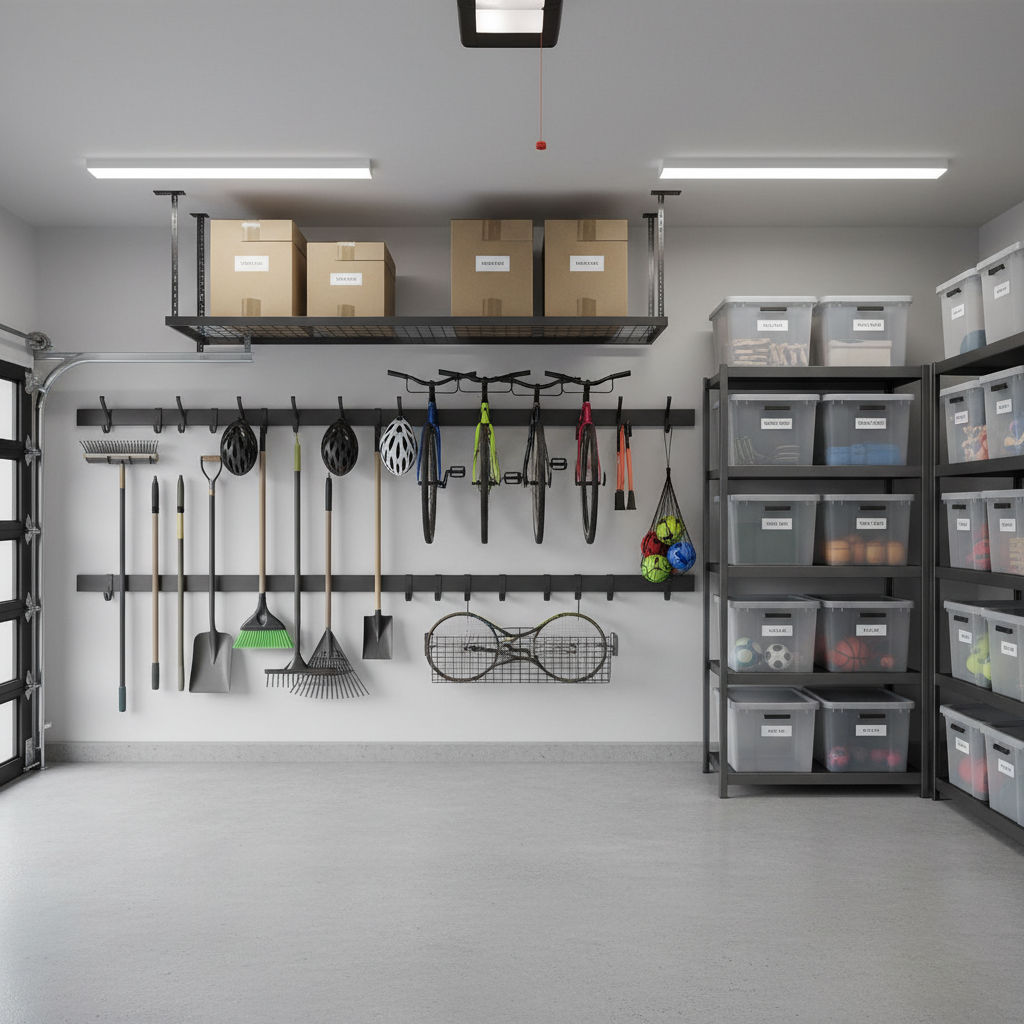
One honest note: containers don’t solve volume problems. If a category consistently overflows its bin, it’s a signal to reduce that category or expand storage intentionally.
Set up a paper management system you’ll actually use
Paper is sneaky because it looks “important.” A workable paper management system keeps paperwork moving in one direction: in, decide, out.
- One inbox near where mail lands, no “secondary inboxes” in other rooms.
- Action folders: Pay, Reply/Call, File, To Shred.
- A weekly paper reset (10–15 minutes): empty inbox, process actions, shred junk.
If you scan documents, consider your privacy and storage settings. For sensitive documents, you may want guidance from a trusted IT professional or financial advisor.
Make it stick: simple routines and “reset points”
Most tidy homes rely on short resets. Not daily deep cleaning, just repeatable touchpoints that keep clutter from compounding.
Two resets that cover most households
- Night reset (5–8 minutes): clear kitchen sink, quick counter sweep, return items to their home.
- Weekend reset (20–30 minutes): pantry glance for expired items, bathroom restock check, toy bin quick sort.
Key takeaways to remember
- Organize for your “average day,” not your aspirational routine.
- Reduce decision points: fewer categories, clearer labels, closer storage for daily-use items.
- Protect flat surfaces with a designated landing spot or you’ll fight the same piles again.
When you approach home organization this way, you spend less time “cleaning up” and more time living in the space without feeling like it’s judging you.
Pick one high-traffic area today, set up a single container limit, and run one 10-minute category sweep. If you do just that, you’ll usually see a noticeable change by tomorrow morning.