
Best led floor lamp for reading corner shopping is really about one thing, getting light that feels effortless on your eyes while still making the space look warm, not like a waiting room.
If you have a cozy chair, a side table, and a stack of books but the lighting feels harsh, dim, or “in the wrong place,” you end up fidgeting more than reading. The right floor lamp fixes that fast, but only if you pick for your room and your habits, not just for a big lumen number on the box.
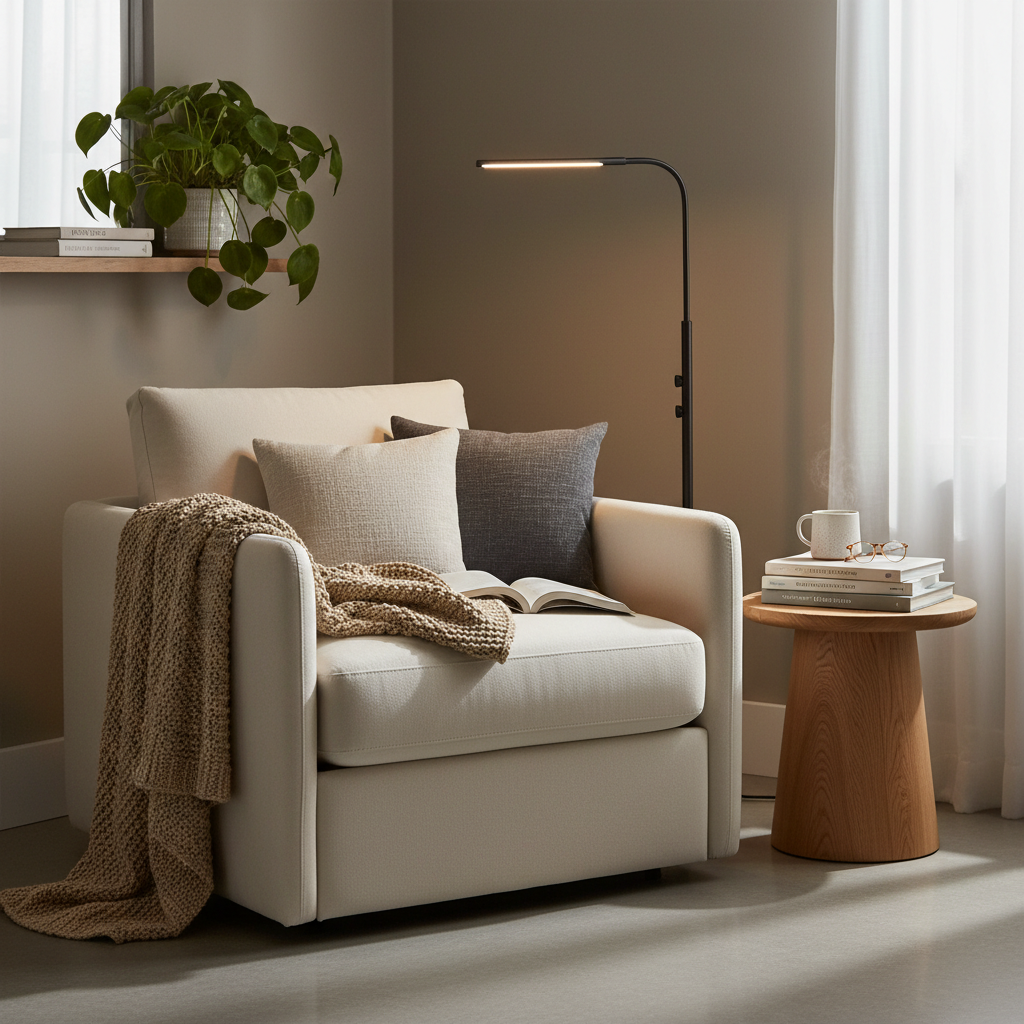
This guide focuses on what actually matters in a reading nook, beam shape, color temperature, glare control, adjustability, and how the lamp plays with your existing room lighting. You’ll also get a quick checklist, a comparison table, and setup tips that prevent the usual “looks great, reads terrible” outcome.
What makes a floor lamp “best” for a reading corner
The best pick usually balances task lighting and comfort lighting. Task lighting is the focused light that hits your page, comfort lighting keeps the corner from feeling like a spotlight on you.
- Brightness you can control: A dimmer matters more than extreme max output, because your eyes adapt to the room’s overall brightness.
- Beam that lands where you read: A gooseneck or swing arm helps you put light on the book, not in your eyes.
- Color temperature that suits your mood: Many people prefer warm to neutral white for reading, but it depends on paper color, time of day, and sensitivity.
- Low glare: Diffusers, deeper shades, or indirect designs reduce that “shiny page” look.
- Stable base, small footprint: Reading corners often have little floor space, a heavy base prevents tip-overs near pets or kids.
According to the American Lighting Association, layered lighting tends to create more comfortable spaces than relying on a single bright source, which is exactly why reading corners feel better with a controllable task lamp plus softer ambient light.
Key specs to compare (without getting lost)
Spec sheets can be noisy, so here are the few numbers and features that usually predict satisfaction in a reading nook.
Brightness and dimming
Look for a lamp with a real dimmer (not just 3 preset steps) if you read at different times. Too bright at night can feel edgy, too dim makes you lean in.
Color temperature (Kelvin) and “warmth”
Warm white feels cozier, neutral white can feel clearer on the page. If you share the corner with crafts or note-taking, adjustable color temperature is often worth it.
CRI (color rendering)
Higher CRI helps colors look more natural, which can make paper, illustrations, and your room decor feel less “flat.” It’s not a deal-breaker for everyone, but it’s a quality marker.
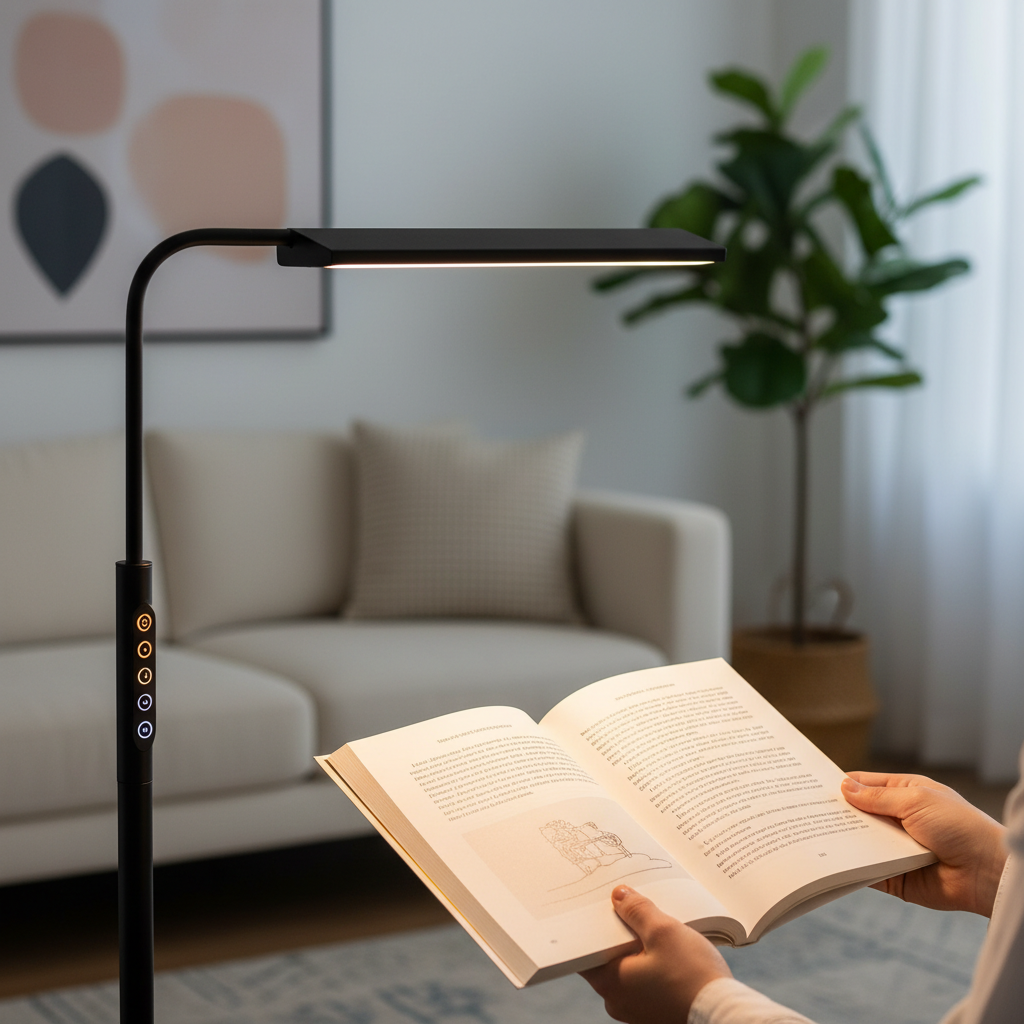
Flicker and eye comfort
Flicker can be subtle but annoying, especially during long sessions. Many modern LED lamps manage this well, but if you’re sensitive or get headaches, it’s smart to look for claims like flicker-free and buy from brands with clear specs and warranties. If discomfort persists, consider asking an eye care professional, since lighting is only one factor.
Quick comparison table: lamp styles that work in reading nooks
Instead of recommending one “universal winner,” it’s more helpful to match the lamp style to how your corner is laid out.
| Type | Best for | Watch-outs | What to look for |
|---|---|---|---|
| Torchier + reading arm | Layered light in one fixture | Torchier can bounce glare off TV or frames | Separate dimmers for up-light and reading arm |
| Gooseneck task lamp | Precise light on pages, small spaces | Can look “utilitarian” in cozy decor | Stable base, smooth arm tension, diffuser |
| Arc floor lamp | Light over chair without side table clutter | Needs space, can tip if base is light | Heavy base, reach that clears head and shoulders |
| Modern indirect/uplight bar | Soft ambiance plus wall wash | May not be enough for small print alone | Add-on task head or pair with table lamp |
Self-check: which “reading corner problem” are you solving?
Before you buy, get honest about the real friction. Most returns happen because people pick based on looks, not the problem.
- You squint or get tired fast: You likely need better placement and a dimmable task beam, not just more lumens.
- The page reflects light: Glare control and angle matter, a shade or diffuser helps.
- Your partner complains it’s too bright: You need tighter beam control or separate ambient vs task lighting.
- You move positions a lot: Gooseneck, swing arm, or an adjustable head beats fixed shades.
- Your corner looks “cold” at night: Warmer color temperature or tunable white makes a bigger impact than a new bulb color name.
If your answer is “all of the above,” don’t panic, it usually means you want a lamp with both dimming and a controllable head, plus a warmer default setting.
How to choose the best LED floor lamp for reading corner use
When someone asks me for the best led floor lamp for reading corner comfort, I usually narrow it down by layout first, then by light quality.
Step 1: Pick placement before picking the lamp
A good rule: place the light slightly behind and to the side of your reading shoulder, aimed at the page. That reduces shadows from your hands and keeps the hot spot out of your eyes.
- If you read in a right-hand chair arm position, place the lamp slightly to the left and vice versa.
- Try to keep the light source above eye level, or shielded by a shade.
Step 2: Match beam type to your seating
Recliners and deep lounge chairs often work better with an arc lamp or a tall lamp with an extended arm, because the book sits lower and more forward than you think.
Step 3: Choose color temperature based on when you read
- Mostly evenings: warm or warm-neutral tends to feel calmer in many homes.
- Daytime and note-taking: neutral white can feel cleaner and help contrast.
- Mixed use: tunable white (warm-to-cool) keeps you flexible.
According to the U.S. Department of Energy, LEDs are efficient and long-lasting compared with older technologies, which is why a quality LED floor lamp can be a “set it and forget it” upgrade for a reading nook, assuming the light quality meets your comfort needs.
Setup tips that make a cheap lamp feel better (and a good lamp feel great)
You can buy the right product and still miss the experience if setup is off by a few inches.
- Aim for the page, not the room: Your corner should feel softly lit, with a brighter zone on the book.
- Add a second low light if the room is dark: A small warm lamp across the room reduces contrast, your eyes relax.
- Use a matte bookmark or page clip if glare drives you crazy: Shiny paper plus a naked LED head causes reflections.
- Route cords safely: If the lamp crosses a walkway, use a cord cover and keep the base out of traffic.
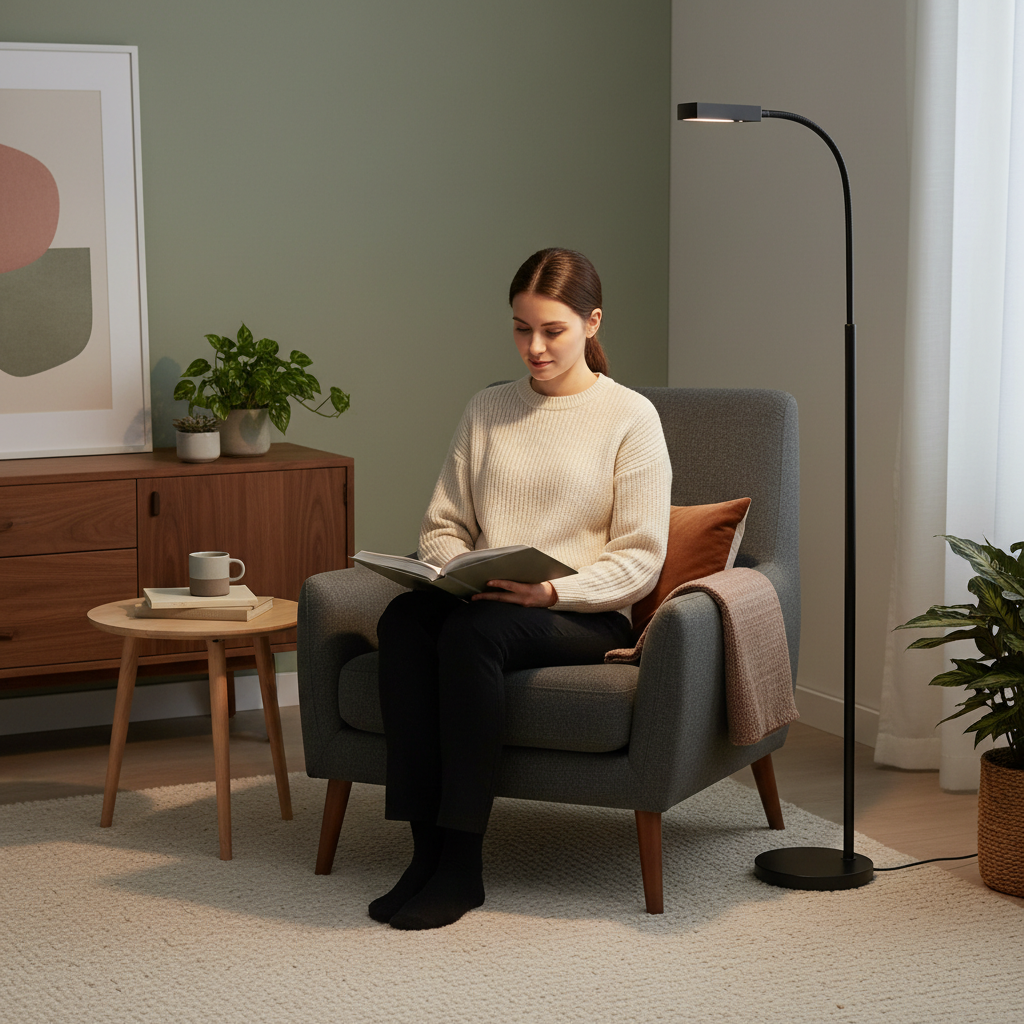
Key takeaway: small placement changes often beat swapping lamps, especially if your current lamp already has a dimmer and adjustable head.
Mistakes to avoid (these cause most “meh” reviews)
- Buying only by lumens: A bright lamp with poor beam control can feel worse than a less powerful lamp placed correctly.
- Ignoring base size: Tall lamps with small bases feel fine in photos, then wobble in real life.
- Choosing a fixed shade for a recliner: Your book position changes, the light doesn’t, frustration shows up fast.
- Forgetting the rest of the room lighting: If your nook is the only bright spot, your eyes keep adjusting.
- Overusing cool white at night: Some people feel more alert than they want, if sleep is impacted, dialing warmer may help.
If you’re dealing with migraines, diagnosed eye conditions, or persistent strain, lighting adjustments can help but may not solve everything, it’s reasonable to consult an eye care professional for tailored advice.
Conclusion: a practical way to pick your 2026 reading-corner lamp
The best led floor lamp for reading corner use is the one that puts a controllable, low-glare beam exactly where you read, while keeping the corner soft and welcoming. Start with placement and adjustability, then prioritize dimming and a color temperature that fits your reading hours.
If you want one simple next step, measure where your chair sits, decide whether you need an arm that reaches over the seat, then pick a lamp with smooth dimming and a shaded or diffused head. That combo tends to age well, even if you rearrange the room later.
FAQ
- What brightness should a reading corner lamp have?
Enough to make small print feel easy without blasting the room. In practice, a dimmable lamp matters more than chasing a single brightness number, because room lighting and shade design change how bright it feels. - Is warm white or cool white better for reading?
Many people prefer warm to neutral for comfort, especially at night. If you want crisp contrast for studying, neutral can feel cleaner. If you read at mixed times, tunable white is the least regret option. - Do I need a gooseneck lamp for a reading nook?
Not always, but adjustable heads solve common problems fast, shadows, glare, and changing seating positions. If your chair is fixed and you always read the same way, a shaded fixed-head lamp can still work. - How do I reduce glare on glossy pages?
Angle the beam so it hits the page from the side rather than straight-on, and avoid exposed LED heads aimed directly at the book. A diffuser or deeper shade usually helps more than adding brightness. - Are LED floor lamps safe to leave on for hours?
Quality LED lamps usually run cooler than older bulbs, but any lamp can be a hazard with poor ventilation, damaged cords, or unstable bases. Follow the manufacturer instructions, keep fabric away from hot parts, and if anything smells hot, turn it off and check it. - Should I get smart controls for a reading lamp?
Smart dimming and scheduling can be convenient, especially if you like presets for “evening read” vs “daytime.” Just make sure the lamp still offers comfortable light quality, app features won’t fix glare or poor placement. - What if my reading corner has no outlet nearby?
A longer cord can work, but it raises trip risk. If you must cross a walkway, use a cord cover and keep the base tight to the wall, or consider having an electrician add an outlet, depending on your home and budget.
If you’re trying to build a cozy nook without overthinking it, start by listing your top two pain points, glare, not bright enough, awkward placement, then choose a lamp style that solves those specifically. If you want, tell me your chair type, side-table height, and whether you read mostly at night, and I can narrow the options to a couple of “safe bets” for your layout.