
Home design gets tricky when you want your space to look modern but still feel livable, not like a showroom that falls apart the minute real life shows up.
Most American homes today need to do more with the same square footage: hybrid work, kids’ gear, entertaining, and storage that never seems to be enough. That’s why “pretty” ideas aren’t enough, you need decisions that hold up in daily routines.
This guide pulls together practical interior design ideas, modern layout choices, and room-by-room upgrades you can actually execute, whether you live in a suburban single-family home, a townhouse, or a small apartment.
Start With Flow: Layout Rules That Make Modern Homes Feel Easy
A modern house layout usually succeeds or fails on one thing: how people move through it. If the circulation feels awkward, even great finishes won’t save the experience.
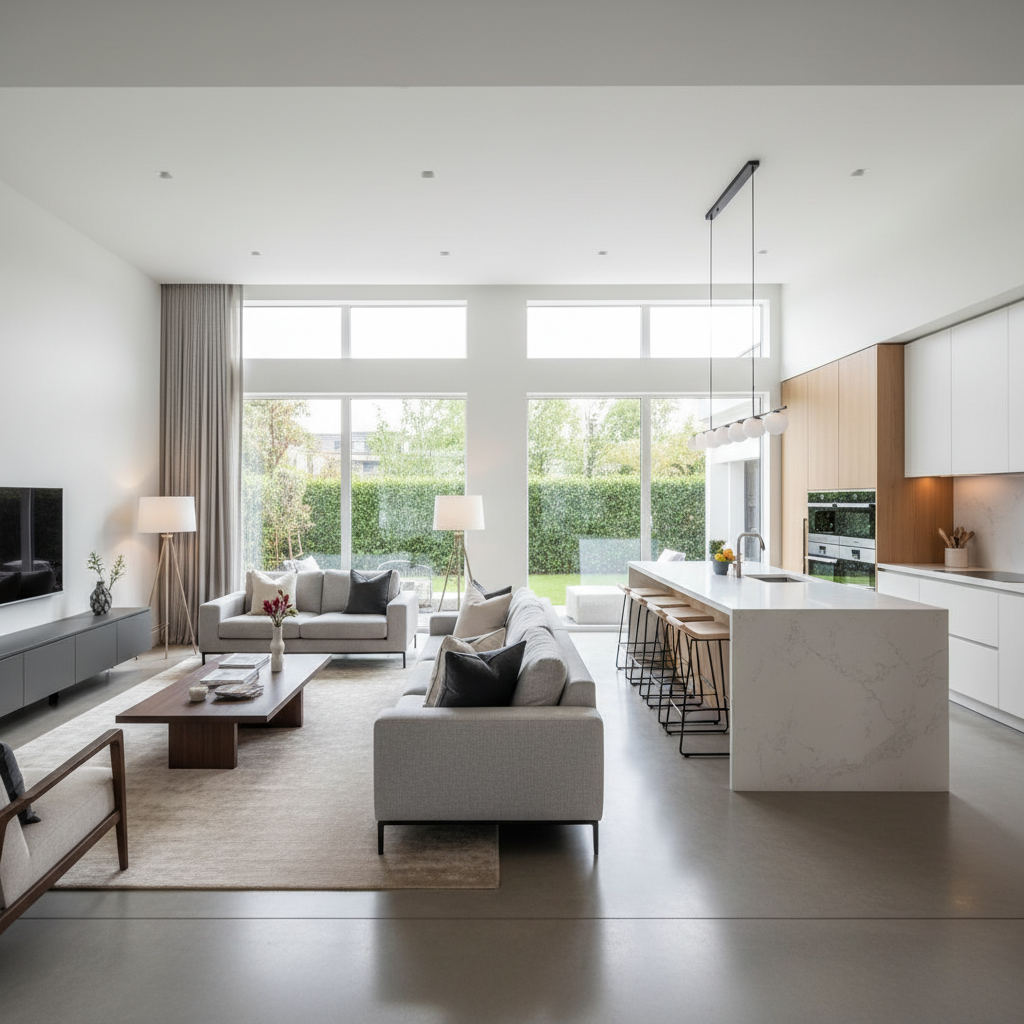
Quick flow checks many designers use before picking furniture:
- Primary paths stay clear: aim for comfortable walkways between key zones (entry to kitchen, kitchen to living, living to patio).
- Anchor zones: each area should have a “center” (sofa + rug, dining table, island) rather than floating pieces.
- Doors and drawers open cleanly: kitchens and bathrooms in particular, because a tight clearance becomes daily friction.
Open floor plan living can feel bright and social, but it can also turn into one giant “stuff zone.” The fix often isn’t walls, it’s stronger zoning: rugs, lighting layers, and furniture placement that draws invisible boundaries.
Room-by-Room Interior Design Ideas That Age Well
Trends rotate fast. What tends to last is good scale, durable materials, and a clear purpose for each room. If you’re prioritizing, start where you spend the most waking time.
Living room design tips that don’t fight your routine
- Pick one “workhorse” fabric for the main seating (performance upholstery or a tight weave) if pets, kids, or guests are common.
- Use a larger rug than you think, at least front legs of seating on the rug, so the room reads intentional.
- Hide cords early: plan outlets, side tables, and cable paths before you commit to layout.
Bedroom makeover ideas that feel calmer, not emptier
- Upgrade lighting before decor: a dimmable bedside setup often changes the mood more than new bedding.
- Keep “visual noise” low: matching nightstands helps, but even more helpful is limiting small objects on surfaces.
- Use one statement: a headboard wall, a large art piece, or a bold textile, not all three at once.
Small Space Decorating: Make It Feel Bigger Without Going Minimalist
Small space decorating is less about owning fewer things and more about giving every item a home. The moment storage becomes vague, clutter returns.
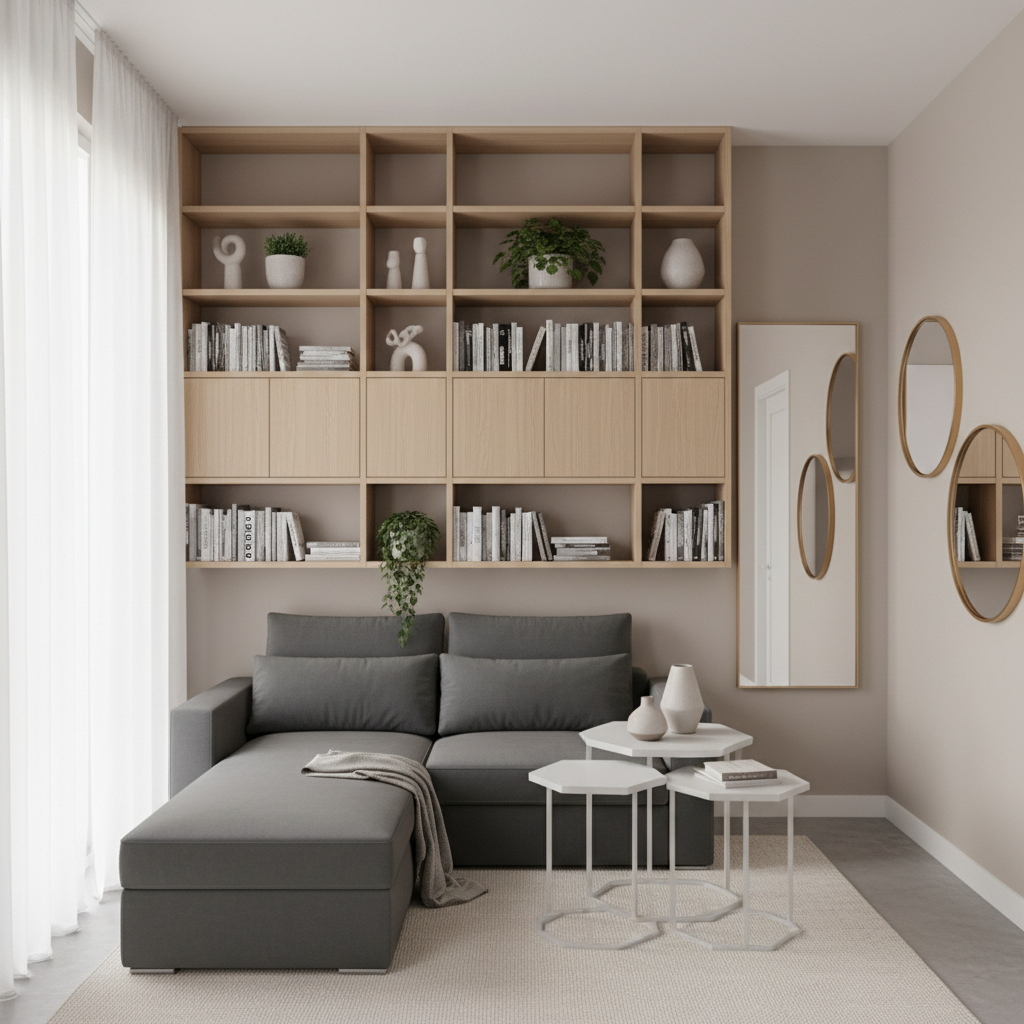
High-impact moves that typically work in tight rooms:
- Go vertical: tall bookcases, wall hooks, and upper cabinets reduce floor crowding.
- Choose “leggy” furniture: pieces on visible legs feel lighter than boxy bases.
- Double-duty pieces: storage ottomans, lift-top coffee tables, a bench that hides shoes near the entry.
- One closed storage wall: even a single credenza or wardrobe can swallow the mess and calm the room.
Mirrors can help, but only when they reflect something worth seeing, like a window or a clean focal point, not the laundry pile.
Kitchen Remodel Inspiration: The Decisions That Matter Most
Kitchen remodel inspiration tends to focus on finishes, but the daily win comes from layout, storage, and lighting. If you do those right, your style choices have room to breathe.
According to the National Kitchen & Bath Association (NKBA), kitchen planning should consider workflow and clearances, because comfort and safety depend on how people move and use key zones.
Practical kitchen choices for modern American homes
- Storage first: deep drawers for pots, pull-outs for trash/recycling, and a pantry plan that matches how you actually shop.
- Island realism: seating is great, but only if it doesn’t block traffic or appliance doors.
- Backsplash height: taking tile to the hood or upper cabinets often looks more finished than a short strip.
- Durable counters: pick what fits your habits, some materials need more maintenance than people expect.
If your kitchen connects to an open floor plan living area, keep one or two finishes consistent across both spaces, then add personality through lighting and textiles so it doesn’t feel sterile.
Home Color Palette: A Simple System That Avoids “Paint Paralysis”
A home color palette doesn’t need twelve colors. It needs a repeatable logic so each room feels related, even when it has its own vibe.
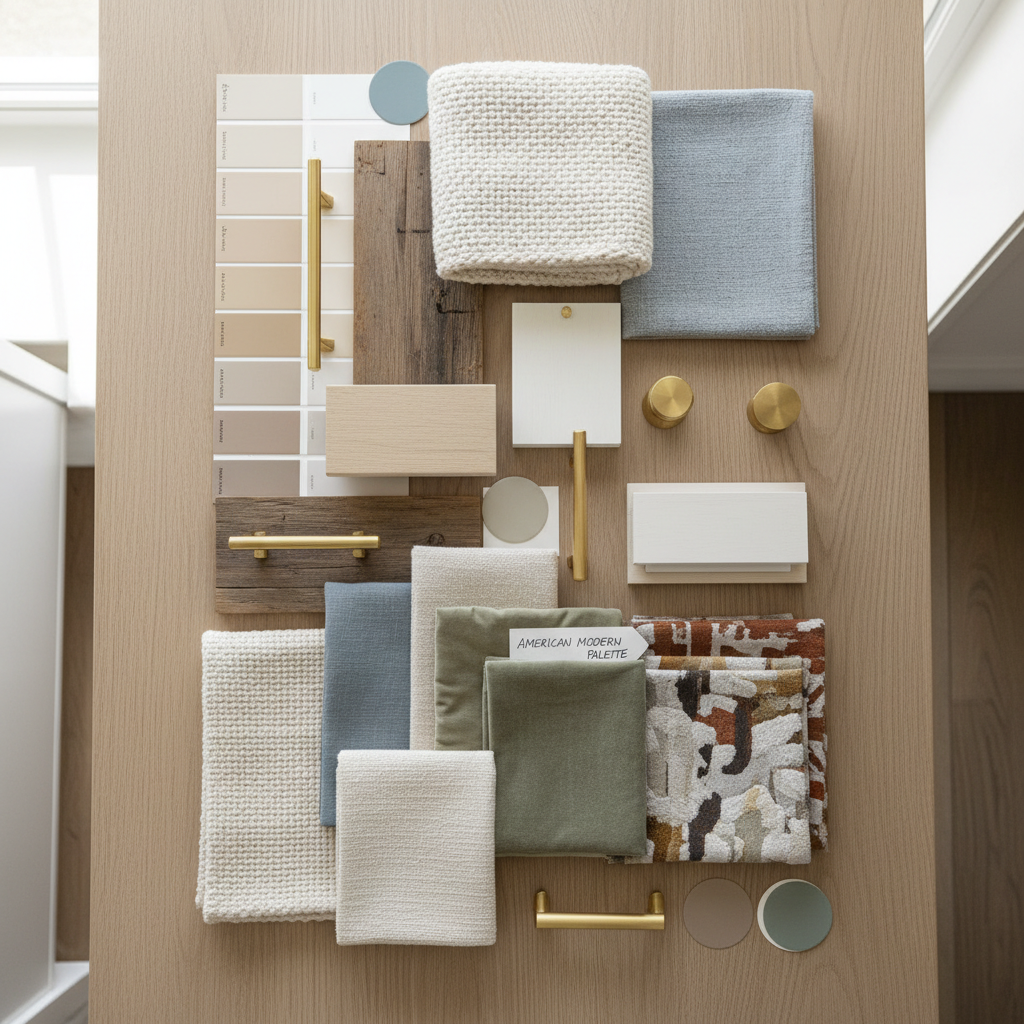
An editor-friendly formula that many homeowners can execute:
- Base neutral (walls): warm white, soft greige, or light taupe for flexibility.
- Wood tone (floors or major furniture): keep it consistent across sightlines.
- Metal finish (hardware/lighting): pick one main, one supporting.
- Accent color (textiles/art): repeat it 2–3 times per room so it reads intentional.
Paint is high impact, but it behaves differently depending on daylight and bulb color temperature. Sampling on multiple walls and checking morning vs. evening usually prevents expensive regret.
Lighting Design for Homes: Layer It Like a Pro (Even on a Budget)
Lighting design for homes is the quiet hero of modern interiors. If a room feels “off,” it’s often not the sofa, it’s that everything depends on one overhead fixture.
According to the Illuminating Engineering Society (IES), good lighting design considers the task needs of a space and visual comfort, not only aesthetics.
Use three layers in most rooms:
- Ambient: general light, often recessed, flush mount, or a ceiling fixture.
- Task: targeted light for reading, cooking, grooming, and work.
- Accent: picture lights, sconces, or a lamp that adds depth and mood.
Dimmers tend to be the fastest “why does this feel expensive now?” upgrade, but if you’re unsure about wiring or loads, it’s smarter to consult a licensed electrician for safety.
Sustainable Interior Materials: Cleaner Choices Without Going Extreme
Sustainable interior materials show up in modern home design more often now, but the best approach is usually selective, not all-or-nothing. Start with the materials you touch most, and the ones that are hardest to replace later.
According to the U.S. Environmental Protection Agency (EPA), indoor air quality can be affected by certain building materials and products, so low-emitting options may be worth considering, especially in bedrooms and nurseries.
Where sustainability tends to matter most
- Paints and finishes: look for low-odor, low-emitting products when possible.
- Flooring: durable materials with repair options can reduce replacement cycles.
- Cabinetry: ask about finishes and adhesives if sensitivity is a concern.
- Textiles: washable covers and long-wearing fabrics often beat “delicate but trendy.”
Also, sustainability can be as simple as keeping what’s already working, then upgrading what actually causes friction, poor storage, harsh lighting, or a layout that wastes space.
Practical Planning Toolkit: Decide Faster With This Table
If you’re juggling multiple rooms, a small framework keeps your home design decisions consistent. Here’s a quick planning table you can reuse for each space.
| Room | Main goal | 1 layout move | 1 storage upgrade | Lighting focus |
|---|---|---|---|---|
| Living Room | Comfort + conversation | Anchor seating on a larger rug | Closed media console | Floor lamp + dimmable ambient |
| Kitchen | Workflow + organization | Protect clear paths around island | Deep drawers + pull-outs | Under-cabinet task lighting |
| Bedroom | Rest + simplicity | Center bed on main wall | Drawer nightstands | Soft bedside lamps on dimmers |
| Small Space | Function without clutter | Float furniture off walls when possible | Vertical shelving | Multiple small lamps vs. one harsh fixture |
Key Takeaways and Next Steps
If you want modern American interiors that feel good day-to-day, focus on flow, lighting layers, and a repeatable home color palette, then bring in personality through a few intentional accents rather than constant “stuff.” That’s how home design stays both polished and practical.
Action steps: pick one room, do a 10-minute flow audit, choose a simple palette, then plan lighting in layers before buying new furniture. If you’re considering a kitchen remodel or electrical work, getting input from a qualified pro can save expensive re-dos.