
How to organize hair accessories in small drawer comes down to one thing: stop treating the drawer like a “miscellaneous bin” and start giving each item a predictable home.
If you’ve ever bought a new pack of hair ties because you couldn’t find the last pack, or spent three minutes untangling clips before running out the door, the drawer isn’t the problem, the system is. Small drawers can work extremely well, but only if you design for quick access, not perfect aesthetics.
This guide walks you through a realistic setup: how to sort without overthinking, what organizers actually help in shallow space, and a maintenance routine that stays easy even on busy weeks.
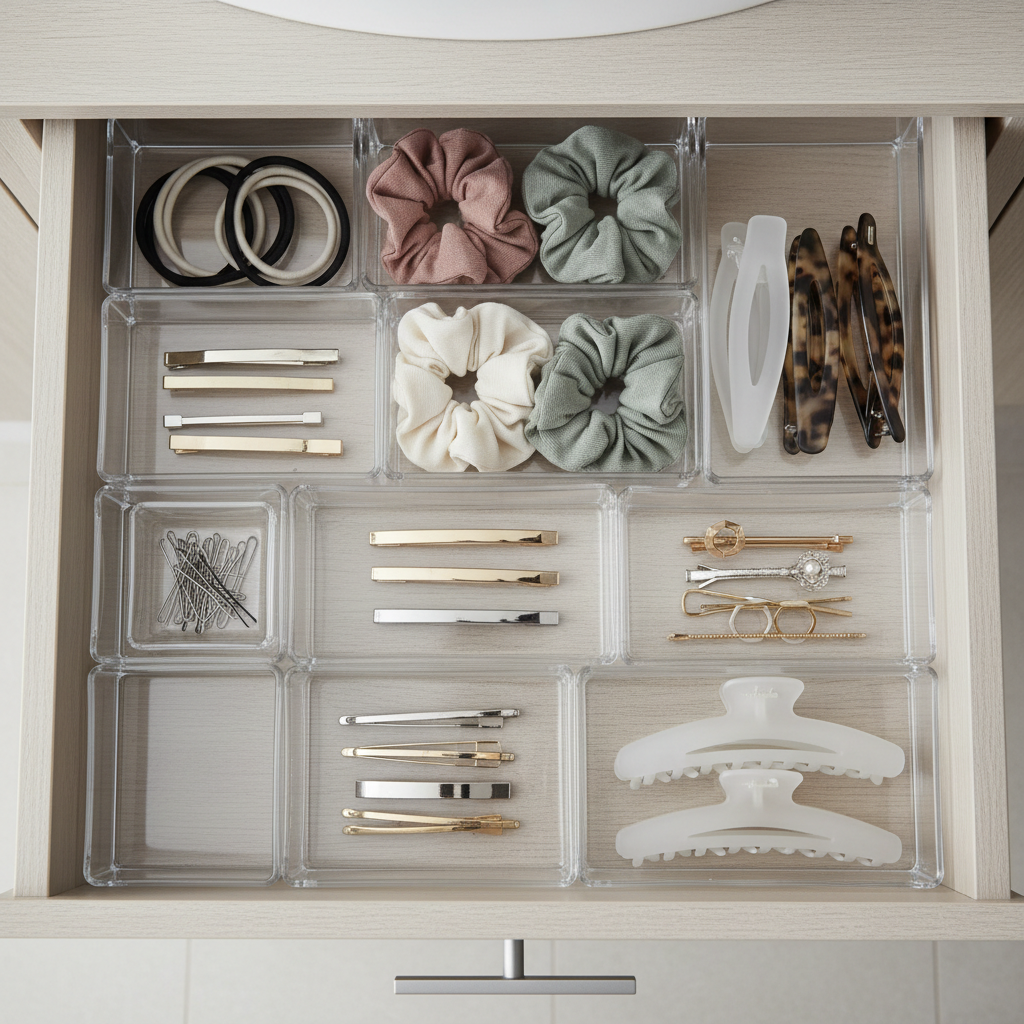
Start with a quick “drawer audit” (10 minutes, no perfection)
The fastest way to get control is a short reset: empty, wipe, sort, and put back with intention. Don’t skip the wipe, tiny drawers collect powder, hair, and makeup residue, and that grime makes accessories feel messy even when they’re organized.
Pull everything out and sort into simple piles
- Daily basics: the items you grab most mornings (usually hair ties, a clip, bobby pins).
- Occasional: special clips, headbands, fancy barrettes, heatless curl tools.
- Damaged or stretched: ties that snap, warped clips, rusty pins.
- Duplicates: the “I forgot I owned this” category.
If you’re hesitating, use this rule: if you haven’t worn it in a year and it’s not for a specific event or hairstyle, it probably doesn’t deserve prime drawer space.
Why small drawers get messy again (and how to prevent it)
Most small-drawer failures come from mixing shapes. Hair accessories are weirdly incompatible: bobby pins want to scatter, elastics want to tangle, and claw clips need vertical clearance. If everything shares one open cavity, it will drift back into a pile.
- No “edges”: without dividers, items slide when the drawer opens and closes.
- Overstuffing: even a good organizer stops working when the drawer is packed tight.
- Too many micro-categories: labeling five kinds of clips sounds nice, but it’s slow at 7:30 a.m.
- No daily reset: one chaotic week can undo a detailed system.
According to CDC guidance on household cleaning, keeping frequently used storage areas clean and clutter-reduced can help reduce buildup of dust and residue. You don’t need sterilized accessories, but a cleaner drawer makes a simple system easier to maintain.
Choose organizers that fit shallow drawers (what works in real life)
If your drawer is small, the best organizers are usually low-profile, non-slip, and easy to lift out. Tall containers waste vertical space and turn the drawer into a stacked puzzle.
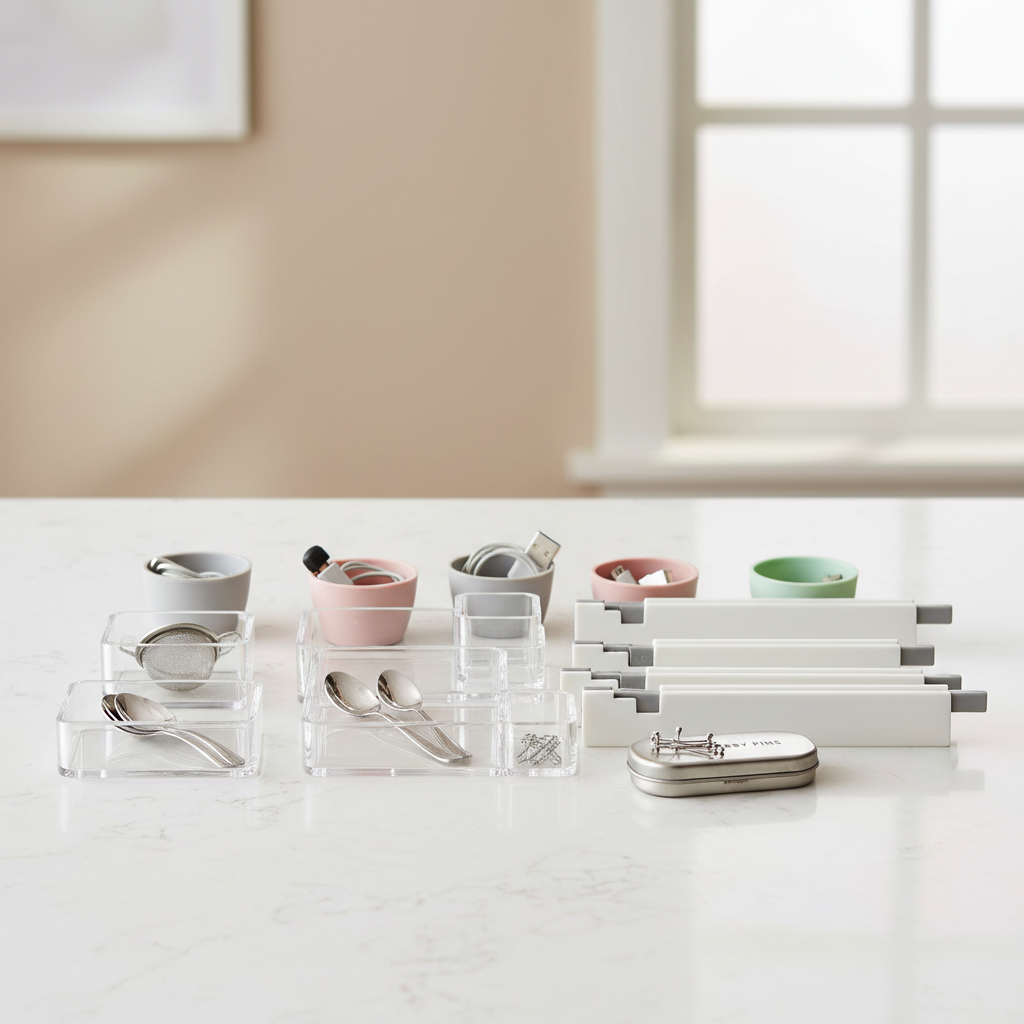
Best organizer options for hair accessories
- Mini trays (2–4 inches wide): great for hair ties, scrunchies, small clips.
- Small lidded tins: ideal for bobby pins so they don’t migrate.
- Adjustable dividers: useful if your drawer is wider than it is deep.
- Silicone pinch bowls or cups: they grip the drawer, so nothing slides.
A quick fit check: if you can’t open and close the drawer smoothly with one hand, your organizer is too tall or you’re trying to store too much inside.
A simple layout that keeps everything visible
When people ask how to organize hair accessories in small drawer, what they usually want is “I can find the thing fast.” Visibility is the point. Here’s a layout that tends to work in most bathroom vanities and dressers.
Use a “front row / back row” logic
- Front row (daily reach): hair ties, bobby pins, one go-to clip.
- Back row (less frequent): headbands, statement clips, extras.
Group by behavior, not by brand
- Fast grab: elastics and pins, anything used to “fix and go.”
- Style pieces: barrettes, decorative clips, headbands.
- Hair tools add-ons: sectioning clips, hair nets, small elastics.
One small trick that helps: keep one empty mini tray as a “landing zone” for accessories you remove at night. You can sort it properly later without turning the drawer into a mess.
Setups by accessory type (so you’re not fighting tangles)
Different items need different containment. If you treat everything the same, you’ll keep redoing the drawer.
| Accessory | Common problem | What to use | Quick tip |
|---|---|---|---|
| Hair ties | Tangle into a knot pile | Small tray or silicone cup | Cap quantity at a “one-month supply” |
| Scrunchies | Take over the drawer fast | Wider tray or short divider section | Store bulky ones in back row |
| Bobby pins | Scatter and disappear | Lidded tin or magnetic strip case | Keep 20–40 accessible, stash backups elsewhere |
| Claw clips | Don’t fit, snag other items | Dedicated compartment, laid sideways | Limit to 3–6 in the drawer |
| Headbands | Warp or fold awkwardly | Flat divider lane or store vertically if height allows | Keep “nice” ones in a separate box |
Self-check: what kind of small-drawer situation are you in?
Before you buy organizers, figure out what’s actually limiting you. This takes two minutes and prevents the classic “I bought bins, now it’s just organized clutter.”
- You can’t see items: you need fewer categories and more shallow trays.
- Items slide into each other: you need non-slip liners or dividers that lock in.
- Drawer won’t close smoothly: you need to reduce bulky pieces or move them out.
- You have multiple users: you need separate zones, even if they’re small.
- You’re always in a rush: you need a “daily kit” compartment, not a perfect display.
If you check three or more, keep the setup intentionally simple for two weeks, then refine. Most systems fail because they get complicated too early.
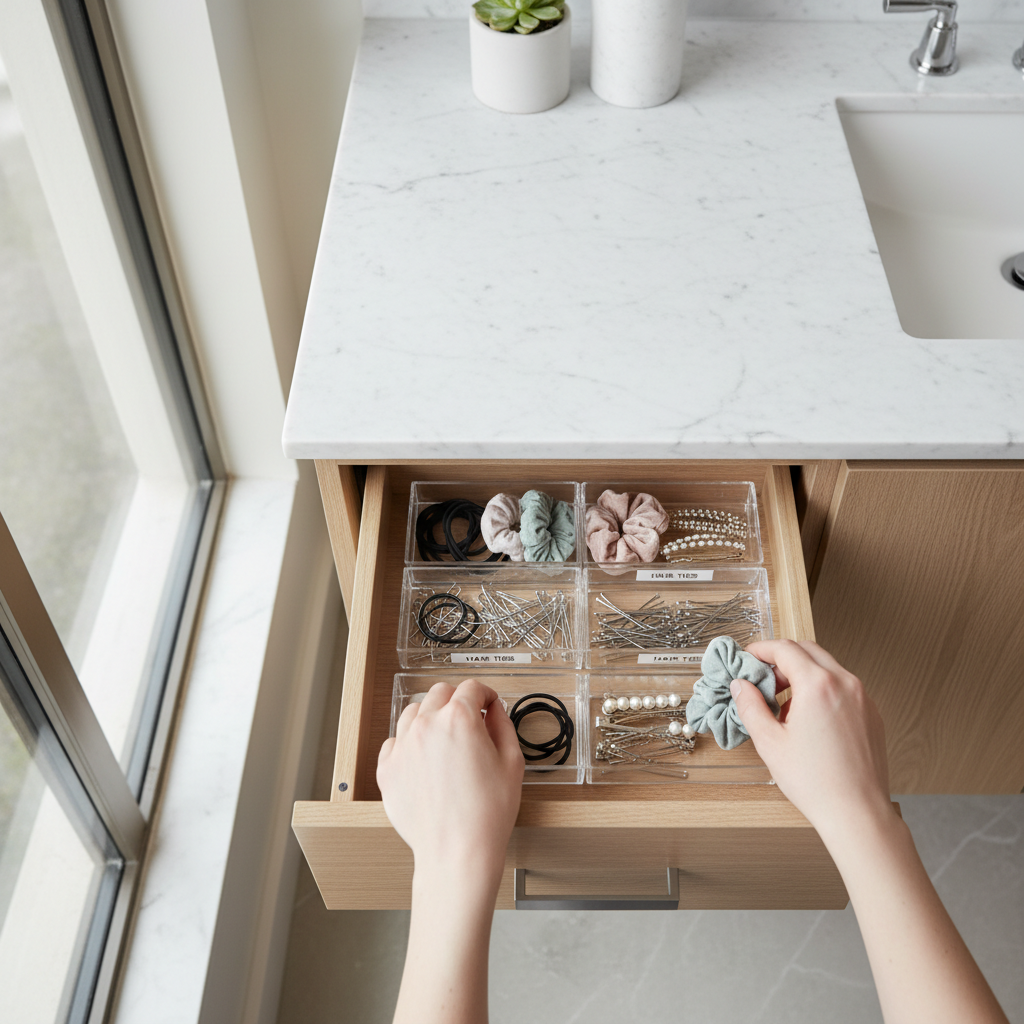
Step-by-step: a setup you can finish in one evening
Here’s a practical flow that works even if your drawer is tiny and you own a lot of accessories. The goal is a drawer you can use without thinking.
- Step 1: Decide what belongs in the drawer (daily + occasional), move backups to a separate bin or closet.
- Step 2: Add a non-slip liner or a thin textured mat so trays don’t drift.
- Step 3: Place two to four low trays, leave a little breathing room, tight packing backfires.
- Step 4: Create one “daily kit” zone in front: ties + pins + one clip.
- Step 5: Put bulky items (large claw clips, thick headbands) in a back corner or move them out entirely.
- Step 6: Do a 30-second reset each night: anything loose goes into the landing zone tray.
Key point: if you share the drawer, duplicate the daily kit so nobody raids the other person’s section in a pinch.
Mistakes that look organized but don’t stay that way
Some setups photograph well and fail by day four. If your goal is long-term order, watch for these traps.
- Storing everything you own in one drawer: a small drawer is for “active inventory,” not your entire collection.
- Deep cups for bobby pins: they sink, then you dig, then everything spills.
- Too many tiny compartments: you’ll stop sorting when you’re tired, and the system collapses.
- Mixing hair accessories with makeup tools: powder and residue can transfer, and smaller items get lost faster.
If you notice hair pins catching on elastics, split those categories immediately. That snagging is a subtle reason drawers feel “annoying,” and annoyance is what makes people abandon systems.
When it’s time to upgrade beyond the drawer
Sometimes the honest answer to how to organize hair accessories in small drawer is: you can, but you shouldn’t store everything there. If you have thick hair, multiple styling routines, or you buy accessories often, a drawer may be the wrong “home base.”
- Upgrade to a secondary container if you keep compressing the drawer to close it.
- Consider wall or counter storage if you use large claw clips daily and your drawer is shallow.
- Ask for help if clutter feels emotionally heavy or hard to maintain; a professional organizer can suggest layouts that fit your habits. If anxiety or compulsive behaviors are involved, consider consulting a licensed mental health professional.
Conclusion: keep the drawer small on purpose
A small drawer can be your fastest, calmest setup when you treat it like a curated station: daily kit in front, occasional items in back, and small containers that stop drifting and tangling. If you do one thing today, cap what lives in the drawer and give bobby pins a closed home, that alone usually changes everything.
Action ideas: set a 10-minute timer tonight to do the audit, then run a one-week trial with a simple front-row layout before buying more organizers.
FAQ
What’s the easiest way to organize hair ties in a small drawer?
Use one shallow tray or silicone cup and set a quantity limit. Keeping “backups” elsewhere prevents the tray from turning into a tangled mound.
How do you store bobby pins so they don’t scatter?
A small lidded tin works well because it closes quickly and keeps pins from sliding into other sections. Some people also like magnetic cases, but a simple tin usually does the job.
How many claw clips should I keep in the drawer?
Most small drawers handle three to six comfortably, depending on clip size. If the drawer starts snagging or won’t close smoothly, that’s your signal to relocate extras.
How can I organize hair accessories in a drawer I share with someone?
Split the drawer into two zones and give each person a mini “daily kit.” Shared bins tend to drift into confusion because nobody owns the reset.
Do I need drawer dividers or are small trays enough?
Trays are often enough in shallow drawers, especially if you add a non-slip liner. Dividers help more when the drawer is wide and items slide side-to-side.
How often should I reorganize a hair accessory drawer?
If the system is right, you shouldn’t “reorganize” often. A 30-second nightly reset plus a quick monthly toss of stretched ties is usually plenty.
Why does my drawer look neat but still feel annoying to use?
Usually it’s friction: pins catching elastics, trays shifting, or categories that take too long to maintain. Simplify the layout and prioritize the items you grab on rushed mornings.
If you’re trying to keep a small space tidy without turning organization into a weekend project, it may help to choose a matching set of low-profile drawer trays and a single pin tin, then build your “daily kit” around what you actually reach for.