
how to remove lipstick stains from pillowcases comes down to one thing: treat the oils and waxes before you let heat set them in.
If you have ever pulled a pillowcase off the bed and seen that bright smear, you already know the panic, lipstick can look permanent, especially on white cotton and light-colored satin.
The good news is most lipstick marks lift with the right order of operations, scrape, blot, pre-treat, then wash, and you can do it with products many people already keep under the sink.
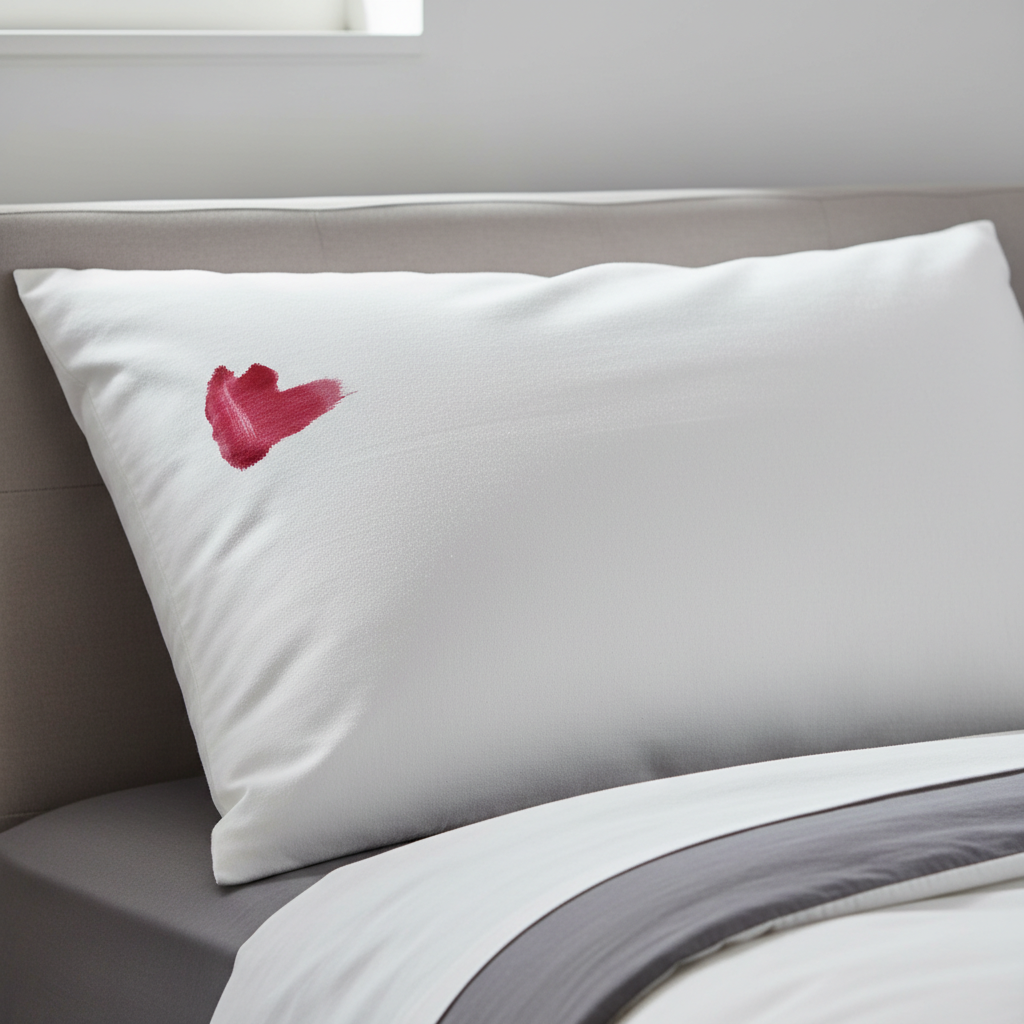
Why lipstick stains are stubborn on pillowcases
Lipstick is not just pigment, it is usually a mix of waxes, oils, and dyes, so water alone often spreads it instead of removing it.
Pillowcases make it trickier because fabric sits against warm skin and hair products, then ends up in a washer that might run hot, heat can lock oily color into fibers.
According to the American Cleaning Institute, acting quickly and choosing the right product for the stain type improves removal, that guidance fits lipstick perfectly because time and heat are the usual reasons it “sets.”
Quick stain check: what fabric and what lipstick?
Before you grab the strongest remover, take 20 seconds to identify the fabric and the kind of lipstick, it changes what is safest and what works fastest.
- Fabric: cotton and cotton blends handle most stain removers well, silk and satin need a gentler approach.
- Lipstick type: creamy bullets tend to be oily, liquid matte formulas often stain more like dye.
- Color: reds and berries can leave a faint tint even after oils lift, that is normal and usually fixable.
- Age of stain: fresh is easiest, dried is still removable but needs a longer pre-treat.
If you are not sure, do a small spot test on an inside seam, especially on colored or delicate pillowcases.
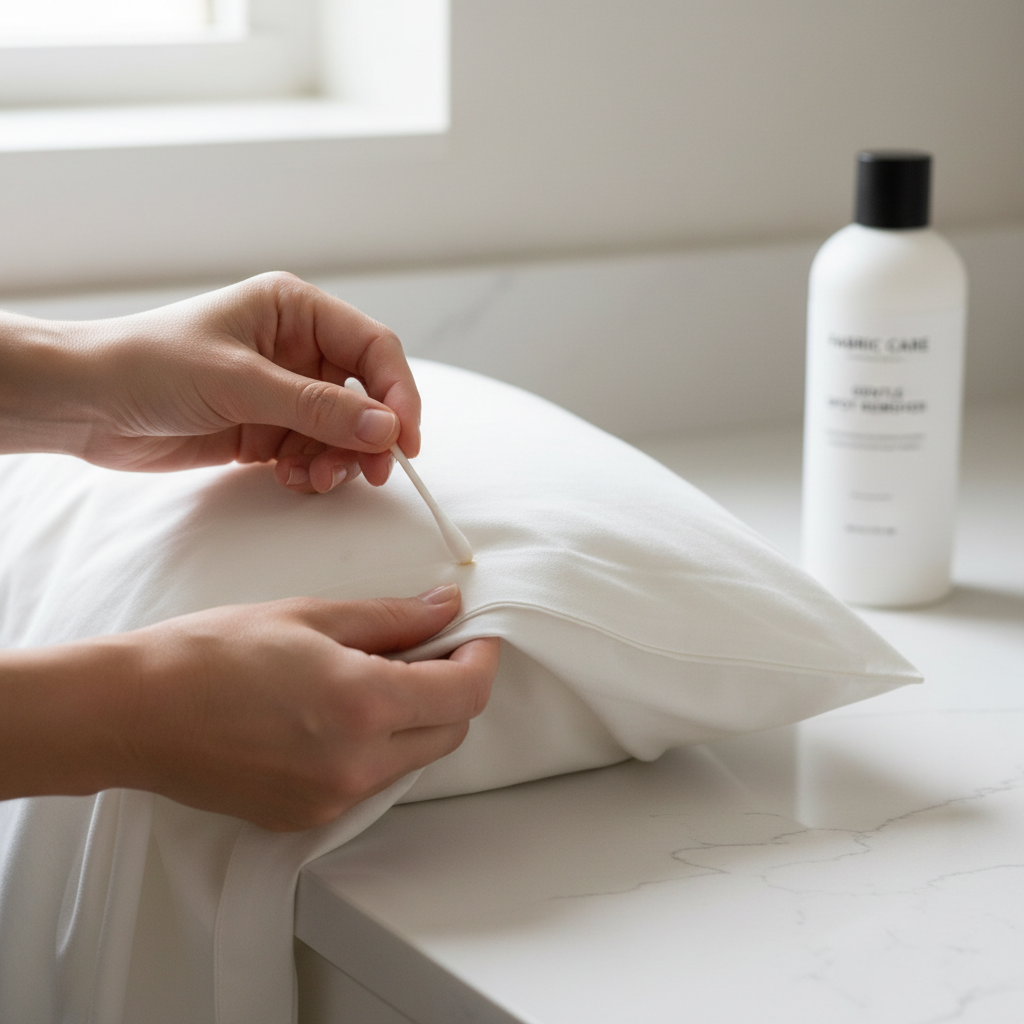
What to do immediately (the 5-minute save)
If the lipstick is fresh, do not rub, rubbing pushes pigment deeper and spreads the wax.
- Lift excess: use a dull edge like a spoon or old gift card to gently scrape surface lipstick off.
- Blot, don’t grind: press a clean white paper towel or cloth onto the stain to pick up transfer.
- Rinse from the back: run cool water through the backside so the stain moves out, not further in.
- Keep heat away: no hot water, no dryer, no iron until the stain is gone.
This quick sequence is the difference between “one wash and done” and a stain that keeps ghosting back.
Best removal methods, choose what you have
You do not need every product, you need the right kind of product for waxy oils plus pigment, below are reliable options, listed from gentle to more aggressive.
Method A: Dish soap (best first try for most cotton)
Dish soap is designed to cut grease, which is exactly what holds lipstick together.
- Wet the stain with cool water.
- Work a few drops of dish soap into the spot with your fingers.
- Let it sit 10–15 minutes, then rinse thoroughly.
- Repeat once if you still see color.
Method B: Liquid laundry detergent or enzyme stain remover
If dish soap lifts the oily feel but leaves color behind, switch to a detergent pre-treat and give it time.
- Apply liquid detergent directly to the stain.
- Gently rub fabric against itself for 10–15 seconds.
- Wait 20–30 minutes before washing.
Method C: Rubbing alcohol (useful for long-wear pigment, use carefully)
For stubborn lipstick dyes, a small amount of isopropyl alcohol can help dissolve color, but it can affect some dyes and finishes, so spot test first.
- Place a towel under the stain.
- Dab alcohol with a cotton pad, blotting as color transfers.
- Rinse well, then follow with dish soap or detergent.
Method D: Oxygen bleach soak (for lingering tint on whites and light colors)
Oxygen bleach is often safer than chlorine bleach for many fabrics, but labels still matter, especially for satin blends.
- Dissolve oxygen bleach in cool-to-warm water per product directions.
- Soak 1–6 hours depending on stain age.
- Wash afterward, then air-dry to check results.
According to the Centers for Disease Control and Prevention (CDC), product labels and safe handling directions should be followed when using household chemicals, so treat any stain remover like a “read-first” product, especially around kids and pets.
A simple decision table (pick the safest effective route)
If you are stuck choosing a method, this quick chart usually gets you moving without overthinking.
| Situation | Start with | If stain remains |
|---|---|---|
| Fresh creamy lipstick on cotton | Dish soap pre-treat | Detergent pre-treat, then wash cool |
| Dried lipstick on cotton | Dish soap + 15 min dwell time | Rubbing alcohol dab, then detergent |
| Long-wear/liquid matte on light fabric | Detergent pre-treat | Oxygen bleach soak (label-permitting) |
| Satin/silk pillowcase | Small amount of gentle detergent, blot only | Consider professional cleaning advice |
| Washed and dried already | Detergent pre-treat + oxygen soak | Repeat cycle, avoid dryer until clear |
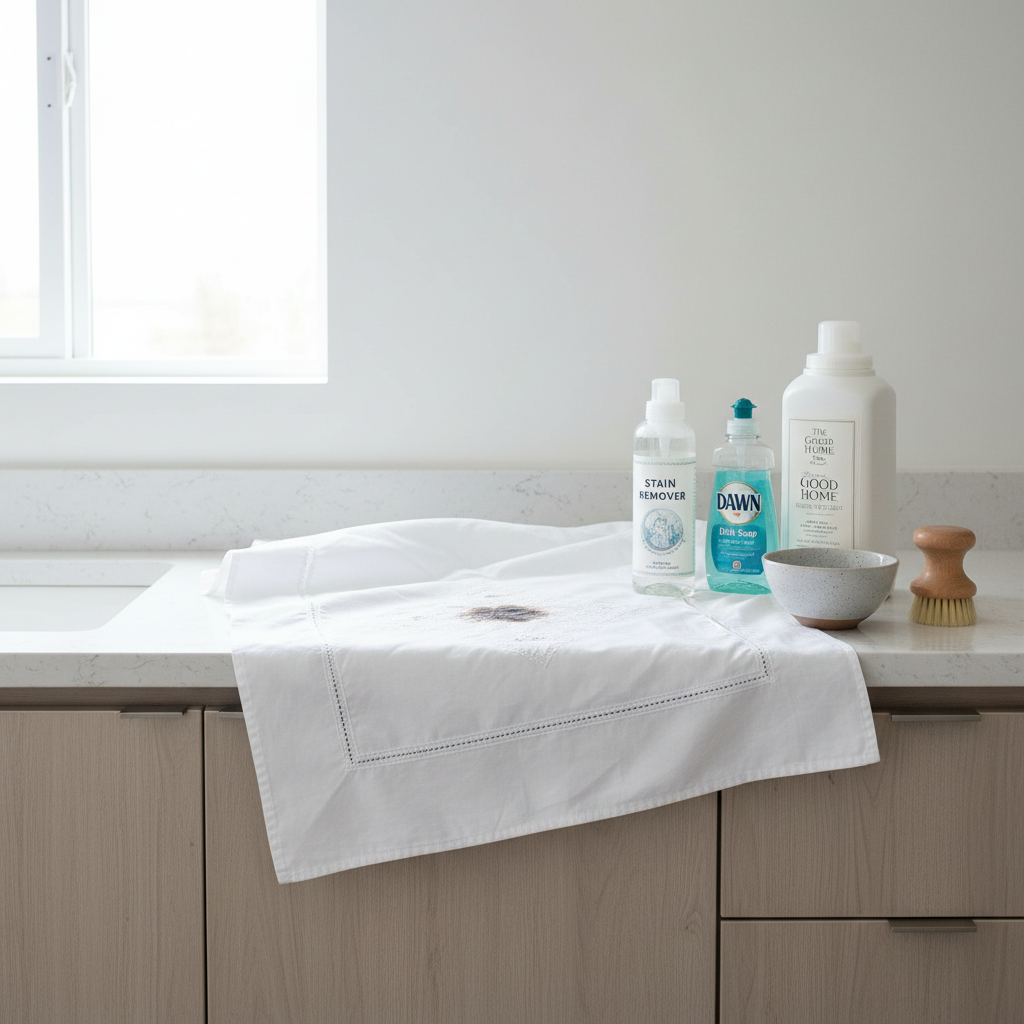
Washing and drying: where many people accidentally set the stain
Even after you pre-treat correctly, the wash cycle can undo your work if water runs hot or the dryer bakes in leftover pigment.
- Water temp: cool to warm is usually safer for lipstick, hot water can set dyes.
- Cycle: normal is fine for cotton, gentle for satin or silk blends.
- Check before drying: air-dry first or inspect while damp under good light.
- If you still see a shadow: repeat pre-treat and rewash, do not dry yet.
If your washer has an “extra rinse,” it helps remove leftover soap and loosened oils so they do not redeposit.
Common mistakes that waste time (and can damage fabric)
Most failed attempts are not about the product, they are about the sequence or the amount of friction.
- Rubbing aggressively: can fuzz cotton and make stains look worse while pushing pigment deeper.
- Starting with bleach too soon: some lipstick colors shift or spread, and delicate fabrics may weaken.
- Using hot water immediately: feels logical, but for many cosmetic stains it is a trap.
- Mixing chemicals: never combine cleaners unless the label explicitly says it is safe.
- Skipping the spot test: especially risky on dyed satin, bamboo, silk, or pillowcases with special finishes.
When it makes sense to get professional help
If the pillowcase is silk, vintage, or has a “dry clean only” label, the safest move is often to consult a professional cleaner, especially if you already tried alcohol or bleach and the color shifted.
If anyone in your home has respiratory sensitivities, using stronger solvents might cause irritation, in those cases it can be smarter to pick mild detergents, ventilate well, and if you are unsure, ask a cleaning professional what is appropriate for the fabric.
Key takeaways and a realistic next step
If you remember one rule for how to remove lipstick stains from pillowcases, keep heat out of the process until the stain disappears, that alone prevents most “permanent” marks.
Tonight’s practical move, scrape and blot, pre-treat with dish soap or detergent, wash cool, then air-dry and check under bright light, if there is a faint tint, repeat once instead of escalating to harsh chemicals right away.
FAQ
How do I remove lipstick stains from pillowcases after they have been washed and dried?
You still have a chance, but plan on a longer pre-treat, use liquid detergent on the spot, let it sit, then try an oxygen bleach soak if the care label allows it, avoid the dryer until it clears.
Will rubbing alcohol ruin a pillowcase?
On many white cotton pillowcases it is usually fine in small amounts, but on dyed fabrics and satin finishes it can cause fading or rings, so a spot test matters more than people think.
Does shaving cream remove lipstick stains from fabric?
Some foaming shaving creams contain surfactants that can lift oily stains, but formulas vary, so it can be hit-or-miss compared with dish soap, if you try it, treat it like dish soap and rinse thoroughly.
What is the safest way to treat lipstick on silk or satin pillowcases?
Blot gently, use a tiny amount of mild detergent diluted in cool water, and avoid hard scrubbing, if the stain spreads or the fabric shows water marks, professional guidance may be the safer call.
Can I use bleach on a white pillowcase for lipstick?
Sometimes, but it is rarely the first choice, oxygen bleach is often a safer step for lingering tint, and chlorine bleach can weaken fabric or interact unpredictably with dyes, always follow the care label.
Why does the stain look worse after I wet it?
Water can temporarily spread oils and pigment, especially if you rub, focus on blotting and using a degreasing pre-treat, then rinse from the back to push stain out.
How do I prevent lipstick stains on pillowcases in the first place?
If you wear lipstick to bed by accident, keeping micellar water or a gentle makeup remover by the nightstand helps, and rotating darker pillowcases for heavy makeup days can reduce the stress, even if it feels unglamorous.
If you are dealing with frequent makeup stains and want a lower-effort routine, it can help to keep a small “stain kit” near your laundry area, dish soap, a soft cloth, and a gentle stain remover, so you can treat pillowcases right away instead of discovering the stain after it has set.