
The best slim rolling cart for bathroom storage is the one that actually fits your gap, rolls without wobbling, and keeps daily essentials reachable without turning your bathroom into a clutter zone.
If you live in an apartment, share a bathroom, or just have a tight vanity-to-toilet walkway, a narrow rolling cart can feel like a cheat code. But plenty of “slim” carts are only slim on the listing photos, or they tip the moment you pull out a bottle.
This guide focuses on what matters in real bathrooms: measuring correctly, choosing stable wheel and frame designs, and matching materials to moisture. I’ll also point out the mistakes that waste money, and give a quick checklist so you can decide fast.
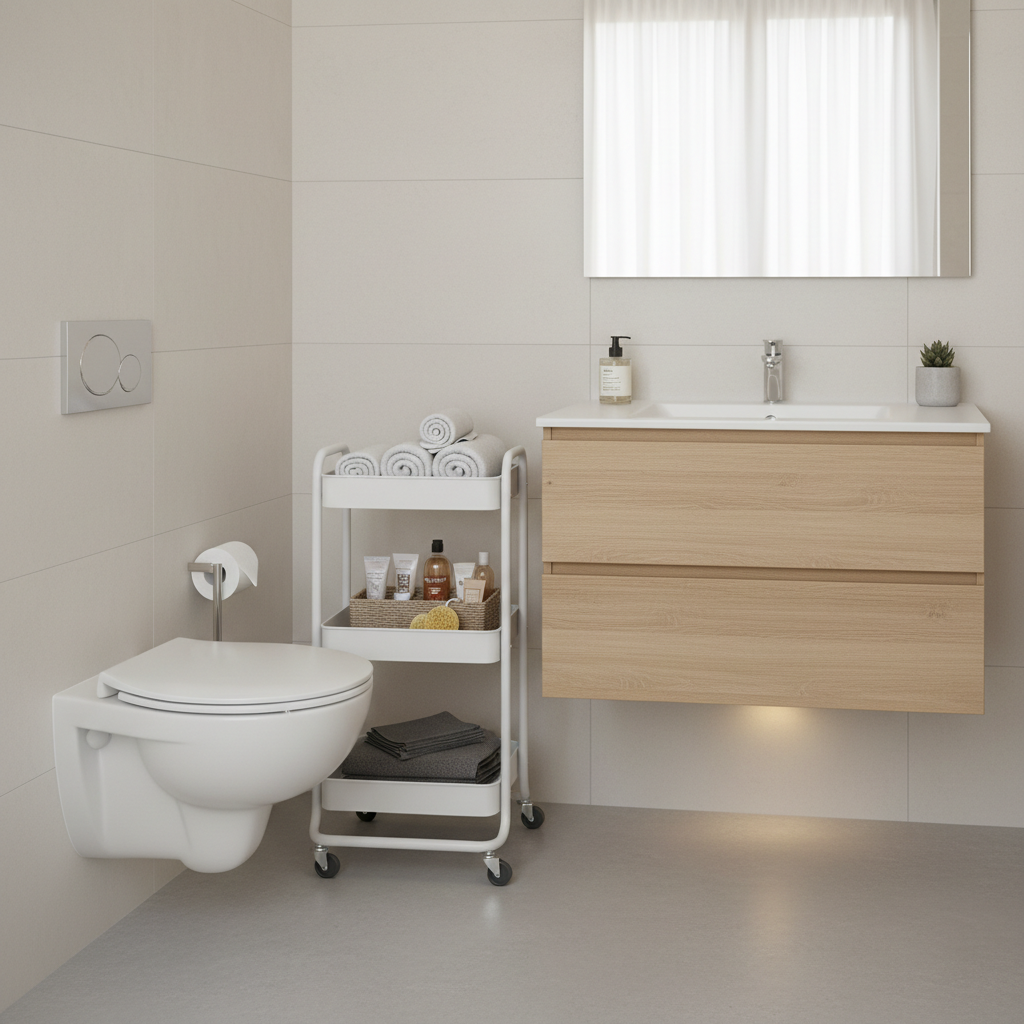
What makes a slim rolling cart work in narrow bathrooms
In tight spaces, small design choices change everything. A cart can be “narrow” and still be annoying if the wheels catch, the shelves sag, or the handle hits your towel bar.
- True width: Many carts are listed by shelf width, not overall width, you want the outside edge-to-edge measurement.
- Stable footprint: Narrow carts need a base that resists tipping, especially when the top shelf holds heavier items.
- Wheel quality: Smooth casters matter on tile, and wheel locks help when you’re grabbing items with one hand.
- Moisture-friendly materials: Bathrooms are humid, coatings and rust resistance matter more than in a kitchen.
- Usable shelf height: Tall bottles, hair tools, and refill packs need clearance, not just “three tiers.”
According to the U.S. Consumer Product Safety Commission (CPSC), tip-overs are a common household safety concern, so if kids use the bathroom, stability and placement become more than a convenience issue.
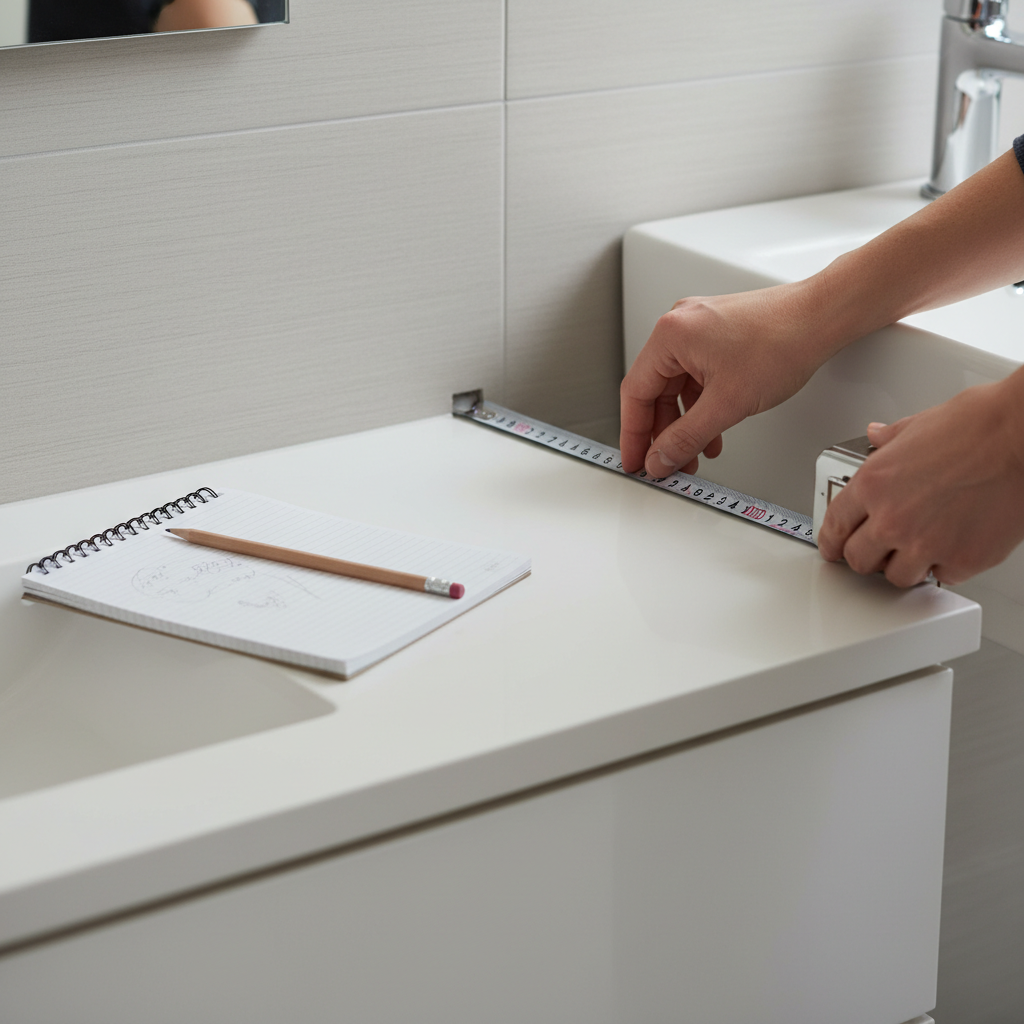
Measure first: the narrow-space checklist (takes 3 minutes)
Most wrong purchases happen because people measure the gap once, then forget hinges, baseboards, and the fact that carts need finger room to pull out.
- Gap width: Measure the narrowest point, then subtract about 0.5–1 inch for clearance.
- Depth: Check how far the cart can extend without blocking drawers, cabinet doors, or your knees at the sink.
- Height: Look for towel bars, counter overhangs, and outlets that might interfere.
- Floor obstacles: Baseboards, toilet bolts, uneven grout lines, bath mats, and doorway thresholds.
- Reach test: Stand where you’ll use it, can you access the top shelf without twisting awkwardly?
If your “narrow space” is next to the toilet, also check whether the cart will sit in the splash zone. In that case, washable bins and wipeable surfaces matter more than cute baskets.
Quick comparison table: pick the right cart type for your bathroom
Not every slim cart is meant for the same job. Use the table to match the cart style to your space and what you store day to day.
| Cart type | Best for | Watch-outs | Nice-to-have features |
|---|---|---|---|
| 3-tier open basket cart | Toiletries, skincare, extra rolls | Visual clutter, small items fall out | Side rails, removable bins, wheel locks |
| Drawer-style slim cart | Cosmetics, hair accessories, meds | Cheap plastic drawers stick or warp | Smooth slides, vented drawers, stop tabs |
| Metal utility cart | Heavier bottles, cleaning supplies | Can rust if coating is thin | Powder coating, deep shelves, handle bar |
| Over-toilet rolling tower (very narrow) | Ultra-tight gaps, vertical storage | More top-heavy, needs careful loading | Anti-tip strap option, wider base casters |
How to choose the best slim rolling cart for bathroom storage (what to prioritize)
If you only remember a few things, remember these. They reduce the chances you end up with a cart that feels “fine” for a week and then becomes annoying.
- Width range that works in most narrow spaces: Many bathrooms do well with carts around 5–8 inches wide, but your measurement decides, not the trend.
- Wheel design: Look for casters that swivel smoothly and don’t feel like hard plastic pegs. If you expect kids to tug on it, locks help.
- Center of gravity: Deeper bottom shelf plus slightly heavier base usually feels more stable than a very tall, very light frame.
- Material choice:
- Powder-coated metal often balances durability and cleaning.
- Plastic can be fine for light items, but cheap plastic may flex under weight.
- Bamboo/wood looks warm, but in humid bathrooms it may need more care and airflow.
- Usability details: A real handle, rounded corners, and shelf lips save you from daily micro-annoyances.
One more practical point, if your cart sits next to the shower, avoid unfinished metal and consider a cart with fewer crevices so you can wipe it in seconds.
Real-world setups: where slim carts actually earn their keep
People often buy a cart thinking “extra storage,” but the win is reducing friction in a tight routine. Here are setups that usually make sense.
Between toilet and vanity
- Top shelf: tissues, hand cream, daily skincare
- Middle: extra soap, wipes, spare toothbrush heads in a bin
- Bottom: toilet paper packs or cleaning spray
Tip: Put heavier items low, it feels less tippy and more “built-in.”
Next to the shower
- Use bins to separate “in-shower” and “after-shower” items.
- Choose rust-resistant shelves and wipeable containers.
Laundry/bath combo bathroom
- Dedicate one shelf to stain spray, lint roller, and detergent pods in a closed container.
- Keep a small “guest” bin to clear the counter fast.
Step-by-step: setting up your cart so it stays neat (not a rolling junk pile)
A slim cart is small, which means it shows mess quickly. The trick is to give each shelf a job and stop mixing categories.
- Step 1: Decide the cart’s purpose, daily essentials, backstock, or cleaning supplies. Mixing all three usually fails.
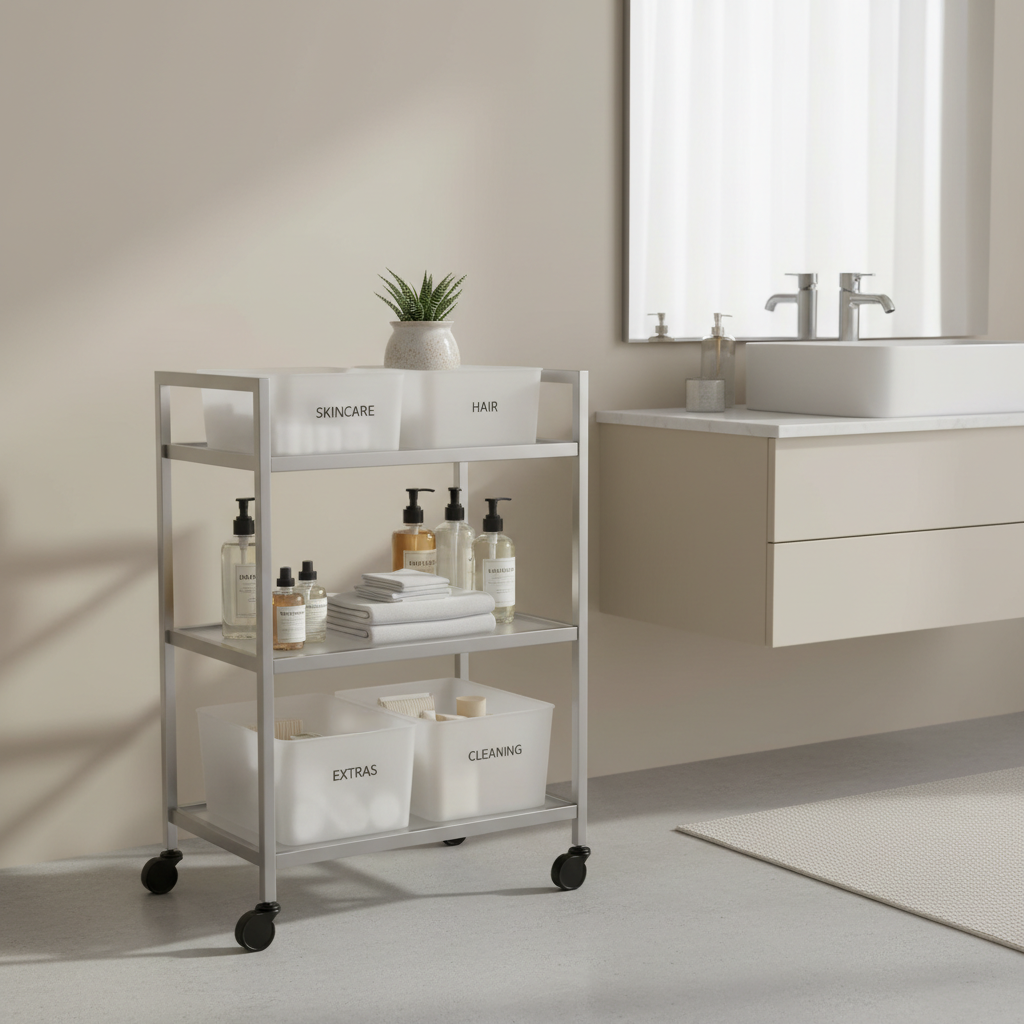
- Step 2: Add containers, two or three small bins beat one big basket because you can pull a category out like a drawer.
- Step 3: Create a “one-in, one-out” rule, if you add a new hair product, an old one gets used up or moved out.
- Step 4: Anchor the routine, once a week, take 2 minutes to wipe shelves and toss empties.
If you’re using the cart for family storage, labels help, but only if they match how people think. “Hair,” “Dental,” “First aid” works better than overly specific labels that nobody follows.
Mistakes to avoid (these cause wobble, rust, and regret)
- Buying by “tier count”: Three tiers can be useless if shelf spacing doesn’t fit your bottles.
- Ignoring wheel locks: In narrow bathrooms, you bump the cart more than you think, locks reduce constant re-centering.
- Overloading the top shelf: It’s the easiest way to make a slim cart feel unstable.
- Placing it where doors swing: Even if it fits, constant scraping turns daily use into a chore.
- Assuming all metal is rust-proof: Look for coated finishes, and dry it if it’s near the shower.
Key takeaways: measure the tightest point, prioritize stable wheels and a heavier base, keep heavy items low, and pick materials that tolerate humidity.
When to consider a different solution (or ask for help)
Sometimes a rolling cart is a workaround, not a fix. If your bathroom feels unsafe to move around in, or you’re storing chemicals and medications where kids can access them, it may be smarter to rethink storage placement.
- If the cart blocks your path or creates a trip hazard, a wall-mounted shelf or over-the-door organizer can be safer.
- If you have mobility concerns, consider accessibility needs and ask a qualified professional for layout advice.
- If moisture is extreme and you see repeated rust or mold, improving ventilation might matter more than switching carts, a contractor or HVAC professional can advise.
Conclusion: the “best” slim cart is the one that disappears into your routine
A narrow bathroom doesn’t need more stuff, it needs better placement. Choose a cart that fits with clearance, rolls smoothly, and stays stable when life gets rushed.
If you want one action to take today, measure your gap and write down three things you want to store, then use that list to shop. If you want a second action, plan your shelf categories before the box even arrives, it sounds picky, but it saves you from the rolling-clutter trap.
FAQ
What width is considered “slim” for a bathroom rolling cart?
Many shoppers mean something in the 5–8 inch range, but listings vary. Measure the tightest point and leave a little clearance so the cart can roll without scraping baseboards.
Is a slim rolling cart safe next to a toilet?
It can be, as long as it doesn’t block movement and stays stable. Keep heavier items on the bottom shelf, and consider closed bins for hygiene and easier wipe-downs.
Which material holds up best in humid bathrooms?
Powder-coated metal often performs well for everyday use, while plastic can work for lighter loads. If you prefer bamboo or wood, good ventilation and quick drying habits matter more.
How do I stop a narrow cart from tipping?
Load heavy items low, avoid stacking tall bottles on the top shelf, and pick a cart with a wider base or better casters. Wheel locks also reduce sudden shifts when you grab items.
Can I use a slim rolling cart for cleaning supplies?
Usually yes, but be cautious with chemical storage, especially around kids and pets. Use a closed, labeled container and place it low, and follow product label guidance.
Why do some rolling carts feel hard to push on tile?
Cheap casters can catch on grout lines or feel sticky under load. Larger, smoother wheels and a solid frame typically roll more predictably.
What’s a good alternative if a rolling cart won’t fit?
Over-the-door organizers, adhesive wall shelves (used within weight limits), or under-sink pull-out trays often solve the same problem with less floor footprint.
If you’re trying to find the best slim rolling cart for bathroom storage but you’re stuck between two sizes or layouts, it helps to share your gap measurements and what you plan to store, that usually makes the “right” choice obvious without overbuying.