
diy macrame plant hanger for indoor vines is one of the simplest ways to get trailing plants off shelves, away from curious pets, and into better light without buying another stand.
If your pothos, heartleaf philodendron, or string-of-things keeps snagging on furniture, a hanger gives those vines a clean “waterfall” path while freeing up floor space. The trick is building something that actually holds your pot size, doesn’t tilt, and won’t slip when you water.
This guide keeps it practical: what cord to buy, how long to cut it, which knots matter, and how to hang it safely on common U.S. ceilings and walls. No perfection required, just a solid result.
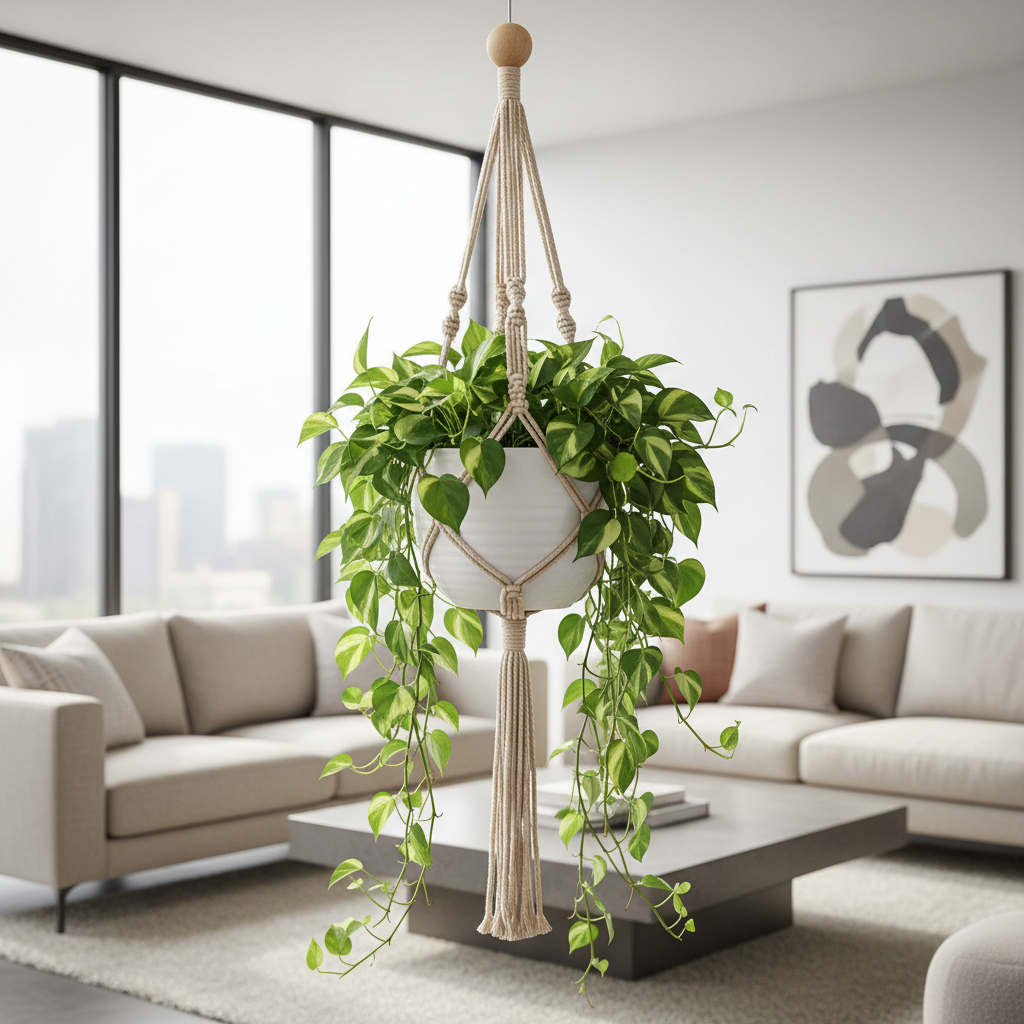
What makes a good hanger for indoor vine plants
Vine plants behave differently than upright houseplants, they pull to one side as they grow, and that can twist a hanger over time. A “good” hanger isn’t fancy, it’s stable.
- Balanced support: 4 or more cords around the pot reduces tipping as vines get heavier on one side.
- Pot-friendly cradle: a base knot cluster or “basket” that cups the pot instead of squeezing it.
- Adjustable hang height: so you can chase light in winter or keep vines out of a walkway.
- Hardware you can trust: pretty hooks are common, properly rated hooks are better.
According to the U.S. Consumer Product Safety Commission (CPSC), anchoring and using appropriate hardware helps reduce tip-over and falling-object hazards in the home. That’s not macrame-specific, but it’s the right mindset when you put weight overhead.
Materials and sizing, choose cord like you mean it
You can make a hanger with almost any cord, but for indoor vines, cotton tends to look softer and sits flatter against a wall. If you want crisp knots and less stretch, braided cord usually behaves more predictably than 3-strand twist.
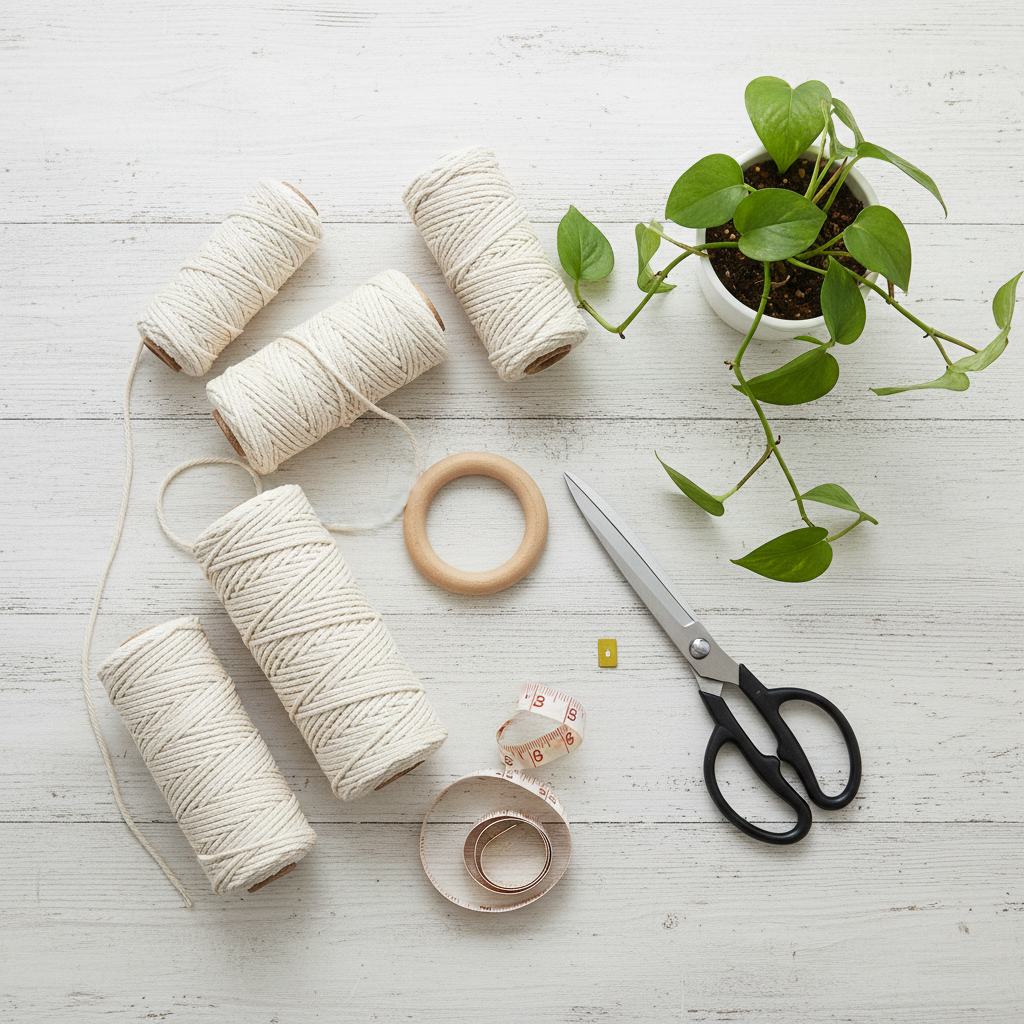
Shopping list
- Macrame cord: 3–5 mm cotton is a comfortable range for beginners
- Ring: 2–3 inch wooden or metal ring
- Scissors and measuring tape
- Optional: wood beads, fabric tape, small clip or S-hook for adjustability
How much cord do you need?
People get stuck here. The easiest rule: cut longer than you think, because trimming is painless and coming up short is not.
| Pot size (typical) | Suggested cord count | Cut length per cord | Notes |
|---|---|---|---|
| 4–6 inch nursery pot | 4 cords | 8–10 ft each | Great for pothos starters, lighter loads |
| 8–10 inch pot | 4–6 cords | 12–14 ft each | Better balance for uneven vine growth |
| 12 inch pot (heavier) | 6–8 cords | 14–18 ft each | Consider a stronger hook and lighter pot material |
If you’re using thick cord, bump lengths up a little because bulky knots eat more material. If you want a long tassel, add extra length now, not later.
Quick self-check, pick the right pattern before you start
Before you cut anything, decide what you actually need. Most frustration comes from choosing a design that doesn’t match the pot or the space.
- Your pot has a lip that flares out: use a deeper cradle with an extra row of knots
- Your vines lean toward the window: choose 6 cords or add a second “support tier”
- You water in the sink: keep the hanger removable, ring + carabiner makes life easier
- You rent: plan for a wall bracket into a stud, or a freestanding rack, ceiling holes can be a fight later
- You use cache pots (decor pot + plastic liner): size the cradle to the outer pot, not the liner
If you want one safe all-around approach for most indoor vines, a 4-cord design with two knot tiers holds shape well and still looks clean.
Step-by-step: a simple 4-cord macrame hanger that stays balanced
This is the version I recommend when someone wants a diy macrame plant hanger for indoor vines that doesn’t twist every time the plant puts out new growth.
1) Cut and mount your cords
- Cut 4 equal cords using the table above.
- Fold each cord in half, attach to the ring using a lark’s head knot.
- You now have 8 working strands hanging down.
Hang the ring on a temporary hook, a closet rod, or a doorknob so you can keep even tension.
2) Make the top “neck” (clean and strong)
- Measure 6–10 inches down from the ring.
- Gather all strands and tie a wrap knot (also called a gathering knot) to create a neat collar.
Keep this section slightly shorter if you want the plant higher, longer if you want a more dramatic drop.
3) Create the first support tier (the part that prevents tilt)
- Divide strands into 4 pairs.
- Tie a square knot on each pair, all at the same distance from the collar (often 6–8 inches).
Don’t over-tighten. You want firm knots, but crushing the cord makes the net “pucker” and pull the pot sideways later.
4) Create the second support tier (your pot’s “basket”)
- Take one strand from a pair and one strand from the neighboring pair to form new pairs.
- Tie another round of square knots 6–8 inches below the first tier.
This staggered tier is what gives the cradle its shape. Many hangers skip it, and those are the ones that tend to slide or lean.
5) Close the base
- Gather all strands under the second tier.
- Tie one large overhand knot or a second wrap knot to “cup” the pot bottom.
- Trim ends evenly, leave a tassel, or add beads.
Test with the empty pot first, then place the plant. If it tilts, you can usually fix it by loosening one or two knots and re-tightening with the pot in place.
Hanging safely in a real U.S. home (apartments included)
A macrame hanger is only as safe as what holds it. For indoor vines, watering adds weight, and wet soil can surprise you.
- Ceiling joist or wall stud: most reliable. Use a properly rated screw hook into solid wood.
- Drywall toggle: can work for lighter setups, but quality varies and installation matters.
- Command-style adhesive hooks: tempting, but many are not ideal for swinging loads or damp areas, read the label carefully.
- Plant stand or rack: underrated option if you rent or you’re not sure about overhead support.
According to the American Wood Council, fasteners perform best when installed into framing members rather than drywall alone, which is why “find the stud” advice keeps showing up in home projects.
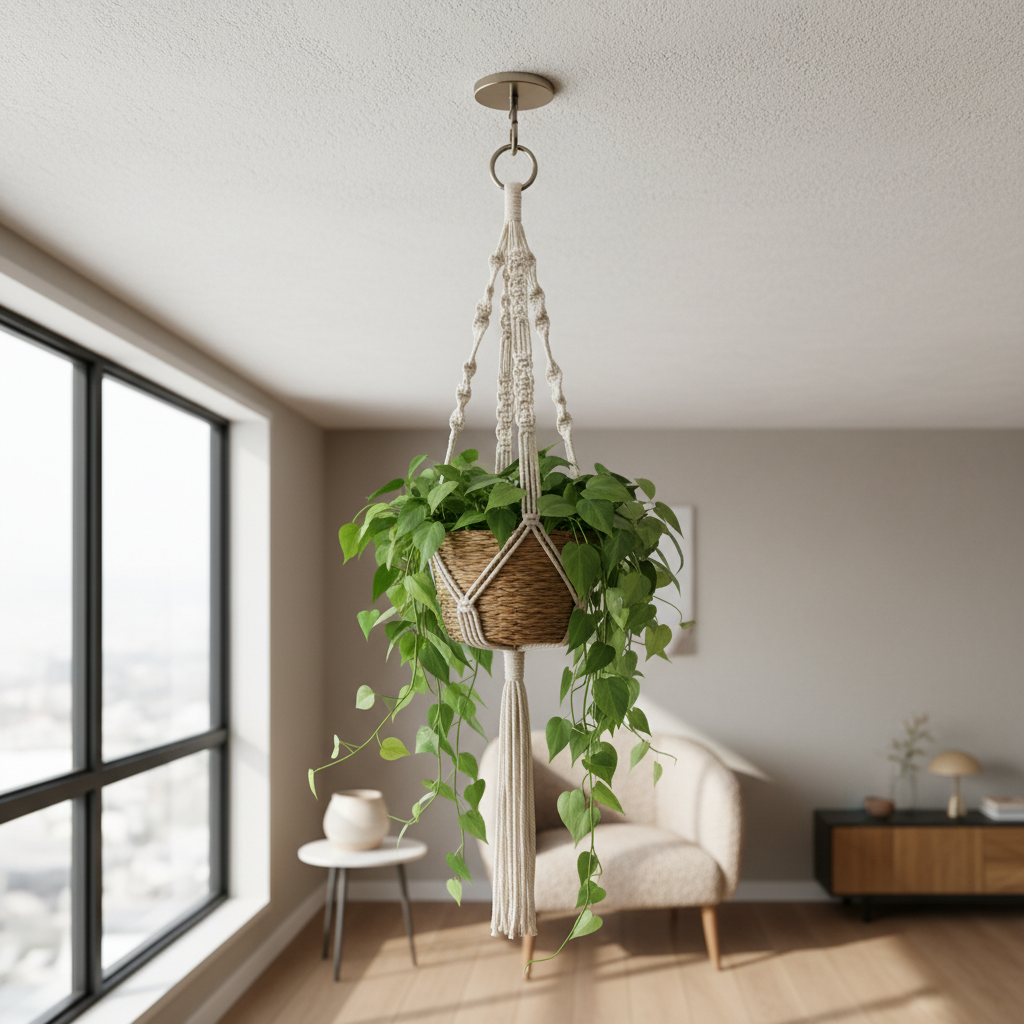
Practical tweaks for vine plants (light, watering, growth direction)
Once the hanger is up, vines will tell you what’s wrong fast: leaning, bare stems, or leaves shrinking usually means the placement needs adjustment more than the knots do.
Make the light work for you
- Rotate the pot every week or two so growth stays even, especially near a bright window.
- Raise or lower the hanger in small increments rather than moving it across the room.
- Train vines gently with small clips on the wall if you want a “frame” effect instead of a curtain.
Watering without a mess
- If you bottom-water or carry to the sink, add a carabiner between ring and hook so you can unclip quickly.
- Use a drip tray only if it stays level, tilted trays create slow leaks that stain floors.
- After watering, let excess water drain fully before rehanging, heavy wet soil can stress the hook.
Common mistakes (and the easy fixes)
- Hanger twists over time: add a second knot tier, or increase to 6 cords for larger pots.
- Pot slides down: your base knot sits too low, move it up so the pot bottom is supported.
- Uneven cord lengths: measure from the ring after hanging, then trim at the end, not mid-project.
- Knots look messy: you may be changing tension each knot, slow down and pull evenly on both strands.
- Cord frays immediately: tape the ends while you work, remove tape before final trim.
If your plant is in a heavy ceramic pot and you’re unsure about your ceiling, that’s not a “push through” moment, it’s a sign to switch to a floor rack or consult a handy person.
Key takeaways (save this before you cut cord)
- Balance beats decoration for indoor vines, use enough cords and at least two support tiers.
- Cut longer cords than you think you need, trimming later keeps the project stress-free.
- Hardware matters, aim for studs/joists when possible and avoid questionable adhesive setups.
- Plan for watering with a clip-off option so maintenance stays easy.
Conclusion
A diy macrame plant hanger for indoor vines works best when it solves the boring problems: tipping, sliding, awkward watering, and unreliable hooks. Get the cord length right, build two solid knot tiers, and hang it from something you trust.
If you want a simple next step, pick your pot size, cut cord using the table, and do a quick “empty pot test hang” before you commit to trimming. That small check saves a lot of re-knotting.
FAQ
- What is the best cord thickness for a macrame hanger for indoor vines?
For most indoor vine plants, 3–5 mm cotton cord is a comfortable choice, it knots cleanly and looks proportional to common 6–10 inch pots. If you use a very heavy pot, thicker cord can help visually, but hardware strength still matters more than cord size. - How long should I cut cord for a 6-inch pothos hanger?
A common starting point is 8–10 feet per cord for a 4-cord hanger, which gives room for two knot tiers and a small tassel. If you want a long drop or chunky knots, go longer and trim after fitting. - Why does my macrame plant hanger lean to one side?
Usually it’s uneven knot spacing or vine weight pulling toward the light. Re-seat the pot, adjust knot tension, then rotate the plant periodically so growth doesn’t keep loading one side. - Can I hang a macrame plant hanger from drywall only?
Sometimes, for lighter plants, using a correctly installed toggle anchor can work, but it depends on the anchor rating, drywall condition, and how much the pot swings when watered. If you’re unsure, anchoring into a stud or using a freestanding rack is a safer bet. - How do I make the hanger easy to take down for watering?
Add a small carabiner or S-hook between the ring and the ceiling hook, then you can unclip the plant and carry it to the sink. This setup also reduces twisting from repeated lifting. - Is macrame safe around pets?
It can be, but pets may chew cords or bat at swinging pots. If your pet shows interest, hang higher, reduce swing, and consider a different placement; for pet safety concerns, it can help to ask a veterinarian what’s appropriate for your animal’s behavior.
If you’re making several hangers or you want a more “no-math” setup, it can help to start from a measured kit or a pre-cut cord bundle, you still get the DIY look, but with fewer sizing surprises and faster results.