
how to decorate a small bedroom with low ceiling usually comes down to one goal: make the room feel taller without fighting the architecture.
If you live in an older home, a basement bedroom, or a top-floor space where the ceiling presses down visually, you already know the frustration, the room can feel darker, tighter, and harder to style without looking cluttered.
The good news is you rarely need a renovation to get a big change, a few decisions around paint sheen, lighting height, furniture proportions, and where your eyes land can shift the whole vibe.
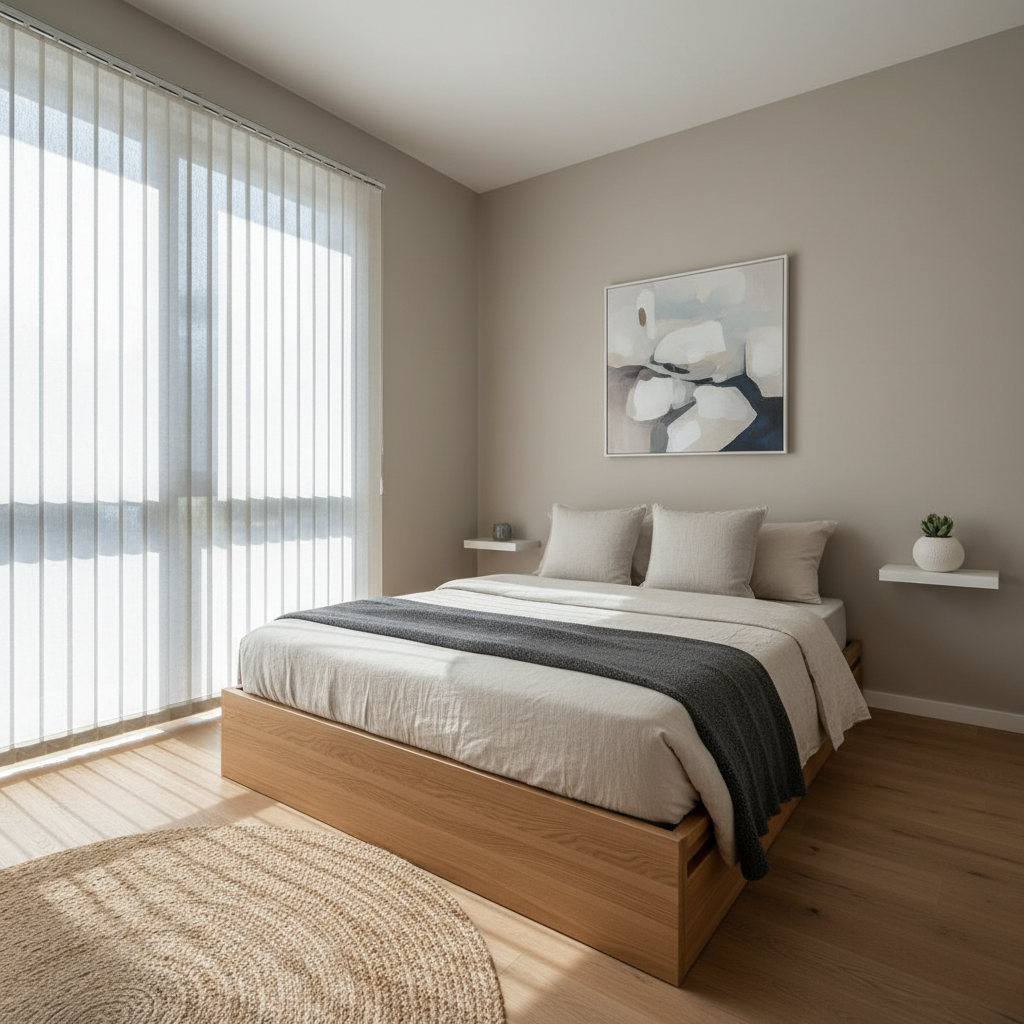
Below is a practical, room-by-room approach, what to prioritize first, what tends to backfire, and a quick checklist so you can decide which fixes matter most in your space.
Why low ceilings feel worse in a small bedroom
A low ceiling is not only a measurement problem, it is a perception problem, and perception is something you can influence.
- Harsh contrast lines make the ceiling edge obvious, especially when crown molding or dark paint frames the top.
- Top-heavy decor pulls attention upward, where there is no visual “breathing room.”
- Bulky furniture eats vertical space, so your brain reads the room as shorter.
- Wrong lighting placement creates shadows at the ceiling plane, which can make it feel lower.
According to the U.S. Department of Energy, using efficient lighting and making better use of daylight can improve both energy use and perceived comfort, and in a low-ceiling bedroom, comfort often starts with how bright and open the room feels.
A quick self-check: what is causing the “low” feeling in your room?
Before buying anything, walk in and answer these in two minutes, this is where most people save money.
- When you enter, do your eyes go to a dark ceiling or a strong color break at the top of the wall?
- Are your curtains mounted just above the window, instead of near the ceiling line?
- Does your bed sit high, with a thick mattress plus tall box spring?
- Is your overhead fixture hanging down, or does the fan visually dominate the center?
- Do you have multiple small items on shelves near head height, creating visual noise?
If you checked two or more, you have an easy path forward, start with paint and lighting, then adjust layout and textiles.
Paint and finish tricks that make ceilings feel higher
Color is the fastest way to change perceived height, but the “right” choice depends on how much daylight your bedroom gets.
Keep the ceiling visually light, but not necessarily pure white
Bright white can work, but in many bedrooms it reads cold or highlights uneven texture. A softer off-white or a ceiling paint tinted just a touch toward your wall color often feels calmer while still lifting the plane above you.
- Low daylight: warm white ceilings, creamy neutrals on walls, avoid gray that turns flat.
- Strong daylight: you can go cooler, but keep the ceiling the lightest surface.
Use the “one-color envelope” when the room feels chopped up
If you have a lot of angles, beams, or odd soffits, painting walls and ceiling the same light color can blur edges and reduce the boxed-in effect. It is a surprisingly grown-up look when you keep trim simple.
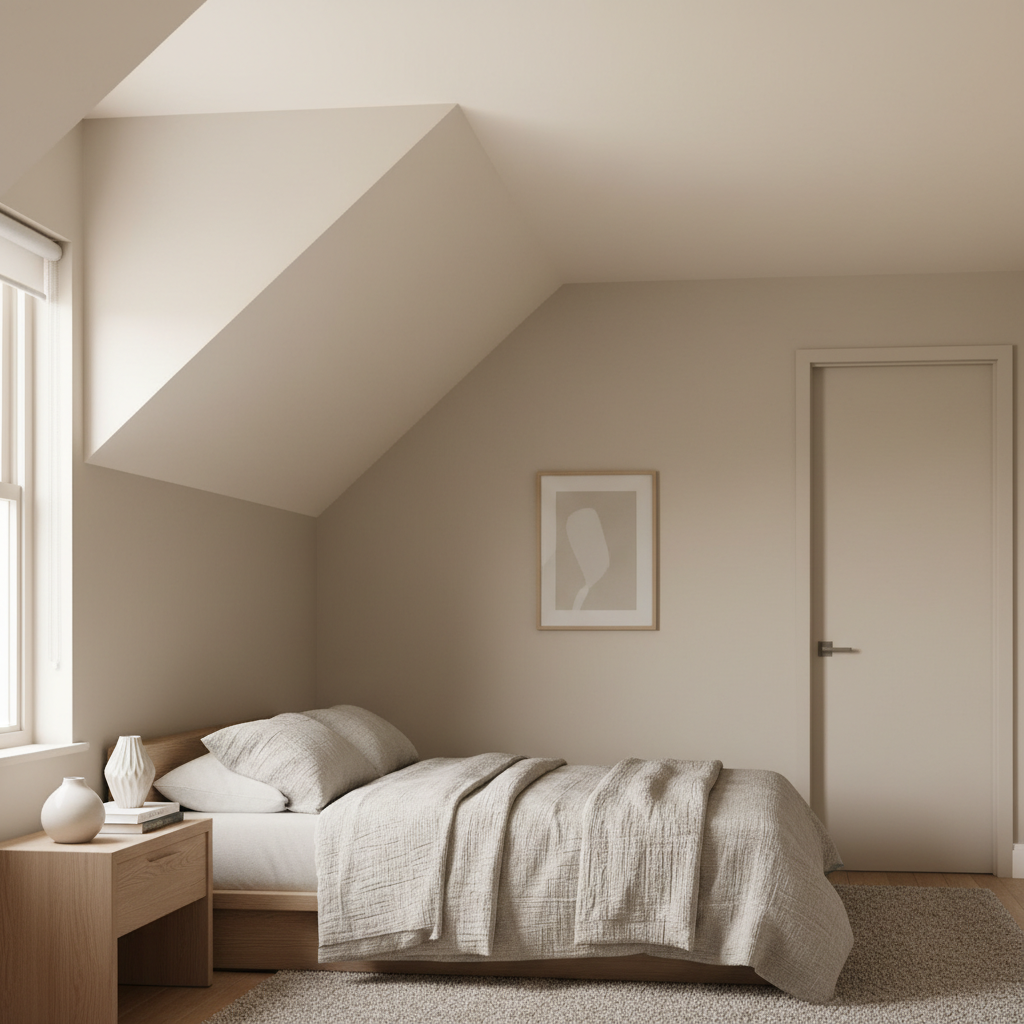
Skip strong horizontal stripes and heavy crown molding
Horizontal bands, dark picture rails, and thick crown molding can look great in taller rooms, but in a low-ceiling space they underline the exact line you want to downplay.
Lighting choices: what helps, what usually hurts
When people search how to decorate a small bedroom with low ceiling, lighting is often the missing piece, because even good decor looks cramped when shadows sit at the ceiling edge.
Prioritize flush, semi-flush, or recessed lighting
- Flush mount: best when you want the cleanest ceiling plane.
- Semi-flush: adds style while staying close to the ceiling, good compromise.
- Recessed: works well, but plan spacing to avoid spotlight “puddles.”
If electrical work is needed, it is usually worth consulting a licensed electrician, especially in older homes where wiring can be inconsistent.
Layer light so the ceiling does not feel like the only light source
A single overhead light can exaggerate the ceiling boundary. Aim for a mix: bedside lamps or wall sconces, plus a floor lamp in a corner that bounces light upward without glare.
- Bedside: plug-in sconces or slim lamps, keep shades compact.
- Corner: a torchiere-style floor lamp can gently lift brightness.
- Closet/entry: a bright, warm bulb prevents dark pockets.
Furniture and layout: go low, go simple, keep walkways clear
The fastest layout win is not a new bed, it is reducing “vertical bulk.” A room can be small and still feel calm if the big pieces stay visually quiet.
Choose low-profile, leggy pieces
- Bed frame: lower platform beds help immediately.
- Nightstands: slim, with legs, or wall-mounted to show more floor.
- Dresser: prefer wider and lower, rather than tall and deep, if storage allows.
Keep the center ceiling visually open
In many low-ceiling bedrooms, a tall armoire in the middle of the longest wall makes the whole space feel compressed. If storage forces a tall piece, push it to the wall you see least when entering, and keep the opposite side lighter.
Window treatments and vertical lines that actually work
This is the part that looks like a small styling tweak, but it often creates the biggest “height” illusion for the least cost.
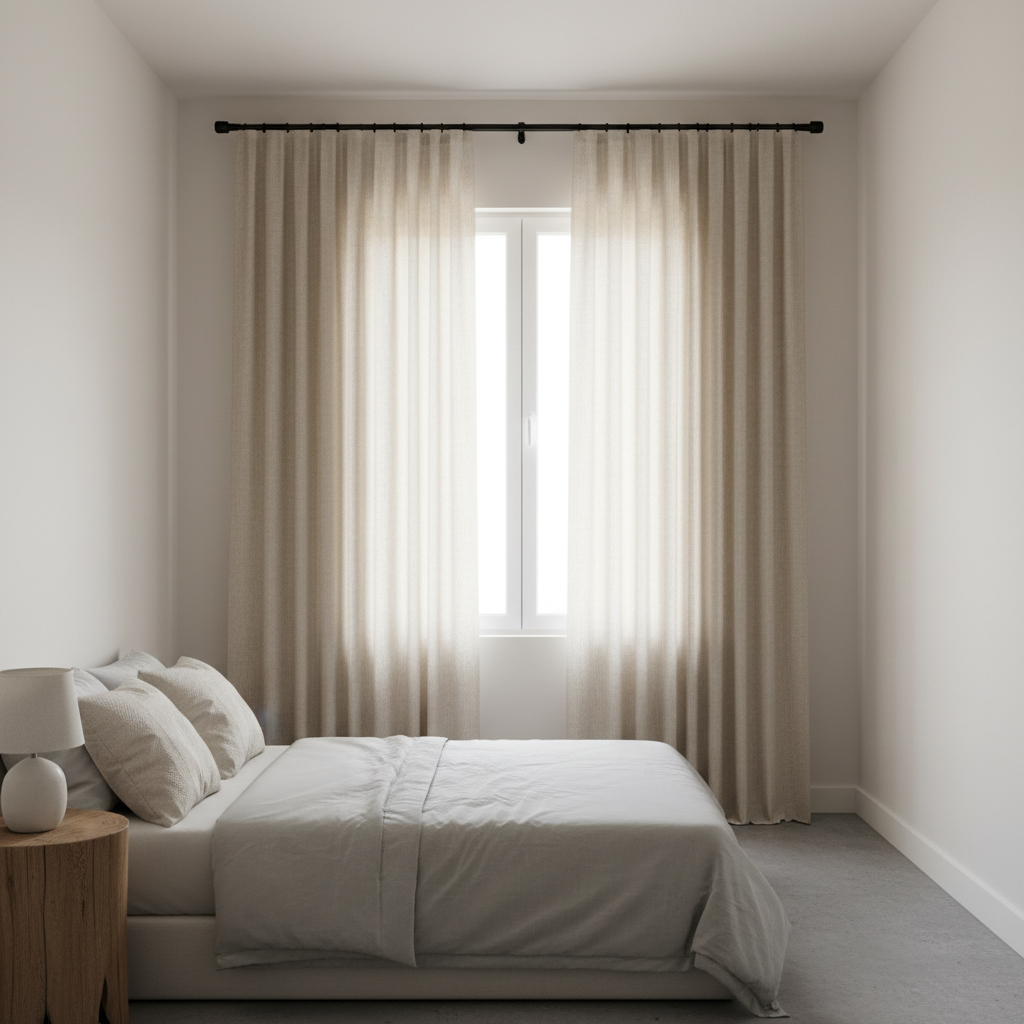
- Mount curtains high, close to the ceiling line when possible, and extend the rod wider than the window so fabric stacks off the glass.
- Pick longer panels that kiss the floor, short curtains can visually shrink wall height.
- Use simple solids or subtle texture, heavy prints can crowd the wall plane.
If privacy is the main issue, consider pairing curtains with a clean roller shade, you get function without adding extra visual weight.
Decor, mirrors, and wall art: where to place things (and where not to)
Decor is where good intentions can make the room feel shorter, especially when everything gets pushed upward in hopes of “using vertical space.”
Use one clear focal point, not five small ones
A single larger art piece above the bed, or one calm gallery cluster, can feel more spacious than many small frames scattered around. Too many tiny objects create visual static, and low ceilings amplify that feeling.
Mirrors: place them to bounce light, not to shout “mirror”
- Across from a window can brighten the room, but watch glare.
- Leaning mirrors can work, yet ensure they are secured to prevent tipping, especially in homes with kids or pets.
- Mirrored closet doors can help, but they are not required if you prefer softer style.
Keep ceiling decor minimal
Hanging plants, dangling mobiles, and lots of ceiling hooks lower the perceived height. If you love greenery, go for taller floor plants with slim profiles or wall planters that sit lower than the ceiling line.
Action plan + a quick reference table
If you want a clean sequence, follow this order, it prevents the classic mistake of buying decor before fixing light and proportions.
- Step 1: Decide your ceiling and wall paint plan, then commit.
- Step 2: Fix overhead lighting, then add two secondary light sources.
- Step 3: Adjust bed height and swap bulky nightstands if needed.
- Step 4: Raise curtain hardware and simplify window layers.
- Step 5: Add one focal art piece, one mirror, then stop and reassess.
What to do based on the most common problem
| What feels “off” | Likely cause | Try this first |
|---|---|---|
| Room feels dark and heavy | Single overhead light, dark upper walls | Add layered lighting, lighten ceiling paint |
| Ceiling line feels too obvious | Strong contrast at trim, thick molding | Soften contrast, simplify trim color |
| Space feels cluttered fast | Too many small items, bulky furniture | Reduce small decor, choose low-profile pieces |
| Windows look short | Rod mounted low, short curtains | Mount rod near ceiling, use floor-length panels |
Conclusion: make it feel taller, not busier
If you are figuring out how to decorate a small bedroom with low ceiling, the most reliable approach is boring in the best way: lighten what sits above eye level, keep furniture low and calm, and let lighting do more of the work than decor.
Pick one upgrade you can finish this weekend, often it is raising curtain rods or swapping the ceiling fixture, then take a fresh look before buying more. Small rooms reward restraint.
Key takeaways
- De-emphasize the ceiling edge with light color and fewer harsh lines.
- Layer your lighting so shadows do not make the ceiling feel lower.
- Go low-profile on bed and storage to gain visual height.
- Hang curtains higher and keep window treatments simple.