
Best stainless steel sink cleaners for shine are the ones that remove mineral haze and greasy film without scratching, and that sounds simple until you’ve tried three bottles and your sink still looks cloudy under kitchen lights.
If you want that “just-installed” look, you usually need two things: a cleaner that matches what’s actually on your sink (hard-water deposits vs. oil vs. rust) and a quick routine that doesn’t quietly ruin the finish over time.
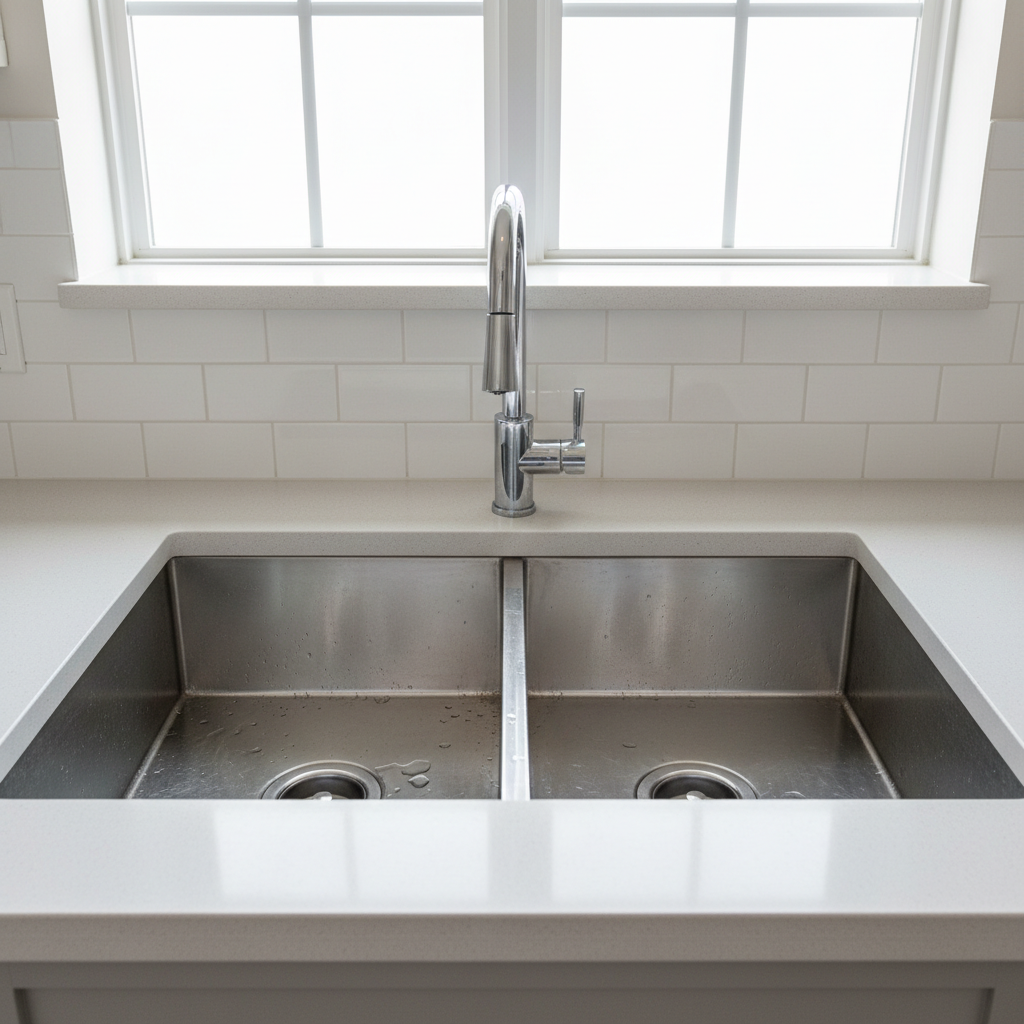
This guide breaks down which cleaner types work best, how to tell what your sink needs in 60 seconds, and the small “finishing” steps that make shine last. I’ll also call out common mistakes, because a lot of stainless steel damage comes from well-meaning cleaning habits.
What actually makes a stainless steel sink look dull
Most “dull sink” complaints come from buildup sitting on top of the steel, not the steel itself. The fix depends on what kind of film you’re dealing with.
- Hard-water minerals: Chalky haze, rings around the drain, spots that come back quickly after drying.
- Grease and soap film: A slightly sticky feel, smears when you wipe, shine looks uneven.
- Oxidation or light rust staining: Orange-brown marks, often near standing water, wet sponges, or cast-iron contact.
- Micro-scratches: A “foggy” look in bright light, often from abrasive powders or the wrong scrubber.
According to the American Cleaning Institute, it’s wise to follow product label directions and avoid mixing cleaners, especially when acids or bleach are involved. That matters here because many “quick fixes” for shine can create fumes or damage surfaces if combined.
A quick self-check: choose the right cleaner type in under a minute
Before you buy anything, do two tiny tests. This saves money and prevents over-cleaning, which is how stainless gets scratched.
Step 1: The “dry wipe” test
- If the sink looks better right after a dry microfiber wipe but dulls again as it air-dries, you’re likely fighting minerals.
- If it smears and looks worse, that’s usually oil/soap film.
Step 2: The “vinegar spot” test (safe for most sinks, but check your manual)
- Put a few drops of white vinegar on one small cloudy area for 60 seconds, then rinse.
- If the spot brightens, mineral scale is a key culprit and a mild acid-based cleaner can help.
If you see pitting, flaking, or deep scratches, cleaners may improve appearance but won’t fully “restore” a factory finish.
Best stainless steel sink cleaners for shine: what to look for (and what to skip)
When people search for the best stainless steel sink cleaners for shine, they often mean “something that makes it glossy fast.” The more useful way to shop is by formula type and finish step.
| Cleaner type | Best for | Shine potential | Watch-outs |
|---|---|---|---|
| pH-neutral dish soap + microfiber | Daily grease, light grime | Medium (needs buffing) | May not remove mineral haze |
| Citric/phosphoric acid descaler | Hard-water spots, cloudy film | High (after rinse + dry) | Don’t leave on too long; rinse well |
| Non-abrasive cream cleanser | Stubborn film, light staining | High | Avoid gritty powders if you want a uniform finish |
| Stainless steel polish (oil-based) | Finishing layer, fingerprint resistance | Very high | Can feel slick; not ideal inside food-prep bowls for some households |
| Baking soda paste (gentle abrasive) | Targeted spots, deodorizing | Medium | Can create micro-scratches if scrubbed aggressively |
What I generally skip for sinks: harsh abrasive powders, steel wool, and chlorine bleach for routine “shine” work. They can make a sink look temporarily brighter, but long-term they often trade shine for fine scratches or discoloration.
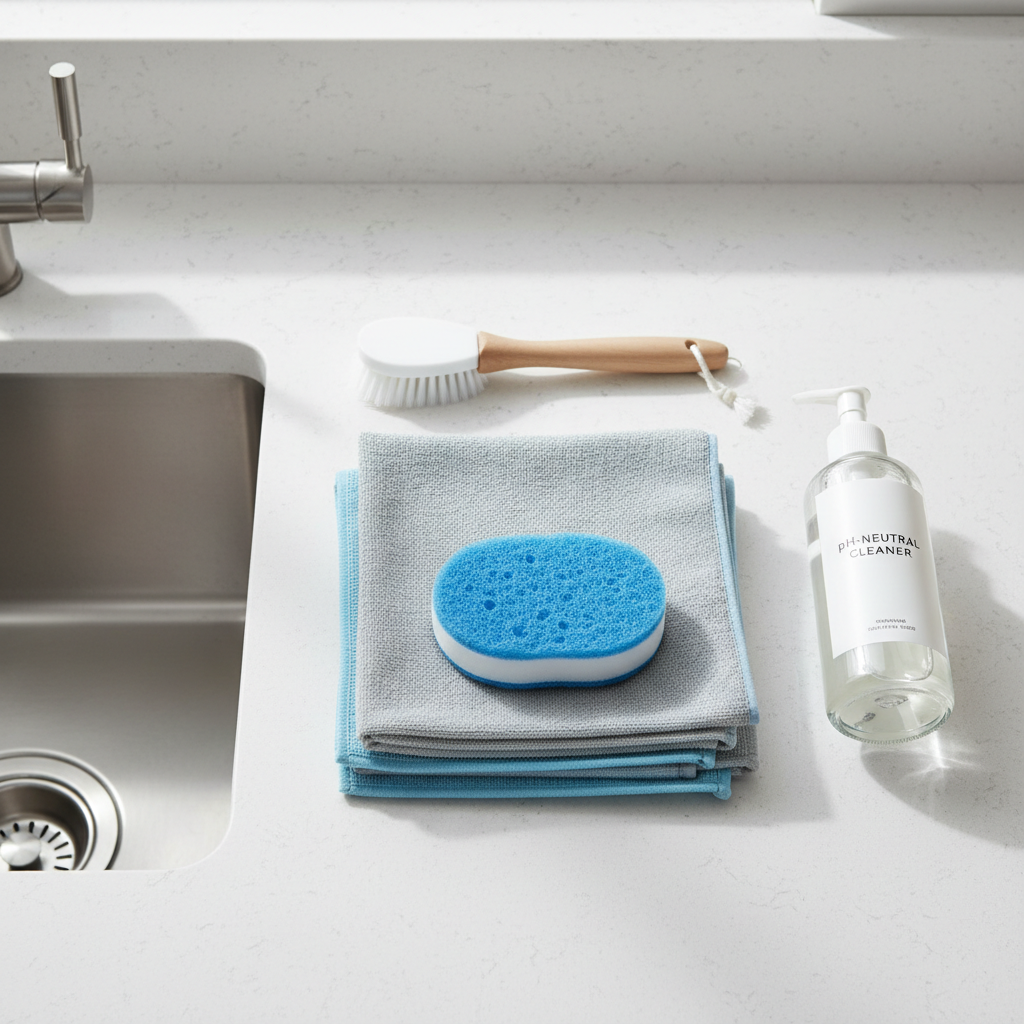
Practical routines that keep shine longer (not just for one day)
The best results usually come from a simple “clean + fully dry + optional protect” rhythm. If you only do the first part, water spots come right back.
Routine A: 3-minute daily reset (for most kitchens)
- Rinse away food and grit so you don’t grind it into the steel.
- Wash with warm water + a few drops of dish soap using a soft sponge.
- Rinse thoroughly.
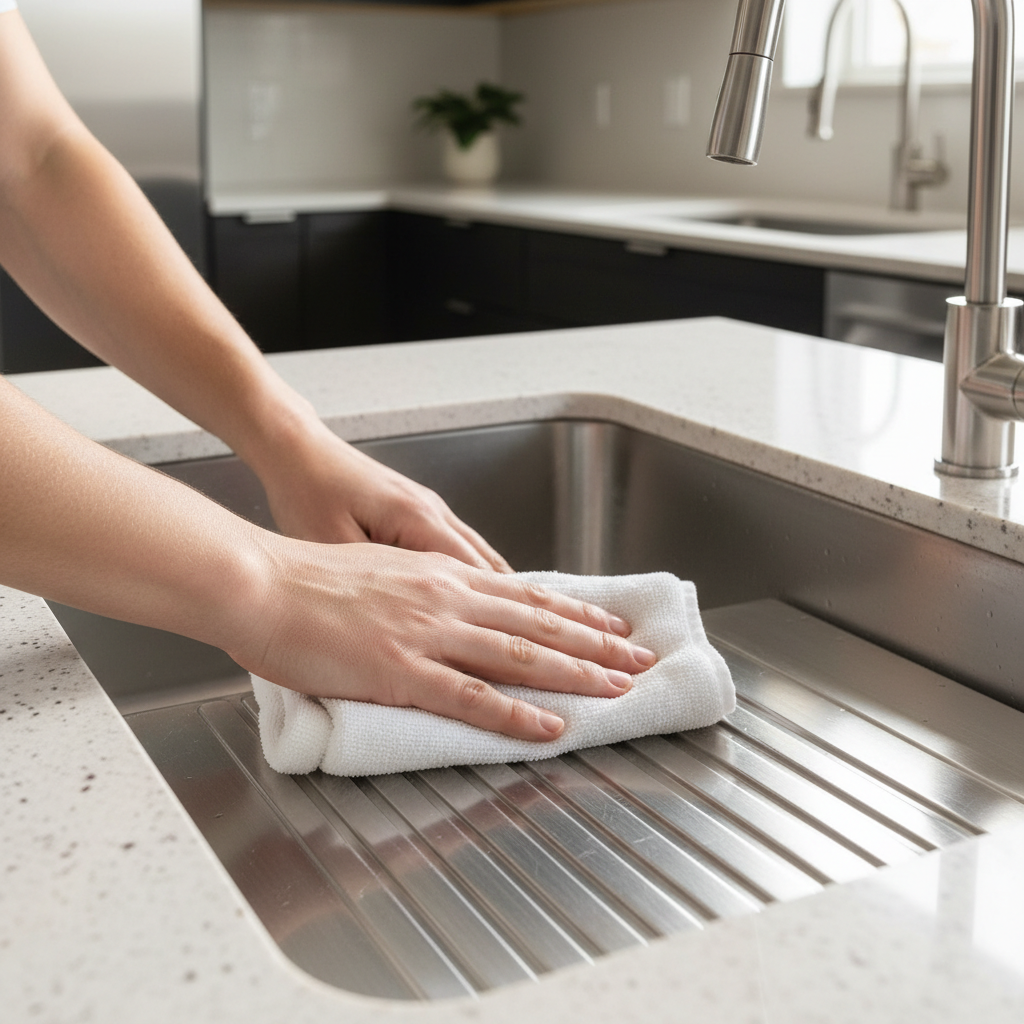
- Dry completely with a microfiber cloth, moving with the grain (the faint lines in the steel).
Routine B: Weekly de-spot and brighten (for hard water)
- After the daily reset, apply a mild descaler or a vinegar-based method to cloudy areas for a short dwell time.
- Rinse until you no longer feel slickness or smell acid.
- Dry, then buff with a clean microfiber cloth.
Routine C: “Showroom shine” finish (when you want it to pop)
- Start with a truly clean, dry sink.
- Add a tiny amount of stainless polish to a cloth, not directly into the basin.
- Buff lightly with the grain, then flip to a dry side and buff again.
If you’re choosing between more scrubbing and more drying, most of the time drying wins. Water evaporating on steel is what leaves the dull-looking minerals behind.
How to remove common problem spots without scratching
This is where people overdo it. The goal is to lift the deposit, not “sand” it away.
Water spots and cloudy haze
- Use a descaler intended for stainless surfaces, or a mild acid approach on a small test area.
- Keep dwell time short, rinse well, and dry right away.
- Repeat once more rather than scrubbing harder.
Rainbow heat tint (less common in sinks, but happens)
- Try a non-abrasive stainless cream cleanser and gentle buffing with the grain.
- If the tint is stubborn, a specialty stainless cleaner may work better than stronger DIY acids.
Rust stains
- Confirm it’s a surface stain, not corrosion. Many times it’s transfer from a cast-iron pan, a steel can, or a wet scrub pad.
- Use a cleaner labeled for rust removal on stainless, follow directions closely, and rinse thoroughly.
According to the U.S. Environmental Protection Agency (EPA), you should always read and follow pesticide and cleaning product labels for safe use and storage. Even when a product is “household,” overuse in a closed kitchen can be irritating, so ventilation helps.
Mistakes that quietly kill stainless steel shine
A lot of “my sink never shines” stories trace back to one of these habits. They’re easy to fix, but you have to notice them.
- Using steel wool or harsh scrub pads: scratches catch grime, then you scrub more, and the cycle repeats.
- Letting cleaners dry on the surface: residues can streak and dull, especially creams and acids.
- Cleaning across the grain: it won’t always scratch, but it can make streaks look worse and create uneven reflection.
- Mixing products: bleach + acids can create dangerous fumes, and some combinations damage metal finishes.
- Skipping the rinse: leftover surfactants (soap) can look like haze once dry.
If your sink has a manufacturer care guide, it’s worth a quick look. Some stainless sinks have specific finish recommendations or warranty notes about abrasives.
Key takeaways and a simple “buying” shortlist
If you’re shopping specifically for the best stainless steel sink cleaners for shine, your best bet is to keep it boring: one gentle daily cleaner, one mineral remover if you have hard water, and an optional polish if you like the glossy look.
- For everyday: pH-neutral soap or a gentle stainless-safe cleaner + microfiber.
- For hard water: a stainless-appropriate descaler used occasionally, then rinse and dry.
- For extra shine: a small amount of stainless polish, buffed thin so it doesn’t feel greasy.
Try not to chase shine by escalating abrasives. If a method needs heavy pressure to “work,” it’s usually the wrong method for stainless.
When it’s time to ask a pro (or replace an accessory)
If you’re seeing persistent orange staining that returns quickly, pitting that looks like tiny pinholes, or rough patches that catch on a cloth, it may be more than surface grime. In those cases, a plumber, the sink manufacturer, or a professional cleaning service can help you confirm whether it’s water chemistry, corrosion, or contact with another metal.
Also consider the simple culprits: a constantly wet cast-iron pan in the basin, a rusty can left overnight, or an old steel scrub pad stored under the sink. Fixing the source often does more than changing the cleaner.
Conclusion: keep the shine by matching the cleaner to the problem
A shiny sink isn’t about one magic bottle, it’s about using the right product for the film you actually have, then rinsing and drying like you mean it. Start with a gentle daily routine, add a mineral remover only when spots prove it’s needed, and treat polish as a finishing step, not a substitute for cleaning.
If you want one action that pays off immediately, dry the sink after your last use of the day and do a quick buff with the grain. That small habit usually makes the “long lasting shine” part real.
FAQ
What is the safest daily cleaner for a stainless steel sink?
In many homes, warm water with a small amount of dish soap and a soft sponge works well, then rinse and dry with microfiber. It’s gentle and keeps you from over-scrubbing.
How do I get rid of cloudy film on stainless steel without scratching?
Cloudy film is often mineral buildup. A stainless-safe descaler or a brief vinegar test on a small area can help confirm it, then rinse thoroughly and dry right away to prevent streaks.
Are baking soda and vinegar okay for stainless steel sinks?
They can be, but technique matters. Baking soda is mildly abrasive and can cause micro-scratches if you scrub hard, and vinegar is acidic so it should not sit too long. When in doubt, check the sink’s care instructions.
Why does my sink look streaky even after cleaning?
Streaks usually come from leftover product residue or wiping without fully rinsing. A second rinse and a dry microfiber buff along the grain often fixes it.
Do stainless steel polishes work inside the sink basin?
They can boost shine and reduce fingerprints, but some are oil-based and may leave a slick feel. Many people prefer polish on visible rims and surrounding stainless, and keep the basin to soap-and-water for everyday use.
What should I avoid if I want long-term shine?
Abrasive powders, steel wool, and aggressive scrubbing are common culprits. They may clean fast once, but the fine scratches tend to make future shine harder to maintain.
How often should I deep clean a stainless steel sink?
It depends on water hardness and cooking habits. Weekly is common for a deeper clean, while hard-water homes may need spot treatment more often, especially around the drain and faucet splash zones.
If you’re trying a few products and still can’t get consistent shine, it may help to simplify your lineup and build a small routine around your water type, a lot of people get better results from one mineral-focused step plus proper drying than from adding stronger cleaners.