
Best hanging organizers for small closets are the fastest way to add “new shelves” without renovating, especially when your closet has a single rod and not much else. If you’ve ever stacked sweaters on a top shelf only to pull out a leaning tower of knits, you already know why hanging storage matters.
Small closets usually fail for one reason: they waste vertical space. The floor becomes a shoe pile, the rod gets jammed, and everything you need ends up living on a chair. A good hanging organizer fixes the middle of the closet, where most closets have nothing but air.
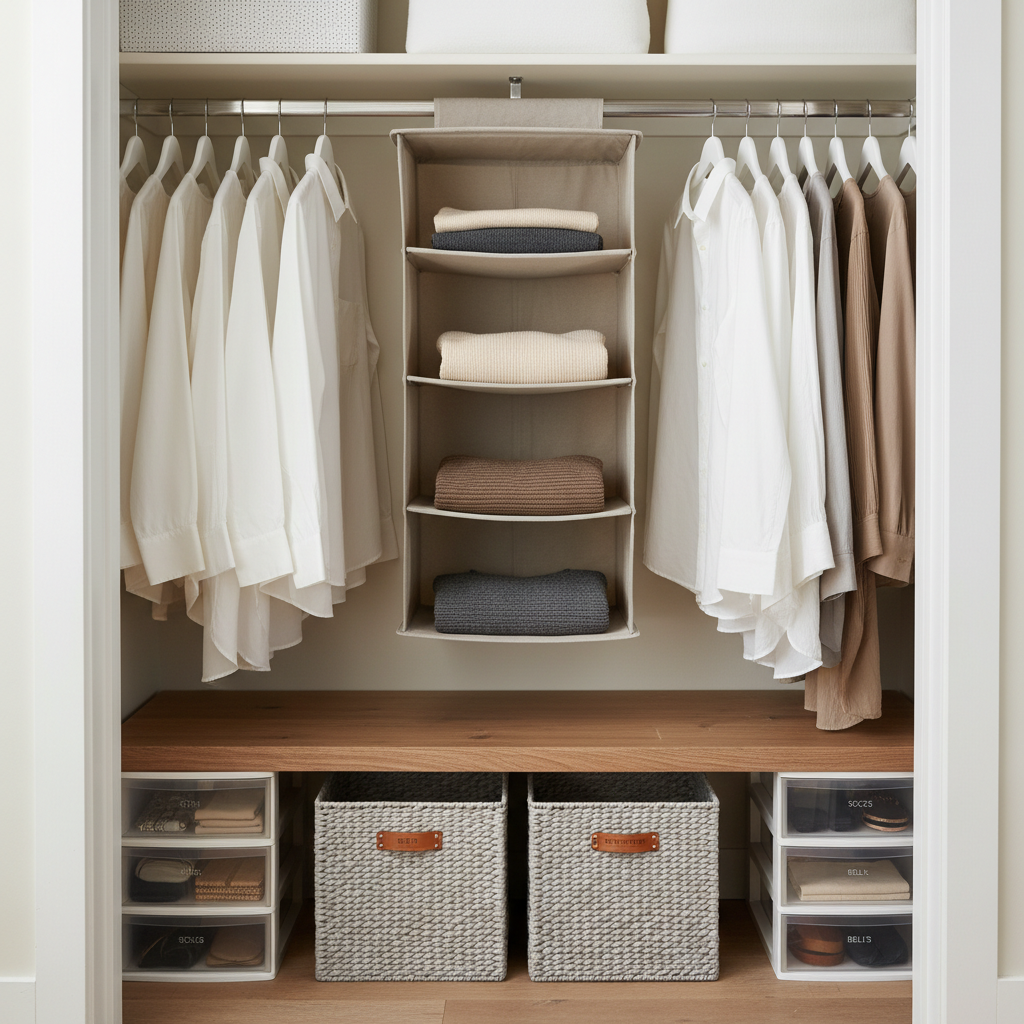
This guide focuses on what actually works in real closets: the organizer types that fit common U.S. closet sizes, what they’re best for, and how to set them up so they don’t sag, slide, or steal all your hanger space.
What makes a hanging organizer “best” in a small closet
In a tight space, “more storage” can backfire if the organizer eats up your rod, blocks drawers, or droops into your clothes. The best pick depends on what you store and how your closet is built.
- Vertical efficiency: tall enough to add levels, but not so long it drags or blocks shoes.
- Structure: reinforced shelves or stiff sides reduce the classic “banana sag.”
- Rod impact: some models take 12–18 inches of rod width; that’s a lot in a small closet.
- Access style: open shelves for folded items, drawers for small pieces, cubbies for shoes, pockets for accessories.
- Stability: side straps, anti-slip hooks, or the option to anchor to the wall help keep it from swinging.
According to the U.S. Consumer Product Safety Commission (CPSC), tip-over and fall hazards can happen when storage is overloaded or unstable, so treat hanging organizers like real shelving: load the heaviest items low and keep weight within what the rod and organizer can handle.
Quick self-check: which small-closet situation are you in?
If you pick the organizer type that matches your pain point, you’ll actually keep using it. Use this quick checklist.
- Your rod is packed, but shelves are empty: choose a narrow hanging shelf (fewer inches of rod) plus slim hangers.
- You have plenty of hang space, but no folding space: choose a 6–8 shelf fabric organizer for sweaters, tees, jeans.
- Accessories explode everywhere: choose pocket organizers for belts, scarves, jewelry, hair tools.
- Shoes invade the floor: choose a shoe cubby or a shelf unit with bottom compartments.
- Kids’ closet or shared closet: choose labeled bins with a hanging shelf to keep categories obvious.
If you’re unsure, start by measuring two things: rod height to floor and rod-to-back-wall depth. That tells you how many shelves fit and whether bulky bins will bump the door.
Comparison table: common hanging organizer types (and who they’re for)
Here’s a practical way to narrow down the best hanging organizers for small closets without overthinking it.
| Type | Best for | Pros in small closets | Watch-outs |
|---|---|---|---|
| Fabric hanging shelves (5–8 cubes) | Folded clothing, towels | Adds “instant shelves” using vertical space | Can sag if overloaded; may swing |
| Hanging drawers (zip or rigid) | Undies, socks, tees, workout gear | Hides visual clutter, great for small items | Heavier; needs sturdy rod and straps |
| Over-the-rod pocket organizer | Accessories, beauty, kids items | Uses door-side air space; very flexible | Pockets can bulge; can snag delicate items |
| Hanging shoe organizer (cubbies) | Shoes, bags, caps | Clears the floor fast | Some shoes deform; depth may block doors |
| Rod-hanging shelf with side hanger bar | Mixed closet needs | Gives shelves and keeps some hang space | More parts; needs careful placement |
Top features to look for before you buy
Product listings all sound the same. These features tend to separate “works for a week” from “still looks good after three months.”
1) Reinforced shelf panels and stitching
If the shelves have thin cardboard inserts, they usually bow under denim stacks. Look for thicker panels, rigid inserts, or reinforced seams at the front edge.
2) Side straps or anchor points
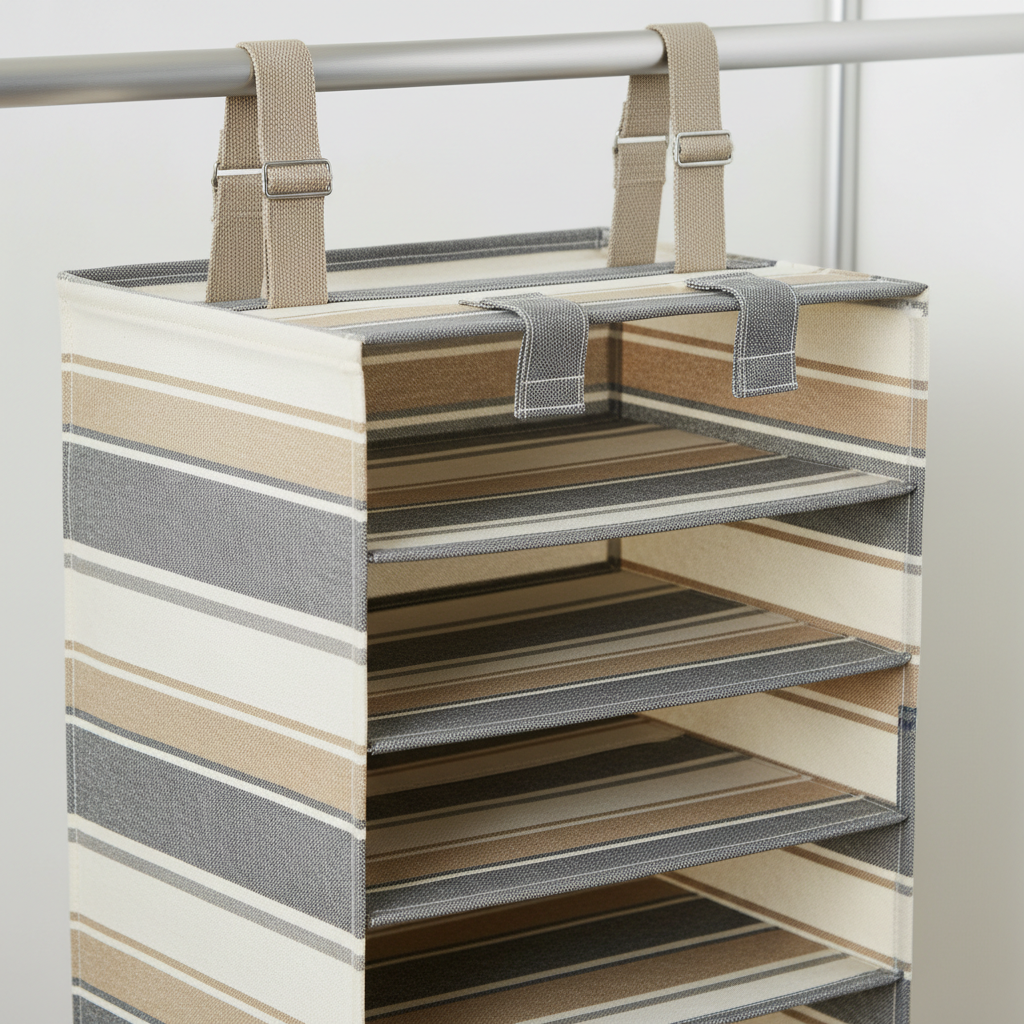
Many closets have a smooth rod, so organizers drift to the middle over time. Side straps that buckle to the rod, or grommets you can anchor to the wall with appropriate hardware, reduce sway.
3) The right shelf count for your rod height
More cubes is not automatically better. In many small closets, a 6-shelf unit can push the bottom shelf too close to the floor, which makes it awkward and collects dust. A 4–5 shelf unit often feels more usable.
4) A width that matches your hanger reality
Some “extra wide” organizers turn your hang section into a sliver. If you own lots of dresses, coats, or work shirts, a narrower unit plus one or two add-ons usually works better than a single wide tower.
How to set up hanging organizers so they don’t waste space
Setup is where most people lose the benefit. A small closet needs a little planning so you gain capacity without creating new friction.
Step-by-step placement (simple but effective)
- Pick your “prime zone”: place the organizer where your hand naturally reaches, usually center-left or center-right, not tucked behind long coats.
- Keep hang space functional: leave at least a shoulder-width of rod for everyday items, otherwise you’ll stop hanging clothes properly.
- Load heavy items low: jeans, sweatshirts, or stacks of towels go in the bottom two shelves.
- Use bins for messy categories: a small bin inside a cube beats loose belts, chargers, or gym accessories.
- Label only what you forget: “workout,” “sleep,” “winter hats” helps; labeling every cube often becomes noise.
According to the National Association of Home Builders (NAHB), storage designs that improve accessibility tend to be used more consistently, so aim for easy reach and easy return, not maximum theoretical capacity.
Best use cases: what to store in hanging organizers (and what not to)
Even the best hanging organizers for small closets have a sweet spot, and a few things they’re just bad at.
Great candidates
- Folded knits and tees: they don’t need rigid support like stacks on a shelf.
- Activewear: easy to grab and put back, especially in drawers or bins.
- Accessories: scarves, belts, hats, small bags, swimwear.
- Kids clothing: categories stay visible, which reduces morning chaos.
Usually poor candidates
- Heavy books or bulk liquids: weight can warp shelves and stress the rod.
- Delicate fabrics: lace and silk can snag on rough seams or Velcro.
- Wet items: trapped moisture can cause odors or mildew; let items dry fully first.
Common mistakes that make hanging organizers feel “not worth it”
Most frustration comes from a few predictable missteps, and they’re all fixable.
- Overstuffing every cube: the organizer bows, then you avoid using it. Leave a little air.
- Ignoring the door swing: deep pockets or shoe cubbies can block sliding doors or scrape hinges.
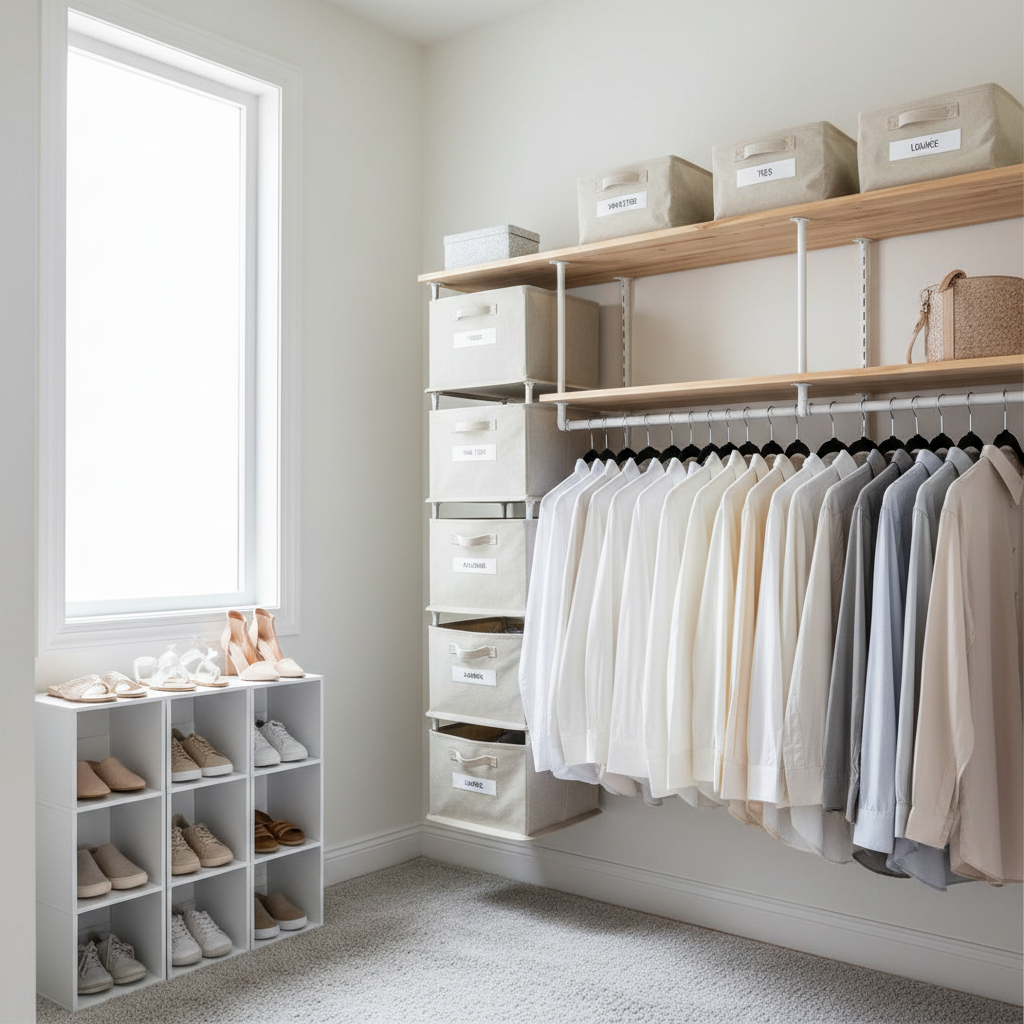
- Using bulky hangers: switching to slim velvet hangers can “create” rod space without buying anything else.
- Mixing too many categories: one cube with “random” items becomes a junk drawer, just vertical.
- Skipping a weekly reset: two minutes of refolding prevents the slow collapse back into piles.
When you might need a different solution (or a pro)
If your closet rod bends, the wall feels loose, or the organizer keeps slipping no matter what, the issue might be the closet hardware rather than your storage choice. In many cases, replacing the rod brackets or upgrading to a sturdier rod solves the root problem.
If you rent, check your lease and use removable solutions when possible. If you see wall damage, persistent moldy odors, or structural issues, it’s smart to consult a qualified handyman or property professional, since safety and building materials vary by home.
Conclusion: what to buy first for the quickest win
If your goal is a noticeable change with minimal effort, start with a reinforced fabric hanging shelf (4–6 cubes) plus two small bins for the messiest categories. That combo usually improves visibility, cuts floor clutter, and makes daily “put away” feel less annoying.
Key takeaways:
- Match the organizer type to your main bottleneck: folded clothes, shoes, or accessories.
- In small closets, narrower units often beat extra-wide towers.
- Load heavy items low, keep the top shelves light, and avoid overfilling.
If you want one simple next step, measure your rod height and choose a shelf count that leaves comfortable clearance at the bottom, then set it up with one category per level so it stays tidy without constant effort.