
Spring cleaning checklist for whole house works best when it feels less like a marathon and more like a simple plan you can actually finish.
If you’ve ever started with good intentions and ended up reorganizing one junk drawer for two hours, you’re not alone. The trick is deciding what “clean” means for this season, then moving in a logical order so you don’t re-dust, re-mop, or re-clutter the same spaces.
This guide gives you a whole-home checklist, a realistic schedule, and a few “don’t waste your time” calls. You’ll also see when it’s smarter to pause and call in help, especially for safety-related tasks.
Before You Start: Set the Scope (So You Don’t Burn Out)
Most spring-cleaning frustration comes from mixing three projects into one: cleaning, organizing, and home maintenance. You can do all three, but not in the same hour.
Pick your scope for this round:
- Reset clean: dust, vacuum, mop, bathrooms, kitchen surfaces, quick declutter
- Deep clean: baseboards, vents, inside appliances, windows, grout, behind furniture
- Maintenance check: filters, detectors, leaks, caulk, dryer vent, exterior sweep
Key point: if your time is tight, a “reset clean + one deep-clean target per room” usually beats trying to do everything everywhere.
Quick Prep: Tools, Products, and a Simple Order of Operations
A good spring cleaning checklist for whole house starts with prep, because stopping mid-task to hunt for trash bags is how momentum disappears.
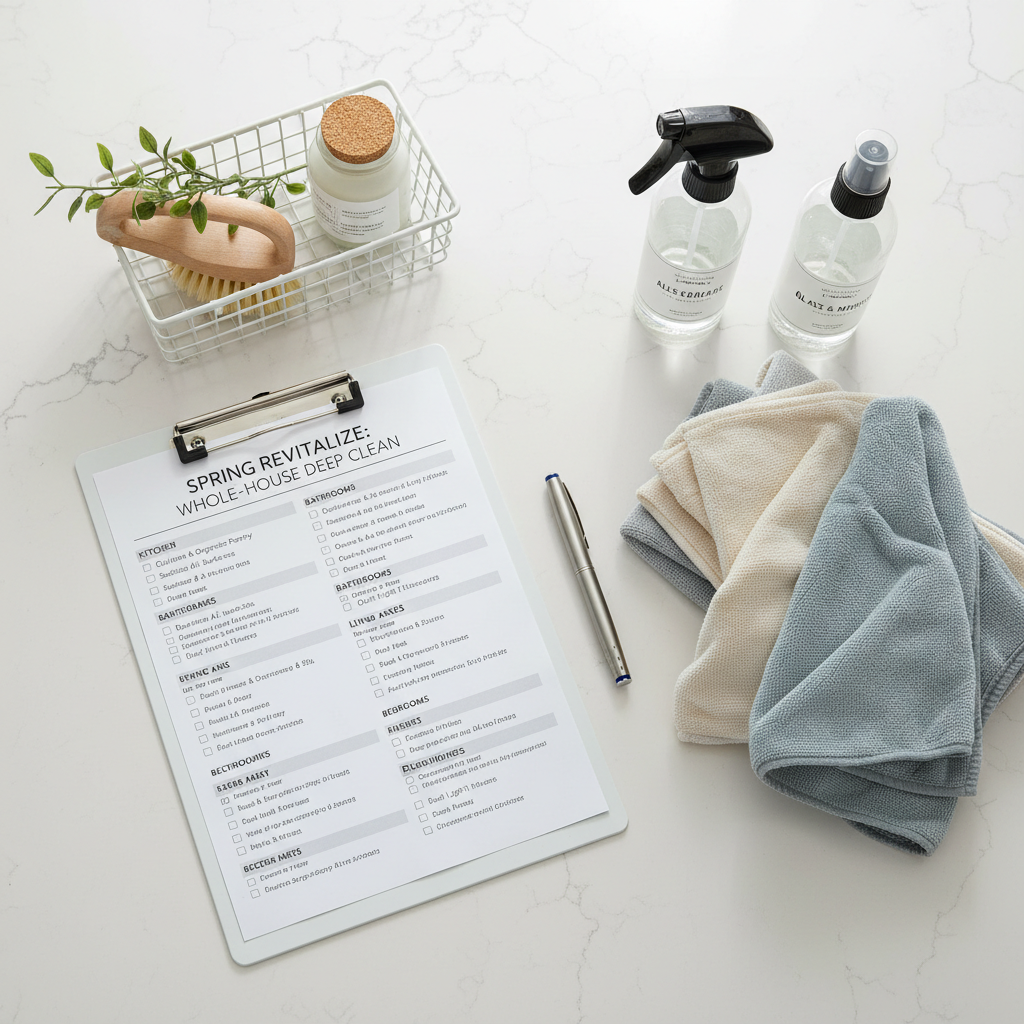
Grab these basics
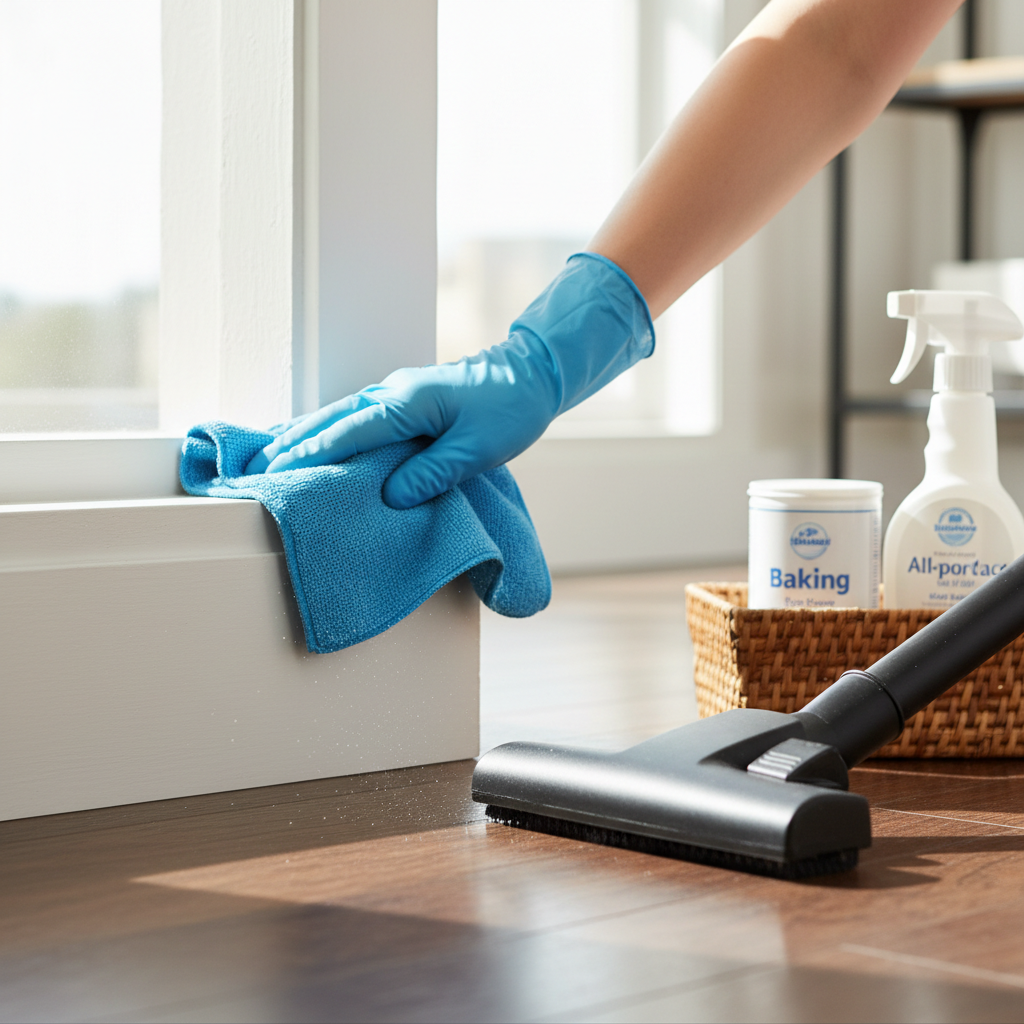
- Microfiber cloths (several), a scrub brush, sponge, old toothbrush
- Vacuum with attachments, mop, bucket, duster
- All-purpose cleaner, glass cleaner, dish soap, baking soda
- Disinfectant for high-touch areas (follow label instructions)
- Trash bags, donation box, a small “belongs elsewhere” bin
Use this order (it prevents rework)
- Declutter first (quick passes only)
- Top to bottom: shelves and fans before floors
- Dry to wet: dust/vacuum before mopping
- Room by room, finishing with floors last
According to CDC, using disinfectants safely means following the product label, including contact time and ventilation guidance, and never mixing chemicals.
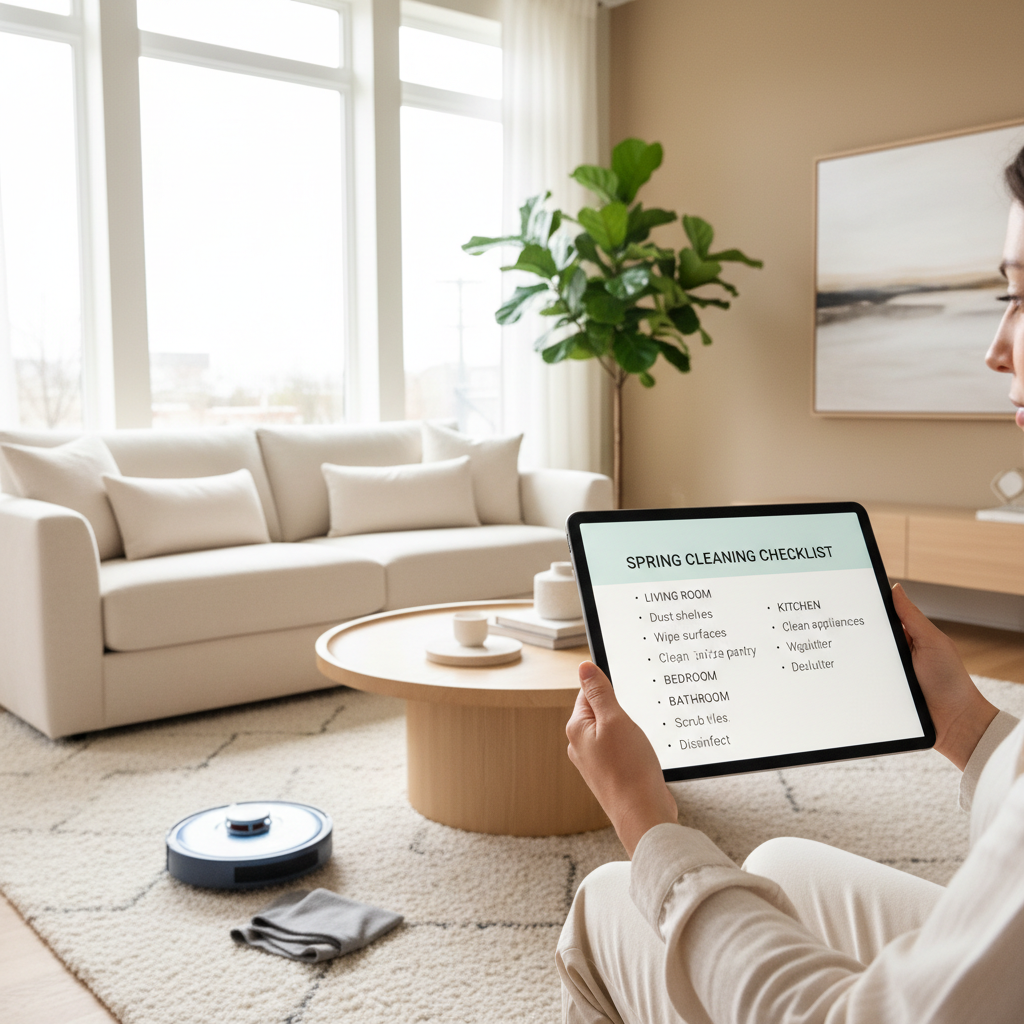
Whole House Spring Cleaning Checklist (Room-by-Room)
Use this as your working spring cleaning checklist for whole house. If you’re short on time, do the bold items first in each room.
Entryway + Hallways
- Clear floor clutter, empty donation box
- Wipe light switches, door handles, railings
- Dust frames, vents, baseboards
- Shake out/doormats, vacuum rugs, mop floor
Living Room
- Dust high surfaces (shelves, TV area), wipe remotes
- Vacuum upholstery and under cushions
- Spot-clean fingerprints on glass and mirrors
- Vacuum edges, then center, then rugs
Kitchen
- Clear counters, wipe and return only essentials
- Clean sink and faucet, sanitize handles
- Wipe cabinet fronts and backsplash (focus near stove)
- Clean microwave interior, stovetop, and hood exterior
- Inside fridge quick sort: toss expired, wipe shelves as needed
- Sweep and mop, including under toe-kicks if accessible
Bathrooms
- Disinfect high-touch areas: handles, switches, faucet knobs
- Clean toilet bowl and exterior, then floors last
- Scrub tub/shower walls; address soap scum and mildew
- Wash bath mats, replace or wash shower liner if needed
- Wipe mirror, fixtures, and cabinet fronts
Bedrooms
- Change bedding, consider washing pillows (check labels)
- Dust nightstands, headboard, lamps, picture frames
- Quick closet sweep: obvious donate pile, rehang “floordrobe”
- Vacuum under bed if reachable
Laundry Area
- Wipe washer rim and detergent drawer
- Clean lint trap and vacuum around dryer
- Wipe shelves, containers, and door fronts
Home Office (or Work Corner)
- Dust monitor, keyboard, and desk (use appropriate wipes)
- Sort paper into: file, shred, recycle
- Vacuum floor edges and chair area
A Practical 1–2 Day Schedule (So It Actually Gets Done)
If you want a clean house without sacrificing your whole weekend, use time blocks. They keep the work honest, and they stop “just one more thing” spirals.
| Time Block | Focus | What “Done” Looks Like |
|---|---|---|
| 30–45 min | Whole-house pickup | Floors mostly clear, donation/trash collected |
| 60–90 min | Kitchen reset + one deep task | Surfaces clean, sink done, plus fridge OR oven quick clean |
| 45–60 min | Bathrooms | Toilet, sink, shower, mirrors, floors |
| 45–60 min | Bedrooms | Fresh bedding, dust, vacuum |
| 60–90 min | Living areas | Dust, upholstery vacuum, floors |
| 30–45 min | Final floors pass | Vacuum/mop main traffic zones, quick spot checks |
Key point: leave “perfect” for another week. This schedule targets the 80% that makes your home feel dramatically better.
Deep-Clean Add-Ons (Pick 3–5, Not All 20)
Deep cleaning is where spring projects balloon. Choose a short list based on what you notice day to day, not what a viral checklist says you “should” do.
- Wash interior windows and wipe sills
- Vacuum couch/sofa under the frame if possible
- Wipe baseboards in high-traffic rooms
- Clean ceiling fan blades and light fixtures
- Descale showerhead or faucet aerators (follow manufacturer guidance)
- Clean inside oven (spot clean or self-clean if appropriate)
- Wipe inside trash cans and recycling bins
- Rotate mattress and vacuum mattress surface
If you’re sensitive to dust, consider wearing a mask while cleaning vents, fans, or heavy buildup, and if you have asthma or other conditions, it may be worth asking a healthcare professional for personalized guidance.
Self-Check: What Kind of Clean Do You Actually Need?
This is the fastest way to avoid over-cleaning the wrong things. Answer honestly, then match your plan.
- You need a reset clean if guests could come over with 2 hours notice and you’d mostly tidy, not scrub.
- You need targeted deep cleaning if you notice odors, sticky buildup, visible dust lines, or dingy floors even after quick cleans.
- You need maintenance-focused help if you suspect airflow issues, leaks, pests, or you haven’t checked filters/dryer vent in a long time.
When people search “spring cleaning checklist for whole house,” they often mean “I want my home to feel lighter.” That feeling usually comes from floors, bathrooms, and kitchen surfaces more than from perfectly folded closets.
Mistakes That Waste Time (and Sometimes Make Things Worse)
- Cleaning before decluttering: you’ll wipe around piles, then do it again after you move them.
- Using too much product: it can leave residue that attracts more dirt, especially on floors and cabinets.
- Mixing chemicals: never combine bleach with ammonia or acids; if you’re unsure, don’t mix at all.
- Starting everywhere at once: half-finished rooms feel demoralizing, even if you worked hard.
- Ignoring labels: some surfaces like natural stone and certain wood finishes need specific cleaners.
According to EPA, safer cleaning includes reading labels, using products as directed, and improving ventilation to reduce exposure to fumes.
When It’s Smart to Call a Pro
There’s no prize for DIY discomfort. These situations often justify professional help, especially if you’re short on time or dealing with health risks.
- Persistent moldy smell, visible mold, or recurring mildew that returns quickly
- Heavy dust issues that may relate to ductwork, HVAC, or renovations
- Carpet stains or pet odors that basic cleaning can’t touch
- High or hard-to-reach areas where ladder work feels unsafe
- Post-construction or move-in cleaning where debris is more than “normal mess”
If you suspect mold, asbestos, lead paint, or major air-quality problems, it’s usually safer to consult qualified professionals rather than experimenting with stronger chemicals at home.
Conclusion: Your Whole-House Clean, Without the Chaos
A spring cleaning checklist for whole house is really a decision tool: do the high-impact basics, add a few deep-clean wins, then stop before you hate your weekend.
Pick one start date, print or save the checklist, and set two time blocks you’ll actually protect. If you finish early, great, spend that “extra” time on one deep-clean add-on instead of inventing a whole new project.