
how to clean mattress stains and odors is usually less about “scrubbing harder” and more about using the right method for the right mess, without soaking the mattress.
If you’ve ever stripped the bed and found a mystery spot, or noticed that stale smell that won’t go away even after new sheets, you’re not alone, mattresses hold sweat, body oils, spills, and sometimes pet accidents, and all of that can build up quietly.
This guide walks you through what to do based on the stain type, how to deodorize without trapping moisture, and what to avoid so you don’t trade a stain for mildew. You’ll also get a quick decision checklist and a simple maintenance routine that keeps things from getting gross again.
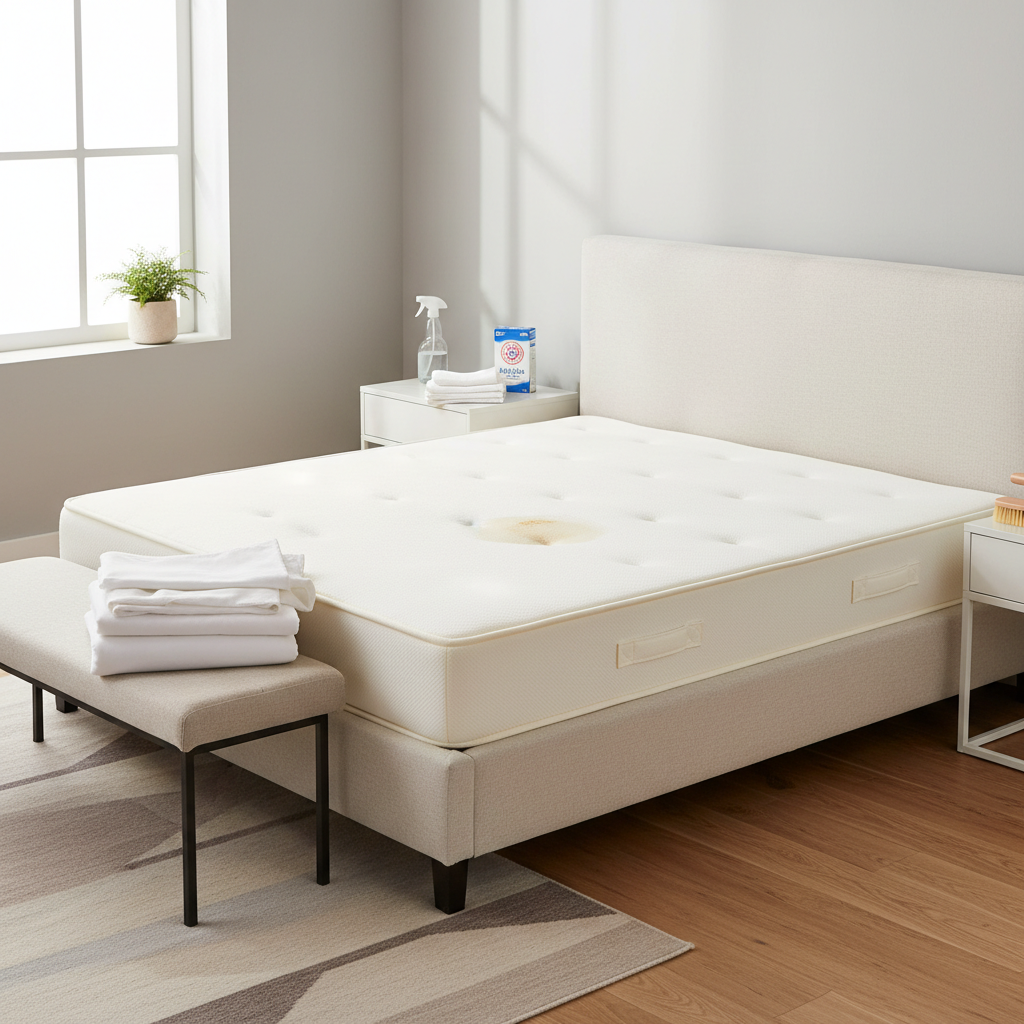
What causes mattress stains and odors (and why they linger)
Most stains and smells stick around because mattresses are thick, absorbent, and slow to dry. Even when the surface looks “clean,” moisture and residue can remain below the fabric.
- Sweat and body oils build yellowing over time, especially if you sleep warm or skip a mattress protector.
- Spills like coffee, wine, or soda contain sugars and pigments that sink in fast.
- Urine and vomit are protein-based and can keep smelling if you only mask them.
- Humidity and poor airflow make odors worse and raise the risk of mildew if cleaning leaves the mattress damp.
- Dust mites and allergens don’t always “smell,” but they can contribute to that stale, lived-in mattress vibe.
According to the U.S. Environmental Protection Agency (EPA), moisture control is a key step in preventing mold growth indoors, and that’s especially relevant when you’re wet-cleaning a mattress.
Quick self-check: what kind of stain or smell are you dealing with?
Before you mix anything, take 60 seconds to identify what you’re seeing and smelling. This is the part people skip, and it’s why they end up setting the stain or leaving a sour odor behind.
- Is it fresh or old? Fresh stains respond better to blotting and gentle cleaning, older ones may need repeated light passes.
- What’s the likely source? Sweat, food/drink, urine, blood, or “unknown” each behaves differently.
- Is there a strong ammonia-like smell? That points to urine that soaked in.
- Do you see dark speckling or musty odor? That can suggest mildew, proceed cautiously and consider professional help.
- Does the mattress feel damp underneath? If yes, drying becomes the priority.
Stain and odor cheat sheet (use the right method fast)
Use this table as a practical starting point. Always patch-test a hidden spot first, and keep liquids minimal.
| Problem | What to use | What to avoid |
|---|---|---|
| Sweat/yellowing | Dish soap + water (light foam), baking soda deodorizing | Over-wetting, bleach on foam mattresses |
| Coffee/wine/soda | Cold water blotting, mild detergent, small amount of hydrogen peroxide for light fabrics | Hot water (can set), heavy rubbing |
| Urine (fresh) | Blot, enzyme cleaner (pet/urine), baking soda after dry | Vinegar-only “fix” for deep urine, soaking the core |
| Blood | Cold water, tiny amount of hydrogen peroxide on white cloth | Warm water, aggressive scrubbing |
| General musty odor | Vacuum, baking soda, airflow + fan, sunlight if possible | Covering with fragrance, sealing moisture under bedding |
Step-by-step: how to clean mattress stains and odors safely
This process works for many common situations, then you can swap the cleaner based on the stain type. The big rule: clean in thin layers, then dry thoroughly.
1) Strip the bed and dry-vacuum first
Remove sheets, protector, and anything on the bed. Vacuum the entire mattress surface using the upholstery tool, especially seams and edges where debris collects.
- If you have allergies, consider wearing a mask.
- Empty the vacuum canister outside if possible.
2) Blot, don’t rub
If the stain is fresh, press a clean white towel into the area to pull up moisture. Rubbing can spread the stain and push it deeper.
3) Use a low-moisture cleaner (choose one)
- Mild soap solution: a few drops of clear dish soap in a bowl of cool water, whip to make light suds, use the foam more than the water.
- Enzyme cleaner: best for urine, sweat funk, and other bio-based odors, follow label directions and avoid soaking.
- Hydrogen peroxide (3%): sometimes helpful for blood or set-in organic stains on light fabrics, patch-test first because it can lighten color.
Apply cleaner to a cloth, not directly to the mattress, then dab the stain in small circles. Work from the outside toward the center.
4) Rinse lightly, then press-dry
Dampen a separate cloth with plain water and dab to lift soap residue. Then press with dry towels until the area feels only slightly damp.
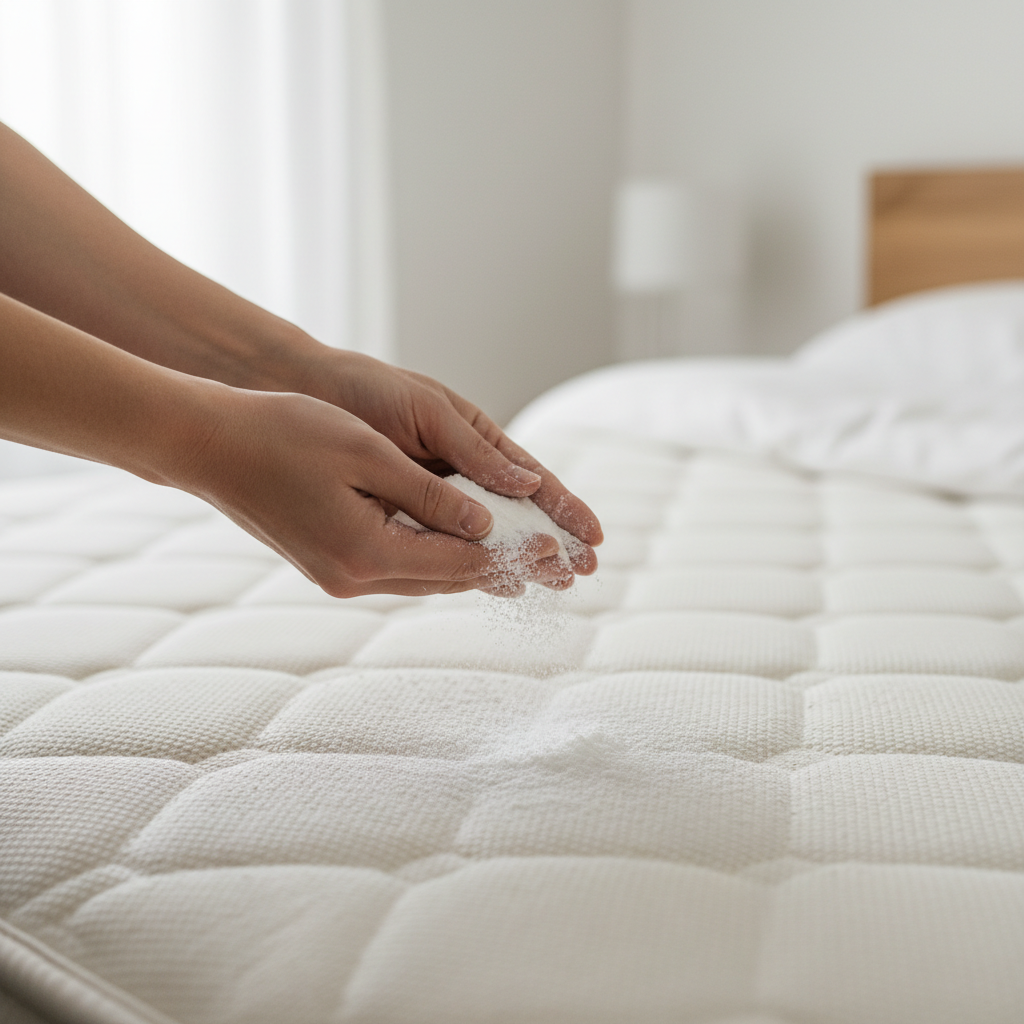
5) Deodorize with baking soda
Once the surface is mostly dry, sprinkle a thin, even layer of baking soda over the cleaned area, or the whole mattress if odors are general.
- Let it sit at least a few hours, overnight is often better for stubborn smells.
- Vacuum thoroughly after.
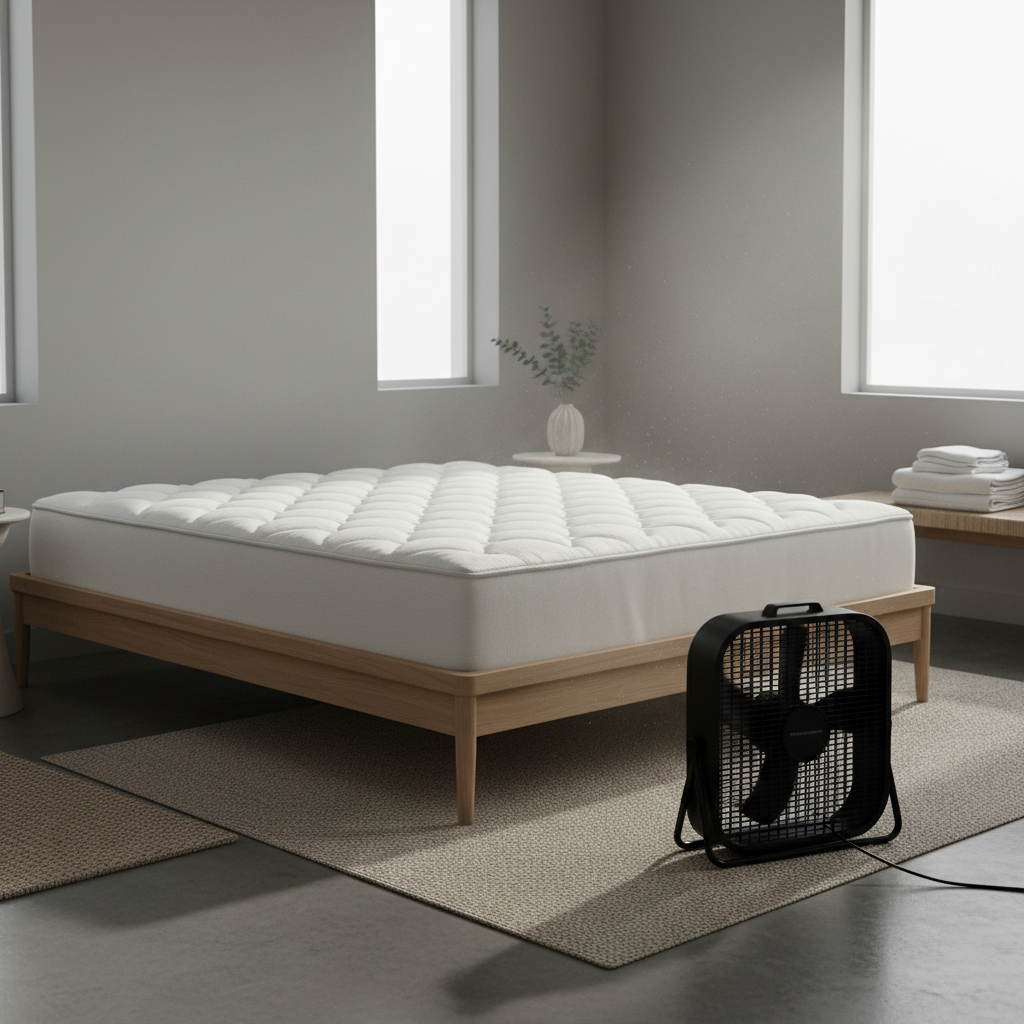
6) Dry like you mean it
Set up a fan aimed across the mattress surface, open windows if outdoor humidity is reasonable, and allow several hours to fully dry. If you can safely bring indirect sunlight in, that can help with freshness, but avoid prolonged harsh sun on some foams and fabrics.
Key point: if you remake the bed while the mattress core stays damp, odors often return, and mildew risk goes up.
Practical “by scenario” fixes (the stuff people actually search for)
Here are a few common situations with small adjustments that matter.
Urine odor that keeps coming back
If you already “cleaned it” but the smell returns on humid days, that usually means residue remains below the surface. Enzyme cleaner is often the most realistic DIY option because it targets odor-causing compounds instead of covering them.
- Blot as much as possible first, then apply enzyme cleaner per label.
- Give it time to work, rushing this step tends to fail.
- After drying, use baking soda and vacuum again.
Sweat yellow stains across the sleeping area
For older yellowing, you may not get “like new,” but you can usually lighten it and improve smell.
- Vacuum, then dab with mild soap foam.
- Use a soft brush gently if the fabric allows, stop if it pills.
- Deodorize with baking soda and dry fully.
Musty mattress smell in a humid room
Start with airflow and moisture control, then do cleaning. According to the Centers for Disease Control and Prevention (CDC), drying water-damaged areas quickly is important to prevent mold growth, and mattresses are a classic “slow to dry” item.
- Run a dehumidifier if you have one.
- Lift the mattress on its side for a while to air out both faces.
- If you suspect mold, avoid spraying more liquid.
Common mistakes that make stains and smells worse
A lot of DIY mattress cleaning goes sideways for predictable reasons. If you avoid these, you’re already ahead.
- Using too much water, it feels productive, but it drives the mess deeper and slows drying.
- Closing the room up to “let it work”, trapped humidity keeps odors around.
- Mixing cleaners, especially anything involving bleach or ammonia, can create harmful fumes. If you’re unsure, stick with one product at a time and rinse lightly.
- Overusing fragrance sprays, they often layer scent on top of the problem, then smell worse later.
- Heat too soon, hot water or a hot steamer can set some stains, and steam can introduce moisture deep into foam.
When to stop DIY and consider professional help
Sometimes the “right” answer is to save your time and reduce risk. Consider calling a professional upholstery/mattress cleaning service, or asking the mattress manufacturer about safe methods, when:
- The stain is large and soaked through to the underside.
- There’s persistent musty odor, visible mold, or anyone in the home has respiratory sensitivity, in these cases, it may be safer to consult a qualified professional.
- You have a memory foam or specialty mattress with strict care instructions, some materials don’t tolerate typical wet cleaning.
- The odor keeps returning after multiple careful attempts and full drying cycles.
Simple routine to prevent future mattress stains and odors
Once you’ve done the hard part, a little routine keeps you from repeating it in three months.
- Use a waterproof mattress protector, not just a pad, and wash it regularly.
- Vacuum the mattress every 1–2 months, more often if you have pets.
- Air the bed out for 15–30 minutes after waking before making it, especially if you sweat at night.
- Rotate the mattress if the manufacturer recommends it.
- Spot clean immediately, waiting turns a quick blot into a project.
Key takeaways (so you don’t overthink it)
- Match the cleaner to the stain, enzyme products for bio odors, mild soap for general grime, cold water for blood.
- Keep moisture low and prioritize drying, odors often “live” in dampness.
- Baking soda helps after cleaning, but it won’t fix a soaked-in source by itself.
- Don’t mix chemicals, when in doubt, keep it simple and ventilate.
Conclusion: a cleaner mattress is mostly about method and drying
If you’re figuring out how to clean mattress stains and odors, the most reliable approach is gentle spot cleaning, deodorizing with baking soda, and aggressive drying with airflow. Do that well and you’ll usually see a real difference without damaging the mattress.
Pick one stain scenario from the table, gather towels, a mild cleaner or enzyme spray, and a fan, then do one careful pass today rather than five rushed ones later. Your future self, and your sheets, will thank you.
FAQ
- How do I get rid of mattress odors without soaking it?
Vacuum first, then use baking soda as a deodorizer after the surface is dry, and run a fan across the mattress for several hours. Airflow is often the missing piece. - Is it safe to use hydrogen peroxide on a mattress?
Many people use 3% hydrogen peroxide for certain organic stains, but it can lighten fabric and some foams react poorly. Patch-test in a hidden area and use small amounts on a cloth. - What’s the best way to clean urine from a mattress?
Blot immediately, then use an enzyme cleaner following the label. After it dries, deodorize with baking soda and vacuum. If the urine soaked through, DIY results vary. - Why does my mattress still smell after I cleaned it?
Usually because moisture or residue remains below the surface, or the mattress didn’t dry fully. Repeat with lower moisture, more blotting, and longer drying time. - Can I steam clean a mattress for stains and smells?
Steam can add a lot of moisture, especially with foam mattresses, which may worsen odors or cause mildew. If you try it, use minimal steam and ensure thorough drying, and check the manufacturer’s care guidance. - How long should baking soda sit on a mattress?
A few hours can help, overnight is often more effective for stubborn smells. Vacuum slowly afterward to pull out the powder from seams. - What if I suspect mold in my mattress?
If you see visible mold or a strong musty odor that won’t improve, DIY cleaning may not be enough and could spread spores. It’s reasonable to consult a qualified professional, especially if anyone has asthma or allergies.
If you’re dealing with repeat stains, pets, kids, or just a mattress that seems to “hold onto” smells, a waterproof protector plus a simple monthly vacuum-and-baking-soda routine is often the most low-effort way to keep things under control.