
How to clean couch cushions at home comes down to two things most people skip: reading the care tag and drying the right way, so you don’t end up with water rings, lingering odor, or a cushion that never feels quite “normal” again.
If your couch looks fine from across the room but feels grimy up close, or the cushions smell a little “lived-in,” that’s usually body oils, dust, pet dander, and spilled drinks settling deep into the fabric and foam. The longer it sits, the harder it is to lift.
This guide walks you through a practical, label-first method: quick dry cleaning options, safe wet cleaning when allowed, how to handle common stains, and how to dry cushions so they don’t mildew. I’ll also flag the spots where it’s smarter to call a pro, because some materials are easy to damage.
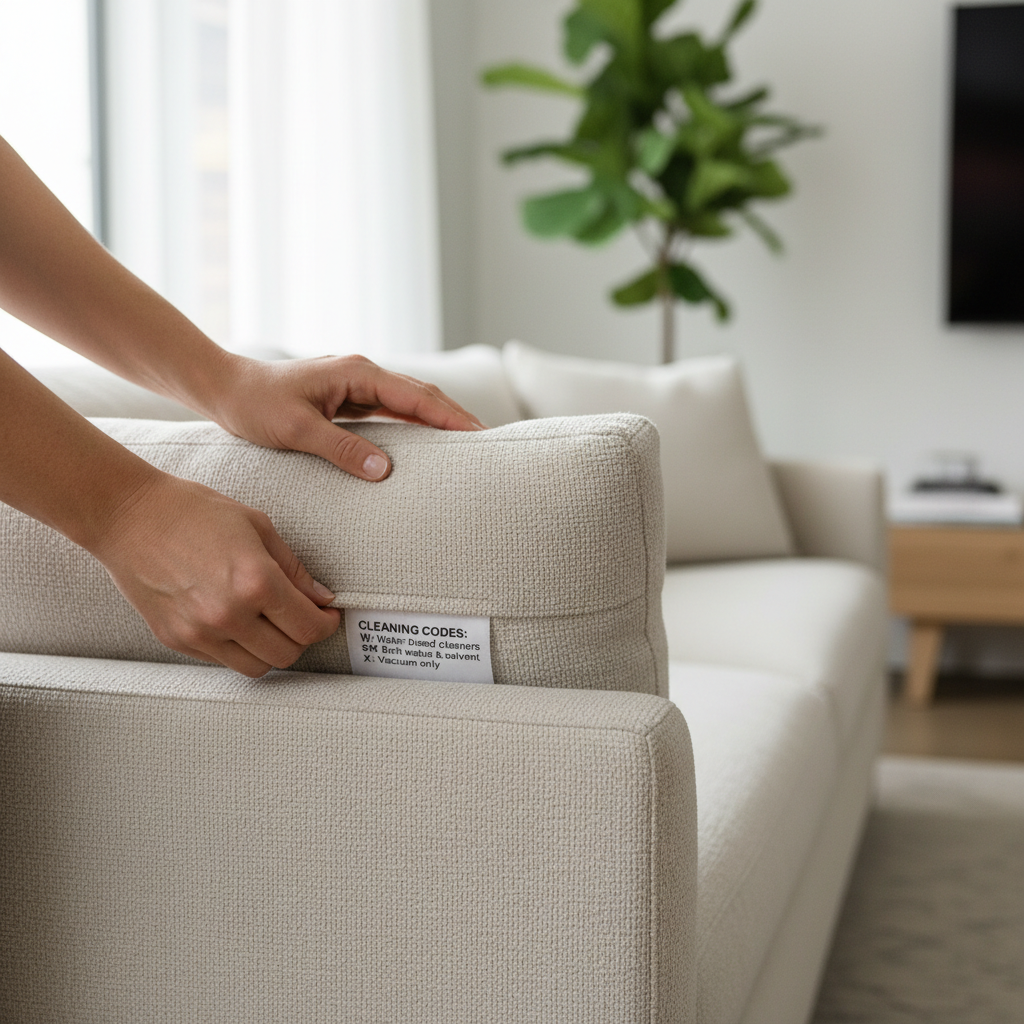
Start with the care tag: the cleaning codes that change everything
Before you grab a steam cleaner or dump soap into a bucket, find the cushion tag. Most upholstered furniture sold in the U.S. uses a simple code system, and it’s the fastest way to avoid damage.
According to the American Cleaning Institute (ACI), checking care instructions first helps prevent problems like color loss, shrinkage, or residues that attract more soil later.
| Code on tag | What it means | What to use at home | What to avoid |
|---|---|---|---|
| W | Water-based cleaners are OK | Upholstery shampoo, mild soap + water | Solvent-only products, over-wetting |
| S | Solvent-based cleaners only | Upholstery solvent/“dry clean” spray, alcohol-based spotters | Water, steam, soaking |
| WS or SW | Either water or solvent, depending on stain | Start mild, spot test, escalate slowly | Heavy saturation |
| X | Vacuum only | Vacuum, soft brush, professional cleaning | Any liquid or solvent |
If the tag is missing or unreadable, assume the fabric is sensitive and treat it like “S” until you can confirm otherwise. That one conservative choice saves a lot of regret.
Quick prep that makes your cleaning actually work
A lot of “I cleaned it but it still looks dirty” comes from skipping prep. Soil sits on the surface, then turns to mud when you add liquid.
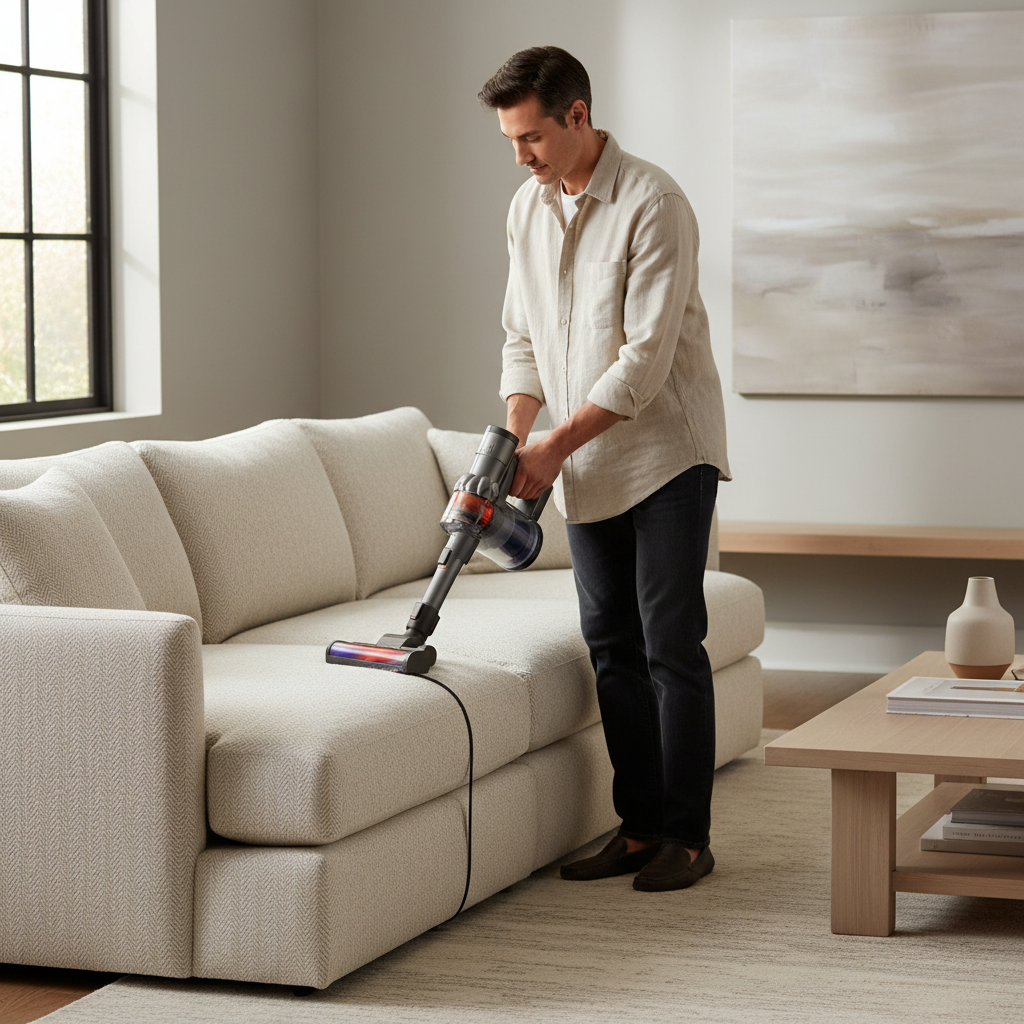
- Remove cushions and vacuum everything: seams, zipper lines, and creases hold crumbs and grit.
- Use an upholstery brush attachment if you have one, it lifts fibers without chewing them up.
- Check for color transfer: dab a hidden spot with your cleaner on a white cloth, wait a few minutes.
- Open zippers if covers are removable: airflow matters later during drying.
Key point: vacuuming thoroughly often makes cushions look one shade lighter even before you “clean,” and it reduces the amount of moisture you need.
Self-check: what kind of “dirty” are you dealing with?
Different messes need different moves. Use this quick checklist to decide how to clean couch cushions at home without doing extra steps that don’t help.
- Overall dullness and gray cast: ground-in dust + oils, plan for a full-surface clean (not just spot cleaning).
- One obvious stain: treat the stain first, then feather-clean the area around it to prevent a ring.
- Persistent odor (pets, smoke, food): deodorize and focus on drying; odor often equals trapped moisture or oils.
- Sticky feel: old soap residue or sugary spill, you may need a light rinse (only if code allows).
- Water marks: uneven wetting or hard-water residue, you usually need even, controlled moisture to blend.
If your cushions have down or feather inserts, or the fabric is velvet/silk-like, proceed carefully. These tend to show nap marks and water shading more easily.
Step-by-step: cleaning removable cushion covers (machine-wash or hand-wash)
Removable covers can be the easiest win, but only if the label says it’s washable. “Removable” does not automatically mean “machine-safe.”
If the tag allows machine washing
- Close zippers so teeth don’t snag fabric.
- Use cold water and a gentle cycle with mild detergent, skip bleach and skip fabric softener.
- Avoid overloading; friction causes pilling and creases.
- Air dry or low heat if permitted, and put covers back slightly damp to reduce shrink-fit struggles.
If you’re unsure, hand-wash is safer
- Use a basin with cool water and a small amount of mild detergent.
- Agitate gently, don’t twist hard.
- Rinse until water runs mostly clear.
- Press water out with towels, then air dry flat or draped evenly.
While covers dry, vacuum the inserts and the couch frame. This is the “whole couch reset” moment people miss.
Step-by-step: cleaning non-removable covers (safe surface cleaning)
For most households, this is the real question: how to clean couch cushions at home when the cover stays on. The trick is controlled moisture and even coverage.
For code W or WS: light upholstery shampoo method
- Mix a small bowl of warm water with a few drops of mild dish soap, or use a dedicated upholstery cleaner.
- Dampen a white microfiber cloth, then blot and lift, don’t scrub hard.
- Work in small sections, and slightly overlap edges to avoid tidelines.
- Follow with a second cloth dampened with plain water to remove excess soap.
- Press with a dry towel to pull moisture up and out.
For code S or when water seems risky: solvent spot cleaning
- Use a solvent-based upholstery cleaner made for “S” fabrics, follow the label.
- Ventilate the room and keep the product away from open flames.
- Blot from the outside of the stain toward the center to reduce spreading.
According to the U.S. Environmental Protection Agency (EPA), improving ventilation when using cleaning products can reduce exposure to fumes, which matters even with “household” cleaners.
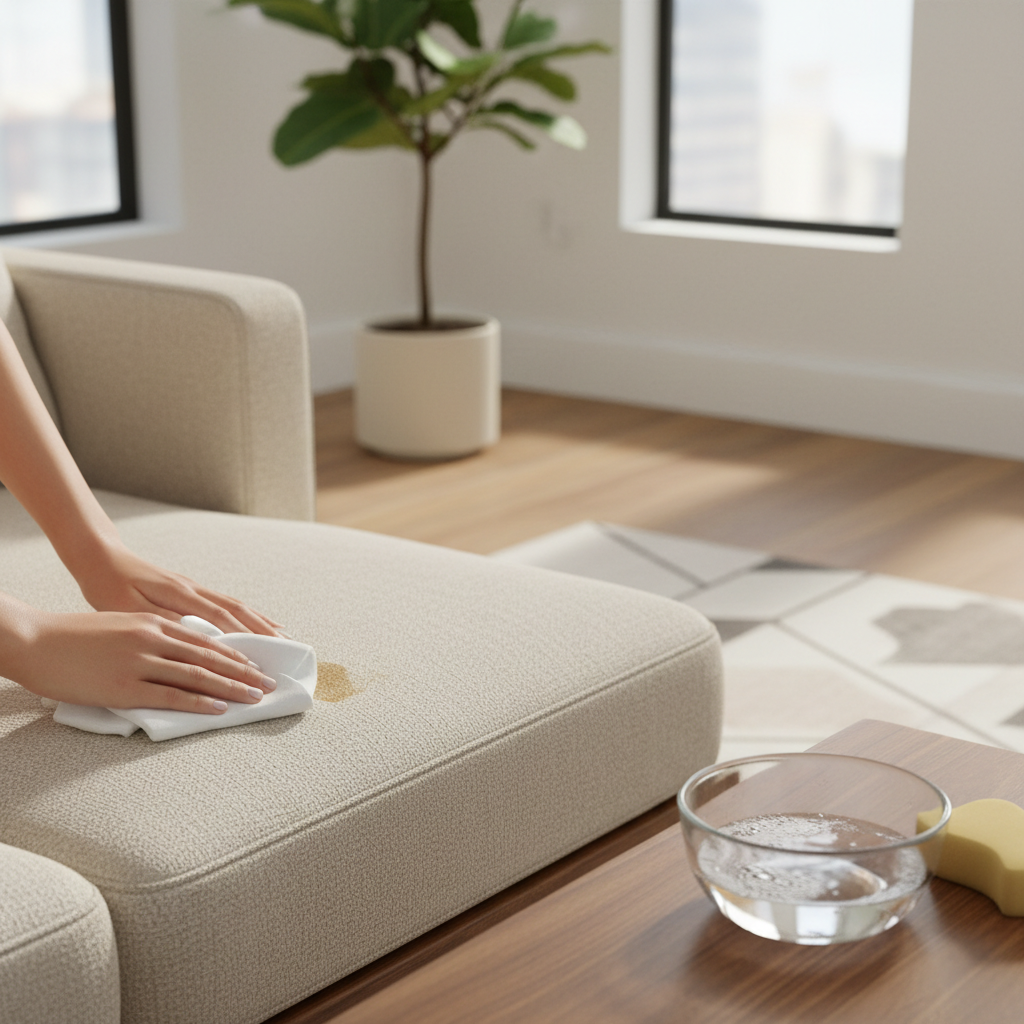
Common stains and what usually works (without wrecking fabric)
Stain removal is where people overdo it. Too much product or aggressive scrubbing often spreads the problem and roughens the fabric.
- Coffee/tea: blot immediately, then use a mild soap solution if code allows, finish with a light water-only wipe to reduce residue.
- Grease/body oils: sprinkle baking soda or cornstarch to absorb, wait 15–30 minutes, vacuum, then spot clean.
- Wine/juice: blot, then use a fabric-safe oxygen-based cleaner if allowed by the label; avoid heat until the stain is gone.
- Pet accidents: use an enzyme cleaner (enzymes break down organics), but spot test first; odor often returns if foam stays damp.
- Ink: alcohol-based spotters sometimes help on “S/WS” fabrics, but ink can spread fast, test in a hidden area.
Practical rule: if the stain is older than a week, assume you’ll need a couple of passes over a day or two, not one intense session.
Drying and deodorizing: where most DIY cleaning fails
Even when the fabric looks clean, a cushion that dries slowly can smell musty. In many homes, the foam holds water longer than you think.
- Use airflow: turn on fans, open windows when weather permits, and stand cushions on edge so air reaches both sides.
- Press, don’t rub: use dry towels to compress and lift water out.
- Deodorize lightly: sprinkle baking soda, let it sit a few hours, then vacuum thoroughly.
- Avoid heavy fragrance sprays: they often mask odor instead of removing the source.
If you suspect mildew or you notice worsening respiratory irritation, it may be safer to pause and consult a professional cleaner or, in some cases, a remediation specialist. Indoor air issues can be complicated.
Mistakes to avoid when you clean couch cushions at home
- Soaking the cushion: water trapped in foam is the quickest route to odor and discoloration.
- Scrubbing hard: it roughens fibers and can create a shiny patch, especially on microfiber and some poly blends.
- Skipping the “rinse” wipe on W fabrics: leftover soap attracts dirt and causes stiffness.
- Cleaning only the stain dot: you often need to feather outward, or you get a clean circle on a dirty field.
- Using steam on the wrong fabric: steam can set stains, distort texture, or cause water marks on “S” code pieces.
If your couch is vintage, high-end, or has a tag that says “X,” this is one of those times where DIY can cost more than it saves.
When it’s worth calling a pro (and what to ask)
Professional upholstery cleaning can be a good idea when cushions have deep odor, widespread staining, or delicate fabrics that punish trial-and-error. It’s also sensible if you have pets and the foam likely absorbed moisture.
- Call for help if: you see repeated water rings, dye transfer on your cloth, or any sign of mold growth.
- Ask what method they use: hot water extraction, low-moisture encapsulation, or solvent cleaning, each fits different fabrics.
- Ask about dry time: a realistic estimate matters for homes with kids or pets.
If you’re in a rental or dealing with warranty terms, double-check what cleaning methods are allowed, so you don’t accidentally void coverage.
Conclusion: a simple routine that keeps cushions fresh
When you’re figuring out how to clean couch cushions at home, the “secret” is not a miracle product, it’s a calm process: confirm the code, vacuum thoroughly, use the gentlest cleaner that fits the stain, then dry aggressively with airflow.
If you want one action to take today, vacuum the seams and deodorize with a light baking soda treatment, then spot clean one cushion as a test. Once you like the result, do the rest the same way, consistency beats improvising cushion by cushion.