
Scandinavian style laundry room organization works because it reduces visual noise and makes your routine easier, not because it looks trendy on a pinboard. If your laundry area feels like a dumping ground for detergent, random baskets, and “I’ll fold it later” piles, you’re not alone, this room gets messy fast.
The good news is you usually don’t need a full remodel. Most laundry rooms in the US can get noticeably calmer with a few choices: fewer categories, clearer storage zones, and materials that handle humidity without looking busy.
What people often miss is that Scandinavian organization is not “all white everything.” It’s function-first, with warm neutrals, natural textures, and a layout that supports how you actually do laundry. Below, you’ll get a practical setup you can copy, plus a quick self-check and a small shopping list that stays realistic.
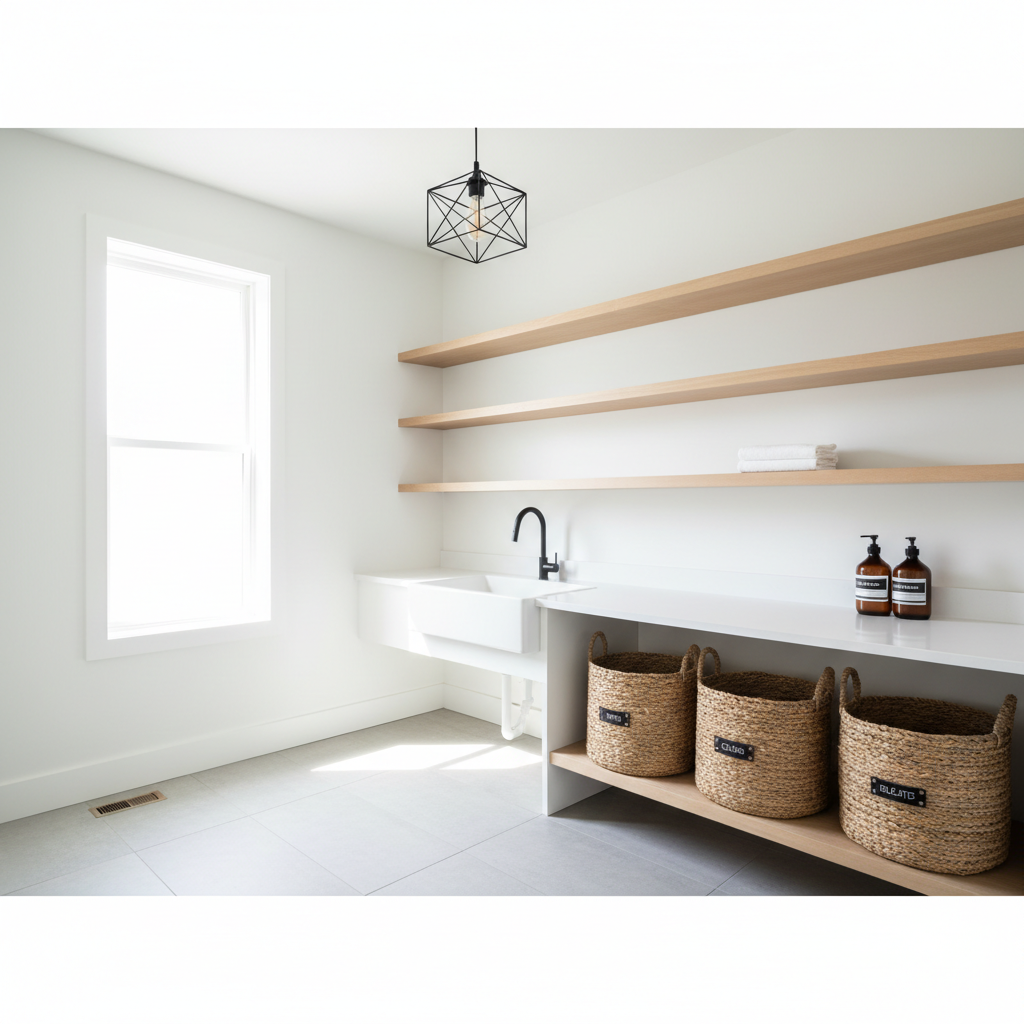
Why laundry rooms get cluttered (and why Scandinavian fixes it)
Most laundry rooms become chaotic for predictable reasons, and naming them helps you fix the right thing instead of buying more bins.
- No “home” for in-between items: hang-dry pieces, stain-treated items, clean-but-not-folded clothes, and single socks need a landing zone.
- Too many products: duplicates, half-used bottles, and specialty cleaners pile up, then you can’t see what you actually use.
- Storage that hides problems: deep shelves and mixed baskets look tidy until you need something quickly.
- Workflow fights the room: the hamper is far from the washer, folding space is too small, or trash and lint tools are missing.
Scandinavian-style systems push you toward fewer categories, clearer zones, and simple containers. That’s why the space feels calm even when real life happens.
According to EPA, indoor humidity control matters for comfort and can help limit conditions that encourage mold growth, which is one reason open airflow and easy-to-clean surfaces are worth prioritizing in laundry spaces.
Quick self-check: which laundry room are you organizing?
Before you change anything, take two minutes and pick the situation that matches your home. This keeps your scandinavian style laundry room organization plan grounded in reality.
- Tight closet laundry: stacked machines, little to no counter, doors that block access.
- Hallway nook: machines plus a small shelf, noise and visual clutter spill into living space.
- Dedicated laundry room: you have walls for shelving, but the room becomes storage for everything else.
- Mudroom combo: laundry shares space with shoes, sports gear, pet items, and bags.
If you’re in the “combo” category, you’ll need stronger zoning. If you’re in the “closet” category, you’ll rely more on doors, slim pull-outs, and vertical storage.
The Scandinavian principles that actually matter in 2026
Trends come and go, but a few principles keep paying off, especially as more homes try to do more with less square footage.
1) Calm palette, not sterile
Think soft whites, warm grays, pale oak, muted black accents. The point is lower contrast so your eye rests, not “hospital white.” If your home leans warmer, choose cream instead of bright white.
2) Closed storage for uglies, open storage for daily essentials
Keep big packaging and backup supplies behind doors or inside uniform bins. Leave out only what you use weekly, and decant if you can do it safely.
3) One motion per step
When you can do each step without moving across the room, you’re more likely to keep it tidy. That usually means a hamper near the washer, lint tools at arm’s reach, and a folding surface that stays clear.
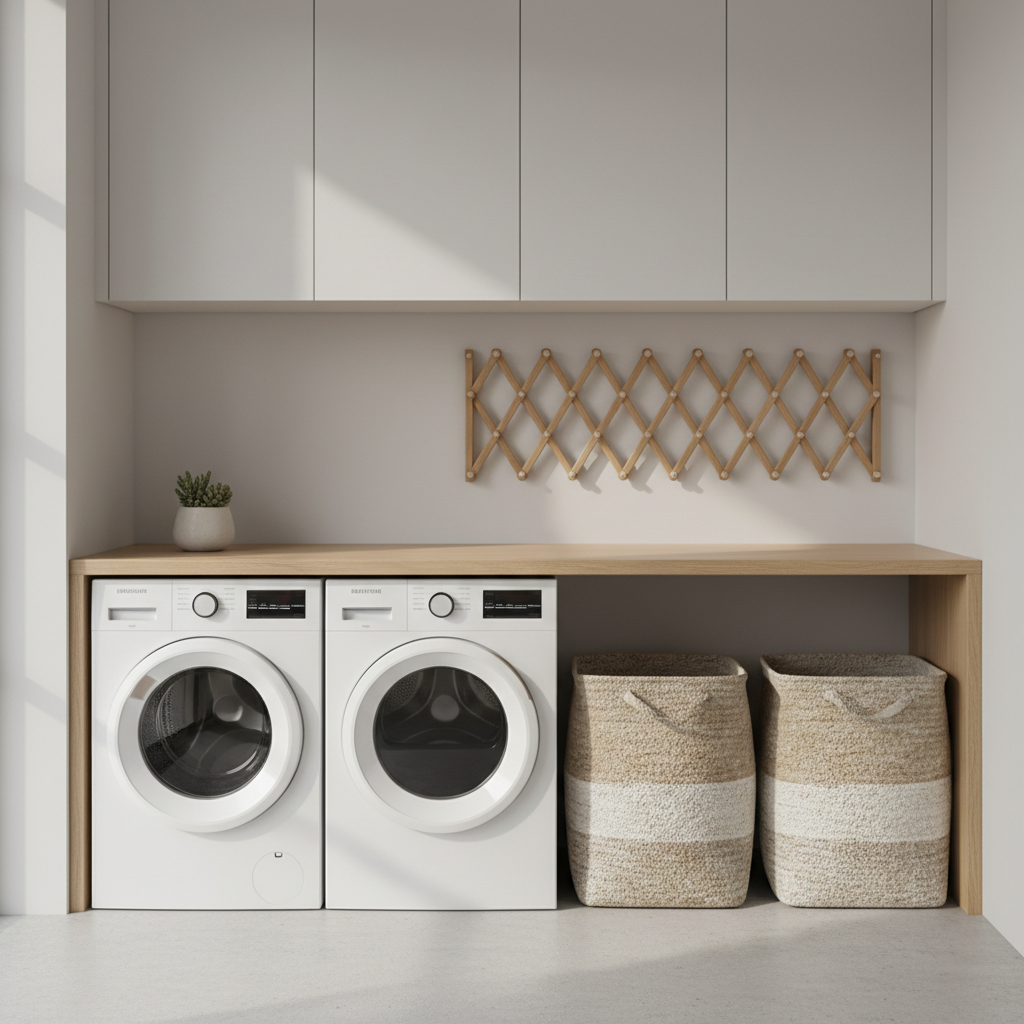
Build your zones: the layout that keeps the room from “drifting”
Instead of organizing by product type, organize by what you do in the room. Most laundry spaces work with four zones.
- Drop zone: hampers, stain-check basket, hooks for “rewear” items.
- Wash zone: detergent, boosters, measuring scoop, lint roller, small trash can.
- Dry + care zone: drying rack, hangers, sweater drying mesh, steamer or iron if you actually use it.
- Fold + finish zone: clear counter, baskets for sorted clean laundry, labels for each person or room.
In a closet laundry, these zones can be vertical: hooks on the door, a narrow shelf over machines, and a fold-down wall table.
What to store where: a simple table you can copy
This is the part that makes scandinavian style laundry room organization feel “done,” not perpetually in progress. Keep the most-used items visible, and push everything else to a consistent backup spot.
| Category | Best container | Where it goes | Notes |
|---|---|---|---|
| Daily detergent + stain remover | Tray + 1–2 uniform bottles | At eye level near washer | Limit to what you use weekly |
| Backup supplies | Lidded bin | Top shelf or closed cabinet | Date it with a simple label |
| Delicates + laundry bags | Small open basket | Wash zone shelf | Open basket prevents “lost” bags |
| Hang-dry items | Clips + hangers | Dry zone wall rail | Store near rack, not in a drawer |
| Clean sorting | 2–4 tall baskets | Under counter or on cart | Label by person/room |
| Tools (lint brush, scissors) | Small caddy | Mounted or inside cabinet door | Keep it grab-and-go |
Step-by-step setup (a realistic weekend plan)
You can do this without making a bigger mess, as long as you avoid reorganizing while you’re still deciding categories.
Step 1: Reduce categories before you buy containers
- Pull everything out of the wash zone.
- Make three piles: weekly use, monthly use, rare/unknown.
- If you have two similar products, keep one in the room and store the other elsewhere.
Step 2: Create one “in-between” basket
This basket saves more laundry rooms than any fancy shelf. It’s for items that don’t belong in hamper or closet yet: air-dry pending, stain-treated waiting, missing mate socks. Limit it to one basket so it can’t grow endlessly.
Step 3: Add vertical function
- Wall hooks for bags and hangers
- Door-mounted rack for small tools
- Fold-down drying rack if floor space stays tight
Step 4: Label lightly (not like a warehouse)
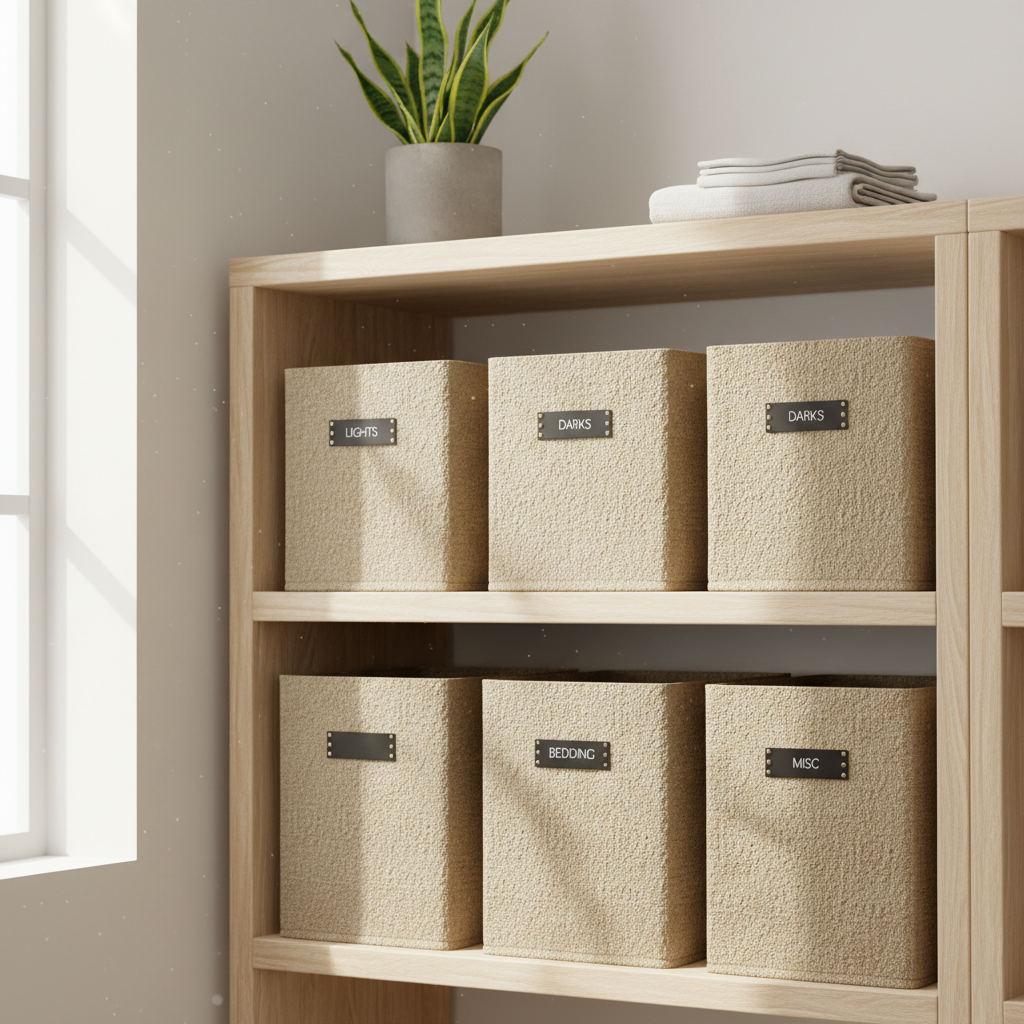
Use simple labels for bins that look identical: “Backstock,” “Delicates,” “Rags,” “Lost & Found.” Avoid over-labeling every micro-item, you’ll stop maintaining it.
Mistakes that make the room look Scandinavian but function worse
A lot of “pretty laundry rooms” fail on the boring details, then the clutter returns in a week.
- Decanting everything: it looks great, but if it slows you down, you’ll abandon it. Keep original packaging for products where instructions and safety info matter.
- Too many open shelves: open storage needs discipline. If your household is busy, mix in closed cabinets or lidded bins.
- Ignoring lint and trash: no trash can means wrappers and dryer sheets land on the counter.
- Over-optimizing for aesthetics: a room can be calm and still have a visible hamper. The goal is repeatable routines.
According to CDC, keeping appliances clean and managing moisture can help reduce mold risks in damp indoor areas. If you notice persistent musty odor or visible mold, it may be worth talking with a qualified professional.
Key takeaways you can apply today
- Design around your workflow, not around product photos.
- Use four zones: drop, wash, dry/care, fold/finish.
- Keep weekly items visible, push backups into one labeled bin.
- Create a single in-between basket to stop “laundry drift.”
- Mix open and closed storage so the room stays calm even on busy weeks.
Conclusion: a calm laundry room is mostly a system, not a renovation
If you want the Scandinavian look without the constant upkeep, treat this as a behavior-friendly setup: fewer categories, clear zones, and containers that match how your household actually moves. Pick one action today: build your four zones with painter’s tape labels, or create that in-between basket and commit to keeping it small. Once the room supports your routine, the “style” almost happens on its own.
FAQ
How do I start Scandinavian style laundry room organization if I have almost no space?
Focus on vertical storage and tight categories: one slim hamper, one small caddy for wash essentials, and door hooks for hangers and bags. In small spaces, fewer items beats better containers.
Do I need to decant detergent into matching bottles for a Scandinavian look?
Not necessarily. Decanting can help visually, but many people stop refilling after a month. A middle ground is to decant only the daily-use items and keep backups in a lidded bin with the original label visible.
What colors and materials read “Scandinavian” without feeling cold?
Warm white, soft greige, light oak tones, and small black accents usually feel balanced. Add texture with woven baskets or matte ceramics so the room feels lived-in, not sterile.
What’s the best way to handle clean laundry that sits around?
Use 2–4 tall sorting baskets labeled by person or room, and make “fold + finish” a real zone with a clear counter. If folding never happens, consider a basket-per-person system that still looks tidy.
How should I organize a laundry room that’s also a mudroom?
Draw a hard line between “laundry textiles” and “outdoor gear.” Separate bins, separate hooks, and ideally separate lower zones so wet shoes don’t mingle with clean laundry storage.
What’s a realistic maintenance routine to keep it from sliding back?
Do a 3-minute reset once or twice a week: empty the in-between basket, wipe the counter, and return weekly items to the tray. Monthly, check backstock so duplicates don’t quietly multiply.
When should I call a professional for laundry room issues?
If you see persistent leaks, visible mold, repeated musty odor, or electrical concerns near appliances, it’s smarter to consult a qualified plumber, electrician, or remediation specialist. Organization helps, but it can’t fix building problems.
If you’re trying to get a Scandinavian look but want the setup to stay practical, a quick win is choosing a small set of matching bins, a tray for daily supplies, and a labeled backstock box, it’s a simple package that makes the system easier to maintain without turning your weekend into a remodel.