
Scandi boho home decor mix works when you treat “cozy” and “clean” as partners, not opposites, warm texture with quiet structure so the room feels relaxed but still intentional.
A lot of homes miss the mark in one of two ways, they go full boho and lose visual breathing room, or they keep everything Scandinavian-neutral and wonder why it feels a bit flat. The mix is popular because it solves a real problem, many people want warmth without clutter, and minimalism without feeling sterile.
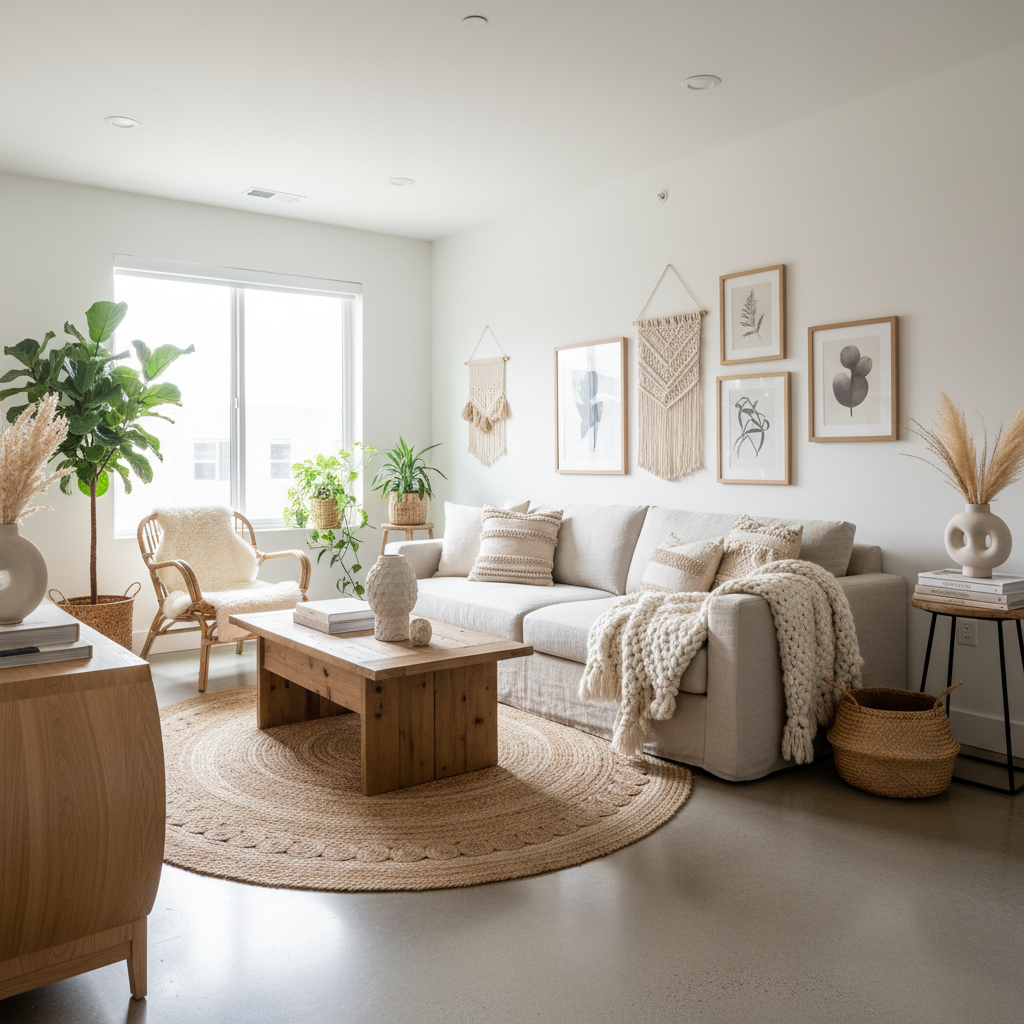
This guide focuses on the decisions that actually move the needle, palette, materials, “how many pieces is too many,” and what to buy first if you’re starting from scratch. You’ll also get a quick self-check list and a room-by-room plan so you’re not stuck scrolling mood boards with no next step.
What “Scandi” and “Boho” really mean in a room
Before shopping, it helps to name what each style contributes. Scandinavian interiors tend to rely on light, function-first layouts, and a calm base of neutrals. Boho typically brings handmade character, layered textiles, and imperfect charm. The mix looks best when you keep the Scandinavian “base layer” and use boho as the seasoning.
According to IKEA, Scandinavian design commonly emphasizes simplicity, functionality, and light-enhancing choices, that’s a useful anchor when you’re tempted to overdecorate. On the boho side, you can think less about “theme” and more about tactility, woven, nubby, fringed, ceramic, aged wood.
- Scandi anchors: clear walkways, light walls, simple silhouettes, practical lighting
- Boho softens: textiles, artisan details, mixed materials, a little pattern
Why this mix looks messy (and how to stop it)
Most “it looks off” rooms have one core issue, the contrast rules aren’t consistent. You’re mixing styles, but also mixing scale, color temperature, and finishes with no hierarchy. Here are the common culprits.
- Too many competing statements: macramé wall, bold rug, patterned pillows, and busy gallery wall all fight for attention.
- Undecided neutrals: cool gray walls with warm creams and yellow woods can feel accidental, not curated.
- Texture without structure: lots of baskets and throws, but no clean-lined “resting points” like a simple sofa, streamlined bed, or clear-top coffee table.
- All small décor, no big moves: tiny objects everywhere reads as clutter, even if each item is cute.
One practical rule that helps, decide what stays quiet and what gets to be expressive. In many cases, walls + large furniture stay Scandi, while rugs + throws + one or two artisanal pieces bring the boho mood.
A quick self-check: which direction is your home leaning?
If you can diagnose the imbalance, your fixes get cheaper and faster. Use this checklist and pick the closest match.
- “It feels cold” → too few textiles, too much hard surface, lighting is bright but not warm
- “It feels busy” → too many small accents, patterns stacked without a consistent palette
- “It feels beige and boring” → you have neutrals, but not enough texture contrast or natural variation
- “It feels dark” → heavy woods, too much black, or layered décor blocking light
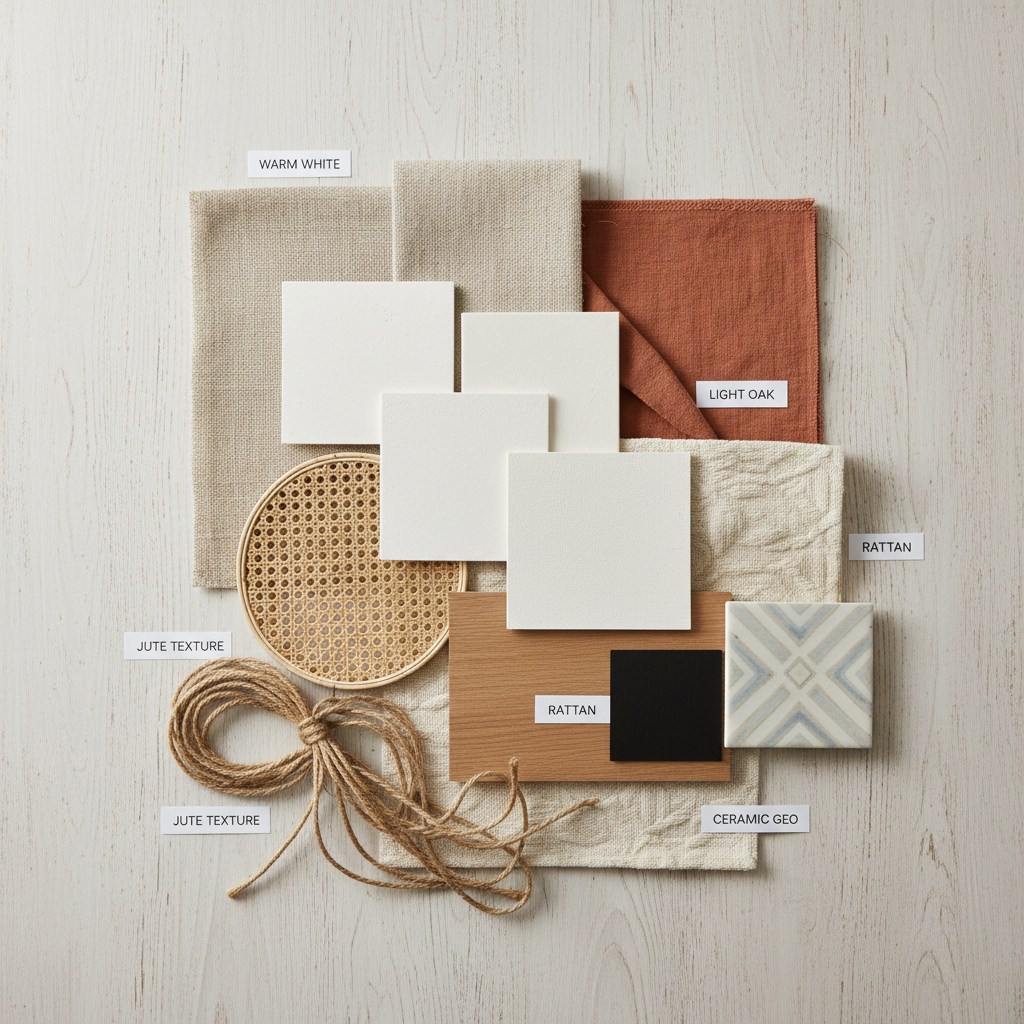
Once you name the problem, pick one “anchor change” and one “accent change,” for example, if it feels cold, start with warmer bulbs and a larger rug before buying more objects.
The core formula: calm base + natural texture + one pattern family
If you want a reliable scandi boho home decor mix, this is the simplest recipe: keep the big surfaces calm, then layer texture, then add pattern with rules. It sounds basic, but it prevents the spiral of buying random cute things.
1) Build a calm base (your Scandi layer)
- Walls: warm white, soft off-white, or very light greige, avoid icy gray if you want cozy
- Large furniture: clean lines, light-to-medium wood, simple upholstery (linen-look, cotton, boucle)
- Visual gaps: leave some empty space on shelves and walls on purpose
2) Add natural texture (your Boho layer)
- Woven pieces: rattan, cane, seagrass baskets
- Textiles: jute or wool rug, linen curtains, chunky knit throw
- Handmade accents: imperfect ceramics, carved wood, artisanal vases
3) Choose one pattern family
Pattern is where many rooms go sideways. Pick one family and repeat it lightly.
- Soft geometrics (Scandi-friendly) in muted tones
- Global-inspired stripes or small-scale kilim motifs (Boho-friendly) in a limited palette
Color and materials guide (with a practical table)
Color is less about “which shade is trendy,” more about temperature and repetition. Warm neutrals plus natural wood usually do the heavy lifting. Then you choose one or two accent colors for personality.
| Element | Scandi-leaning choice | Boho-leaning choice | Easy way to blend |
|---|---|---|---|
| Walls | Warm white, soft matte | Clay or limewash look | Keep walls light, add clay tone via pillows or art |
| Wood | Light oak, birch | Walnut, reclaimed wood | Use one main wood, add the other as small accents |
| Metal | Matte black, brushed steel | Brass, aged bronze | Pick one dominant metal, the second stays minimal |
| Textiles | Solid linen, wool | Tufted, fringed, patterned | Mix solids with one patterned “hero” textile |
| Accent color | Sage, dusty blue | Terracotta, mustard | Choose one accent, repeat 3 times around the room |
If you’re unsure, stay with warm white + light oak + black accents, then add terracotta or sage through textiles. You can change those later without replacing furniture.
Room-by-room steps you can actually follow
Here’s the part most guides skip, what to do in a real home with real constraints. Pick the room you care about most and run the steps in order, it prevents “half-updated everywhere.”
Living room
- Start big: a larger rug than you think, ideally front legs of seating on the rug, it instantly calms the layout.
- Then lighting: one warm floor lamp plus a softer table lamp, aim for layered light, not one overhead blast.
- Add one artisan statement: a woven pendant, a ceramic lamp base, or a vintage-style side table.
- Limit small décor: 1 tray on the coffee table, 1 plant, 1 book stack is often enough.
Bedroom
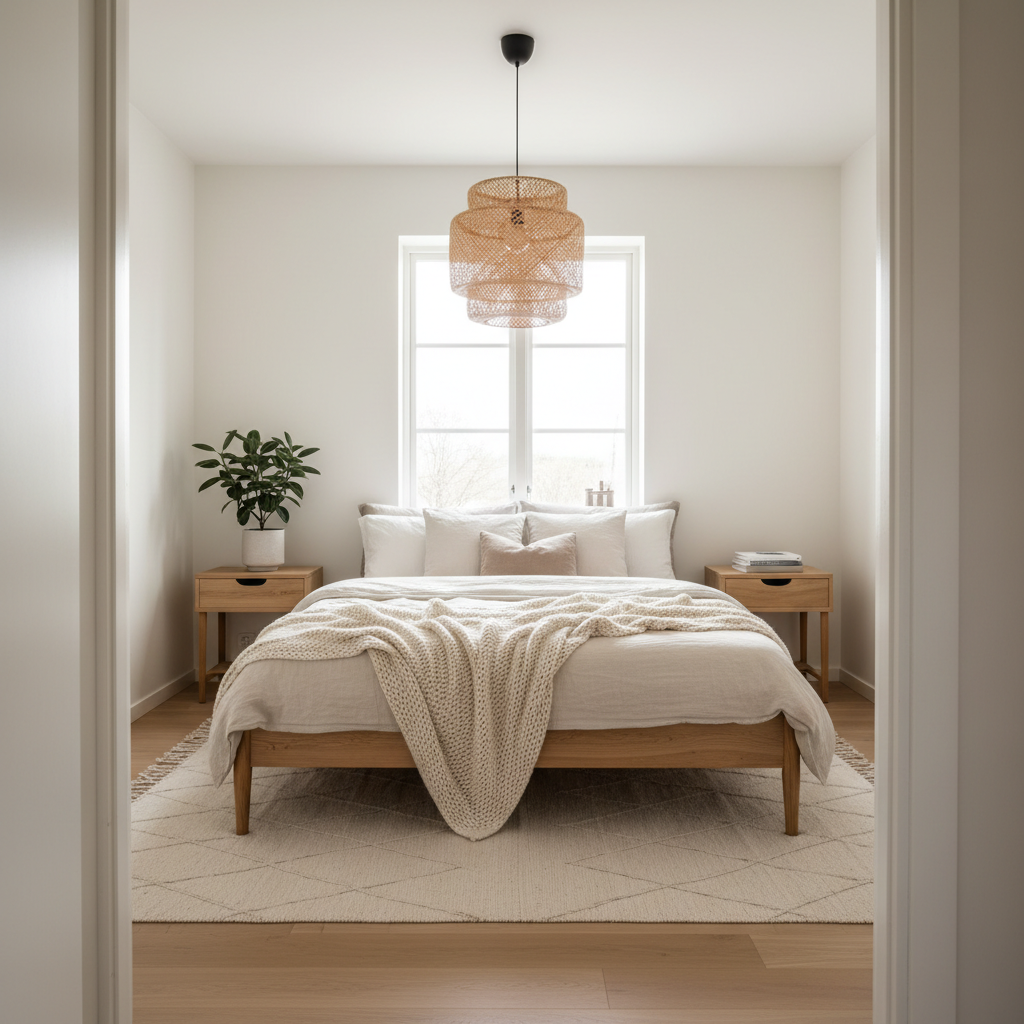
- Make the bed the texture zone: crisp neutral duvet, then a throw and 2–3 pillows with one subtle pattern.
- Keep nightstands simple: clean lines, then add one handmade object per side, not five.
- Soften walls: textile wall hanging or framed abstract line art, pick one.
Kitchen + dining
- Scandi does the heavy lifting here: clean counters, simple bar stools, practical storage.
- Boho shows up in touch points: woven seat cushions, pottery bowls, a runner, or wood cutting boards left out neatly.
- Mind hygiene and safety: natural fibers near heat sources can be a fire risk, keep textiles away from open flames, ask a professional if you’re unsure about placements.
Shopping priorities: what to buy first (and what to pause)
When budgets are real, priority matters. If you buy only “cute accents,” the room won’t change much. Go after the items that set tone and scale.
- Buy first: rug, curtains, lighting, one substantial piece of wall art
- Then: throw blankets, pillows, baskets, one or two ceramics
- Pause on: tiny figurines, multiple patterned pillows, extra shelves “just for styling”
A decent shortcut, keep a running note with your palette and materials, for example “warm white, oak, black metal, jute, terracotta.” If an item doesn’t match at least two of those, it’s probably an impulse buy.
Common mistakes (and the fixes that usually work)
This style mashup is forgiving, but a few mistakes repeat constantly, and they’re surprisingly fixable.
- Mixing five woods: pick one primary wood tone, let the others appear in small pieces only.
- Too many open shelves: open storage turns into visual noise fast, mix closed storage with a small “display zone.”
- Overusing black: a little black frames the look, too much can push the room moody, swap some black for softer bronze or wood.
- Plants everywhere, but no plan: cluster plants in 1–2 spots, varying heights, instead of sprinkling tiny pots around.
According to The American Society of Interior Designers (ASID), good design balances function and aesthetics, which is a polite way of saying, if it’s hard to clean, hard to walk through, or hard to live with, the look won’t last.
Key takeaways you can keep on your phone
- Keep big surfaces calm, then add texture through textiles and natural materials.
- Pick one pattern family and repeat it lightly instead of mixing everything.
- Make one big change first (rug, lighting, curtains) before buying more décor.
- Curate, don’t crowd, empty space is part of the style.
Conclusion: make it feel lived-in, not styled-to-death
The best scandi boho home decor mix usually looks a little effortless, but it’s not random, it’s a calm foundation with a few warm, tactile choices that repeat around the room. If you want an easy next step, pick your palette in one line, then upgrade one “big lever” item this week, like the rug or lighting, and hold off on the small stuff until the room starts to settle.
FAQ
How do I keep a scandi boho home decor mix from looking cluttered?
Limit small décor and make sure you have quiet zones, an empty shelf section, a clear coffee table surface, a plain wall. Let texture come from rugs and textiles, not dozens of objects.
What colors work best for Scandinavian boho style in a small apartment?
Warm whites and light woods tend to make rooms feel bigger, then add one accent color like sage or terracotta. In small spaces, repeating the same neutral across rooms usually feels more intentional than switching palettes.
Can I mix black accents with boho textures without making the room feel harsh?
Yes, black works like a picture frame, keep it to outlines such as lamp bases, frames, or table legs, and balance with warm materials like jute, oak, and linen so it doesn’t dominate.
What’s the easiest “one purchase” upgrade for this look?
A larger rug often changes the room fastest because it sets scale and adds texture. If the room already has a good rug, layered lighting with warm bulbs is a close second.
How many patterns are too many in a Scandi-Boho room?
Many rooms feel balanced with one main patterned piece plus one subtle supporting pattern. If you notice your eye bouncing everywhere, it’s usually a sign to simplify and return to solids.
Should I choose rattan furniture or just use rattan accents?
If you already have clean-lined furniture, rattan accents are safer and easier to swap later. If you’re furnishing from scratch, one rattan statement piece can work well, but keep the rest of the silhouettes simple.
Does this style work with kids or pets?
Often yes, but choose washable textiles and durable weaves, and avoid fragile décor at low heights. If you’re considering wall-hung pieces or heavy items over beds and sofas, it may be worth asking a professional about safe mounting.
If you’re trying to pull the look together but keep second-guessing purchases, a simple approach is to build a short “buy list” around your palette and your one pattern family, then shop only those categories until the room feels coherent, it saves money and decision fatigue.