
How to hang plants without drilling usually comes down to two things, weight and surface, get those right and the rest feels easy.
If you rent, live in a dorm, or just hate patching holes, “no-drill” plant hanging can be a lifesaver, but it also has a reputation for failing at the worst moment, usually because the hook choice did not match the wall paint, humidity, or planter weight.
This guide walks you through reliable no-drill methods, how to choose the right one for your wall and plant, plus a quick safety checklist so you do not end up with broken pottery on the floor.
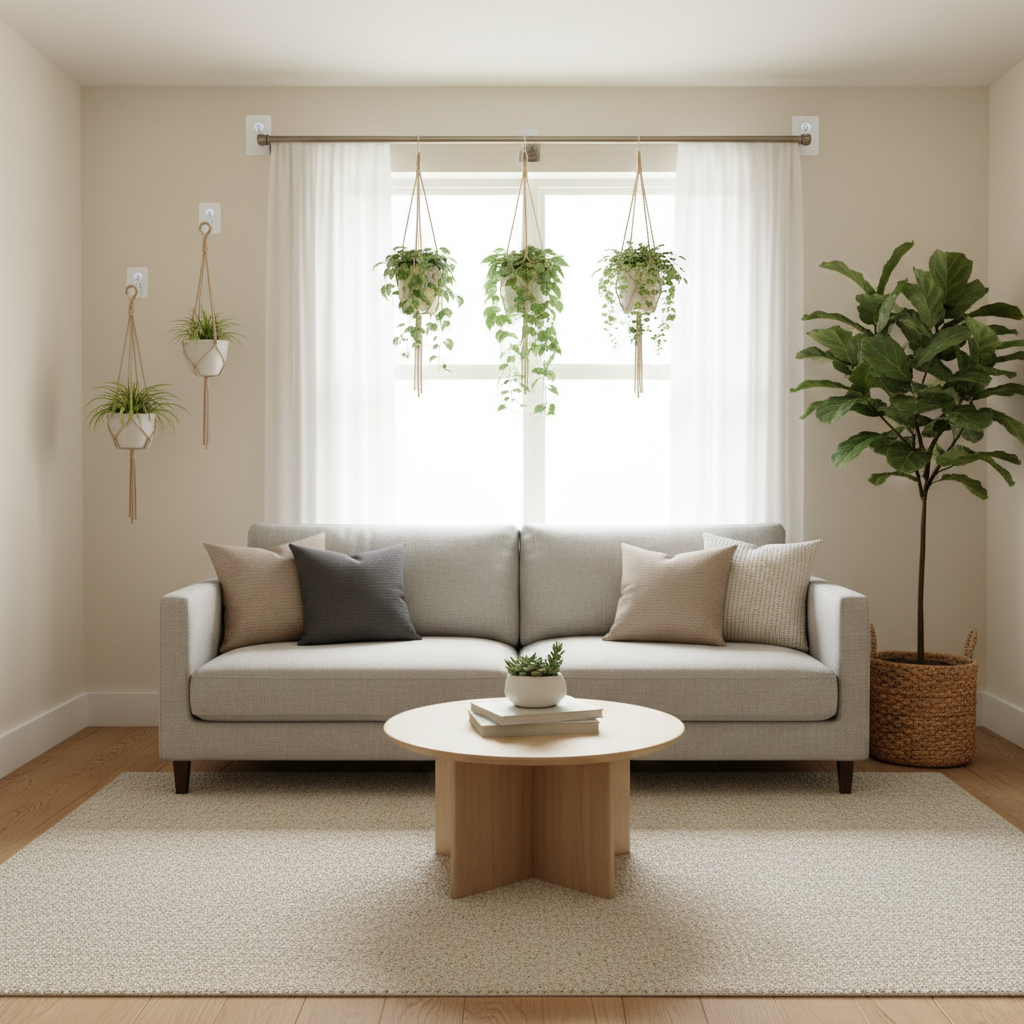
Pick the right method by weight, wall type, and risk tolerance
Before you buy hooks, do a quick reality check, most “no-drill” failures happen when a setup is asked to do more than it reasonably can. Lightweight trailing plants are forgiving, a saturated pothos in a heavy ceramic pot is not.
What usually matters most
- Total hanging weight: pot + plant + wet soil + cachepot, water can add surprising weight.
- Surface: painted drywall, tile, glass, metal, and textured walls behave differently with adhesives.
- Moisture and heat: bathrooms, kitchens, and sunny windows can weaken adhesive over time.
- Risk: do you care more about zero wall marks, or maximum security.
Fast decision table (no-drill options)
| Method | Best for | Typical limit (real-world) | Where it can go wrong |
|---|---|---|---|
| Adhesive ceiling/wall hooks | Light planters, smooth paint, tile, glass | Often safe for small to medium loads | Peeling paint, texture, humidity, bad prep |
| Tension rod + S-hooks | Windows, alcoves, between two walls | Moderate loads if properly braced | Rod slip, weak contact points, overloading |
| Over-the-door hooks / racks | Bathrooms, laundry rooms, closets | Moderate loads | Door misalignment, slam risk, scratching |
| Freestanding plant stand with hanging bar | Heavier plants, renters who want stability | Higher loads, depends on stand | Tipping if top-heavy, pets/kids bumping |
| Clamping solutions (shelf clamps, curtain-rail clamps) | Apartment shelves, sturdy ledges | Light to moderate | Damaging thin shelves, slipping clamps |
Manufacturer ratings are helpful, but they assume ideal surfaces and perfect installation. If you want fewer surprises, use a buffer, aim to hang well below the stated maximum.
Adhesive hooks: the most common no-drill approach (and the easiest to mess up)
Adhesive hooks work great when you treat them like a small installation project, not a sticker. If your main question is how to hang plants without drilling and still sleep at night, your prep step matters as much as the hook.
Where adhesive hooks tend to work well
- Smooth, clean surfaces like sealed paint, tile, glass, metal.
- Lightweight hanging planters and trailing plants.
- Places without constant steam or direct afternoon sun.
Step-by-step: safer adhesive-hook setup
- Weigh the plant: use a bathroom scale, then subtract your weight, or use a kitchen scale for small pots.
- Clean the surface: wipe with isopropyl alcohol and let it dry, many adhesives dislike oily residue.
- Place thoughtfully: avoid fresh paint, flaky areas, or heavy texture.
- Press and wait: follow the brand’s cure time, hanging immediately is a common failure point.
- Test gradually: load it with something lighter first, then move up.
According to 3M, many Command products require a set time after application before you can hang weight, ignoring that window is where people get burned. If your walls are matte, chalky, or textured, adhesives can be unpredictable, sometimes a tension rod or stand is simply a better bet.
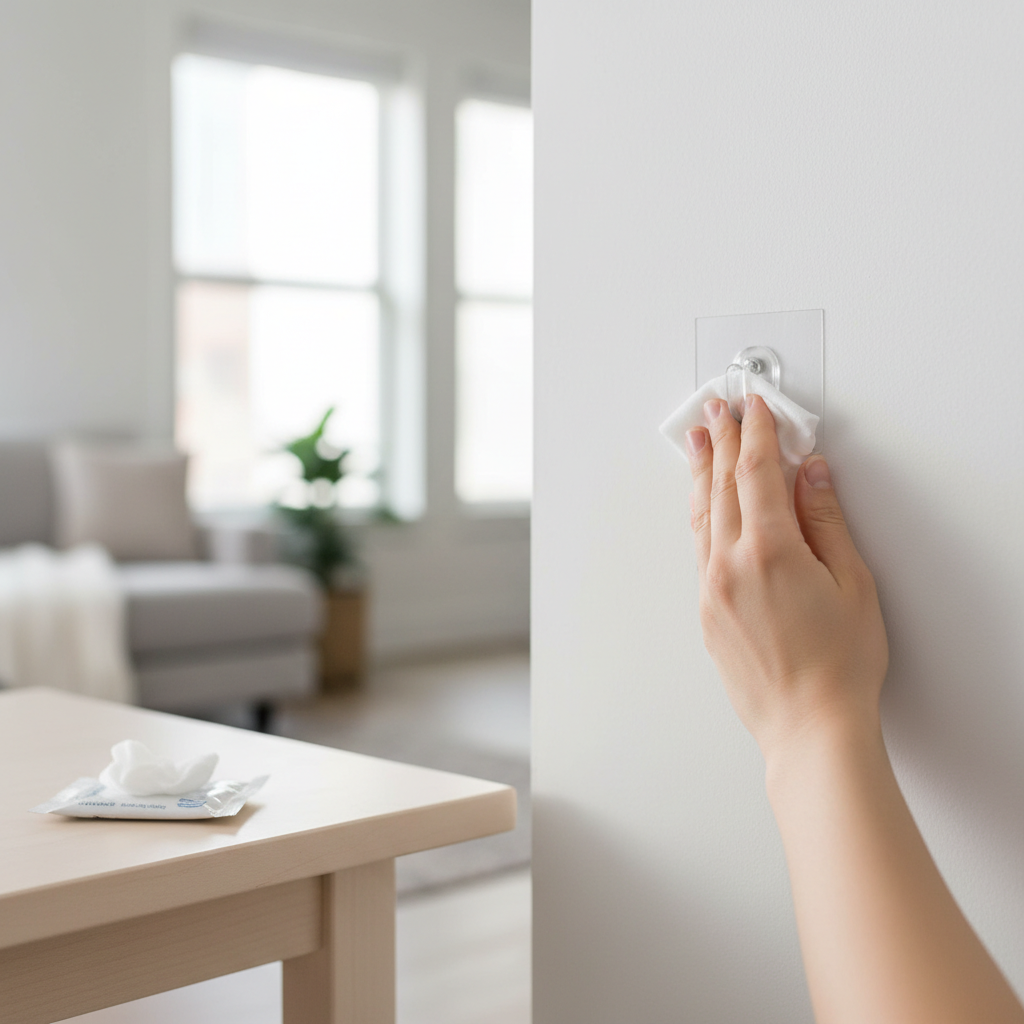
Tension rods and curtain rods: strong option when you have two solid contact points
Tension rods feel almost too simple, but when they are braced between two solid surfaces, they handle hanging plants with less drama than many adhesive setups. They also avoid paint pull-off, which is a quiet win for rentals.
Good places to use a tension rod
- Inside a window frame for sun-loving plants.
- Between two walls in a small nook.
- Across a shower area for humidity-tolerant plants, if you can keep the load light and safe.
Setup tips that make it feel “locked in”
- Choose a rod with a higher load rating and grippy ends.
- Position it where both sides are flat and sturdy, not on crumbling plaster or weak trim.
- Use S-hooks or carabiners, they make it easy to adjust spacing and reduce twisting.
- Keep weight centered, a heavy plant at one end encourages slip.
If the rod sits in a high-traffic spot, consider moving the plants slightly higher, people brushing past a planter is a real-world failure mode that product pages never mention.
Over-the-door hooks and hanging racks: underrated for bathrooms and laundry rooms
Over-the-door setups are not glamorous, but they are reliable for small to medium plants, and they keep you out of adhesive and paint territory entirely. For many renters, this is the simplest “set it and forget it” answer to how to hang plants without drilling.
Practical ways to use door hardware
- Hang a small plant from an over-the-door hook on the inside of a bathroom door, away from the swing path.
- Use a towel bar style over-door rack and attach multiple small plants with carabiners.
- Add felt pads where metal touches the door to reduce scuffs and rattling.
One caution, doors slam, especially with kids, roommates, or spring hinges. If the pot is breakable, use a lightweight plastic planter or add a soft liner.
Freestanding and leaning options: when you want “no-drill” but still want confidence
If you have a heavier plant or you are tired of second-guessing adhesive ratings, a stand can be the calmest choice. It takes up floor space, yes, but it removes most of the uncertainty.
Options that work well in real homes
- Freestanding hanging plant stands: good for corners and near windows.
- Garment racks: surprisingly useful as an indoor “plant bar” for multiple hangers.
- Leaning ladder shelves: use top rungs for hanging lightweight planters, lower shelves for heavier pots.
Look for a wide base, and if pets or small kids are in the home, consider anchoring the stand to a heavy piece of furniture with a discreet strap, or choose shorter, wider stands that are harder to tip.
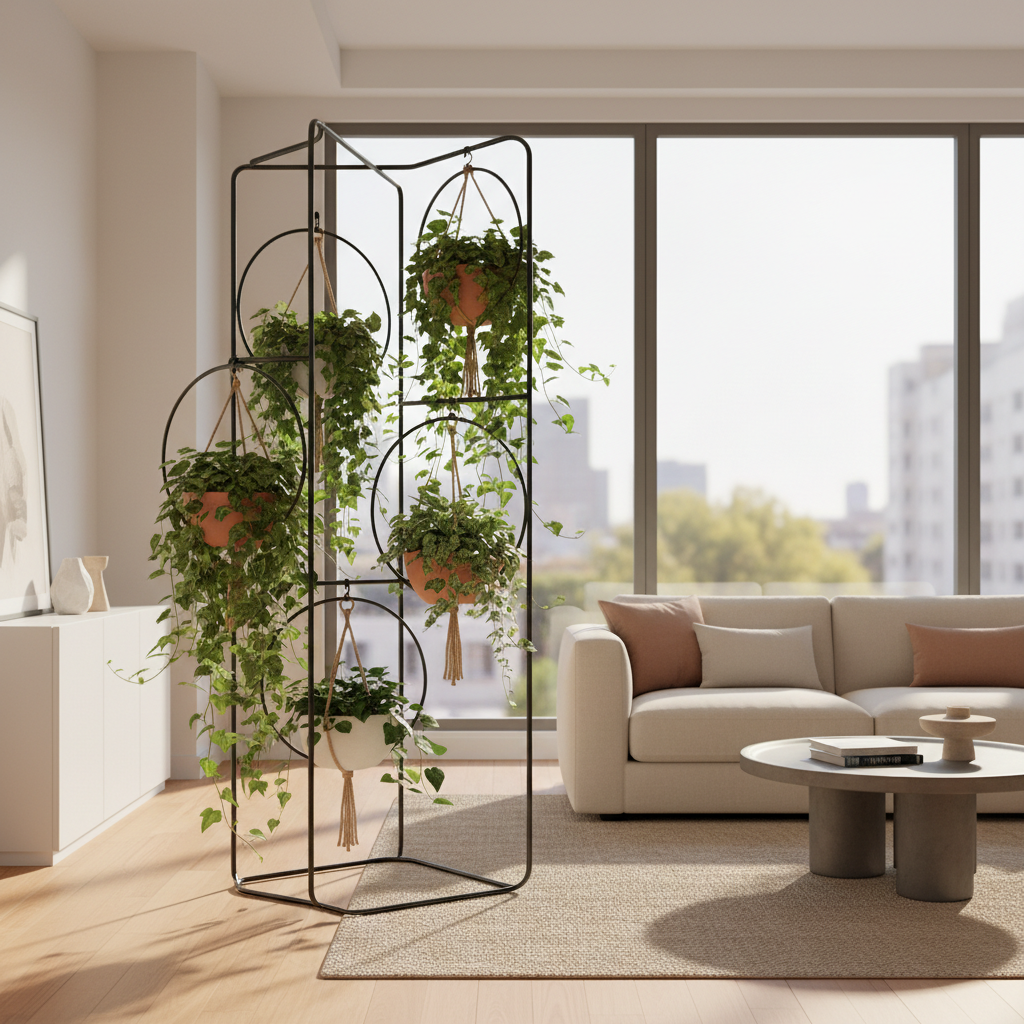
Quick self-checklist: are you set up for success?
If you want a quick gut check before committing, run through this list. If you answer “no” to a couple items, switch methods or lighten the load.
- My planter is light enough even after watering.
- The surface is smooth, clean, and not peeling or freshly painted.
- I can keep it away from constant steam, splashes, or direct harsh sun.
- I have a plan to prevent bumps, door slams, or pet interference.
- I am okay with minor cosmetic risk, or I chose a method that avoids adhesives entirely.
Common mistakes that cause falls (and how to avoid them)
The frustrating part is that most problems look like “bad luck,” but they are usually predictable.
- Ignoring cure time: adhesive needs time to bond, hang too soon and it slowly slides.
- Hanging a wet, heavy pot: water weight pushes setups over the edge, especially after watering day.
- Textured or dusty paint: adhesive bonds to dust, then dust releases from the wall.
- Using one hook when two would calm things down: two-point support reduces swing and peel force.
- Putting plants where people brush past: a small daily bump becomes a weekly failure.
Key takeaway: if you want fewer surprises, reduce movement, reduce moisture, and keep your load comfortably under limits.
When you should consider a pro or a different plan
There are times when “no drill” is not the responsible answer, especially if a fall could injure someone or damage something expensive.
- You want to hang a heavy ceramic planter over a crib, bed, couch, or a frequently used walkway.
- Your walls show peeling paint, crumbling plaster, or unknown coatings that adhesives might not like.
- You are dealing with a ceiling setup near sprinklers, lights, or HVAC vents, in many buildings this can be sensitive.
In these cases, it may be worth asking your landlord for permission to use a proper anchored hook, or checking with a handyman. If you are in a condo or building with strict rules, a quick check with building management can prevent headaches later.
Conclusion: choose boring and stable, your plants will still look great
How to hang plants without drilling is less about a magic product and more about matching the method to the weight, the surface, and everyday life in your home. Adhesive hooks can work beautifully when the wall and conditions cooperate, tension rods and stands often feel more forgiving when they do not.
If you want a simple next step, pick one lightweight plant, test your method for a week, then scale up once you trust it. Your future self, and your floors, will appreciate the slow start.
FAQ
- What is the safest way to hang plants without drilling in a rental?
Many renters get the most consistent results from a tension rod in a window frame or a freestanding stand, because both avoid adhesive unpredictability and paint pull-off. - Do adhesive hooks really hold hanging plants?
They can, especially on smooth, clean surfaces with enough cure time, but texture, humidity, and heavier pots often make performance inconsistent in real homes. - How do I know if my plant is too heavy for a no-drill hook?
Weigh the full setup after watering, then stay well under the hook’s rating, if you are close to the limit, switch to a tension rod or stand. - Can I hang plants from the ceiling without drilling?
Some people use ceiling-rated adhesive hooks, but ceilings vary a lot in paint and texture, if there is any doubt or the plant is heavy, a freestanding solution is usually safer. - Will adhesive hooks damage paint when removed?
They are designed to remove cleanly, but paint quality matters, older or poorly bonded paint can still peel, test in a low-visibility spot if you are unsure. - Are tension rods safe for multiple plants?
Often yes, if the rod is rated for the span and you keep weight centered, adding too much weight to one side is the common slip trigger. - What plants work best for no-drill hanging setups?
Lightweight trailing plants like pothos, heartleaf philodendron, and some spider plants are popular, but pot choice matters as much as plant type.
If you are trying to make hanging plants look intentional without drilling, it can help to map your “plant zones” first, windows, door backs, corners with stands, then choose hardware once you know where weight and traffic will land, it saves money and prevents most redo work.