
Bathroom vanity organization ideas often come down to one simple goal: make your daily routine faster without turning the vanity into a “junk drawer with a sink.” If your counter keeps refilling itself, it’s usually not a discipline issue, it’s a storage system issue.
The good news, most vanities can feel twice as usable with a few targeted changes, not a full renovation. The trick is to organize around how you actually get ready, not around what looks perfect in a staged photo.
In this guide, you’ll get practical, 2026-friendly updates, quick ways to diagnose what’s not working, and setup ideas for different vanity types, from pedestal sinks to double vanities.
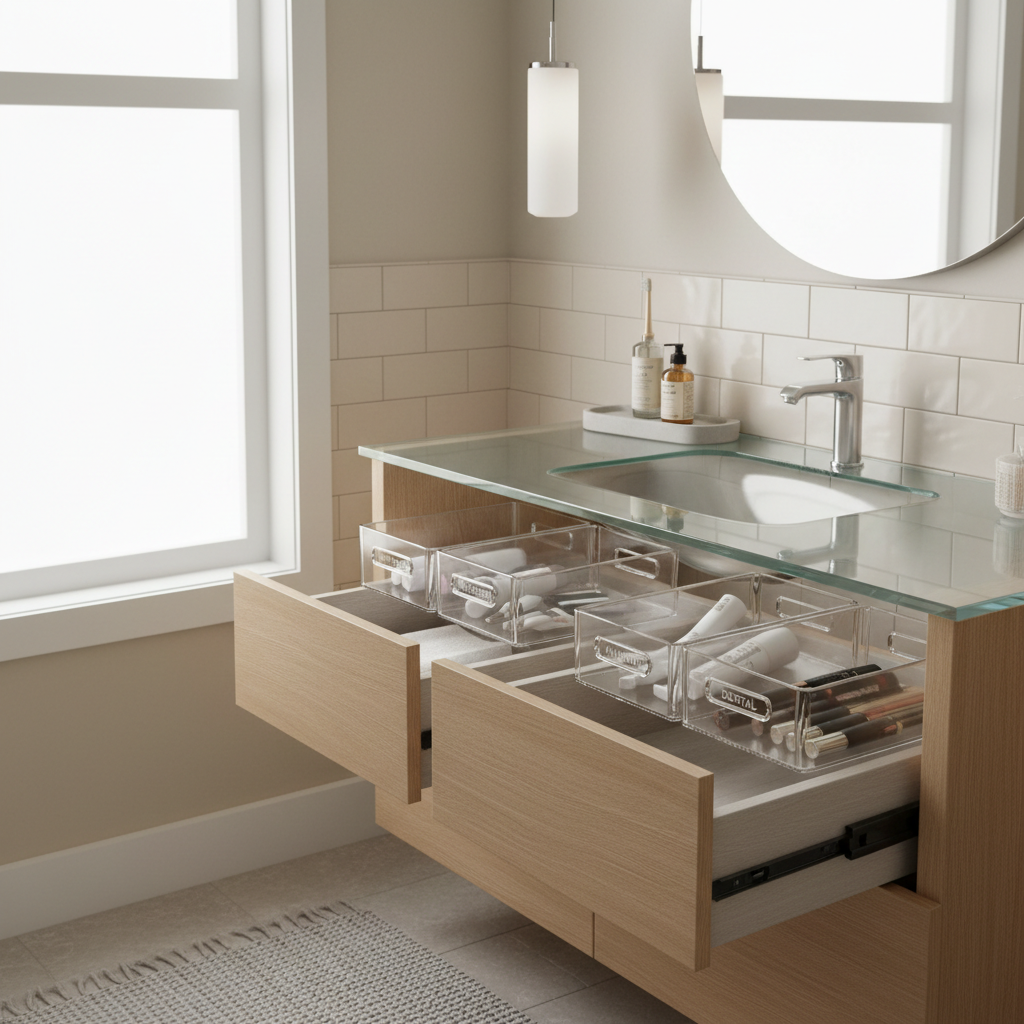
Why vanity clutter keeps coming back (even after you “clean it”)
If your vanity looks great right after you tidy, then slides back into chaos within a week, one of these is usually happening.
- Your storage doesn’t match your routine, daily items live behind rarely used products, so they migrate to the counter.
- You’re storing by category, not by moment, skincare in one place, makeup in another, hair tools somewhere else, but you use them together.
- Drawers are “big empty boxes”, without dividers, everything stacks, tips over, and becomes invisible.
- No defined landing zone, toothbrushes, rings, clips, and meds need a home near the sink, or they’ll spread.
- Too many duplicates, half-used products and backups take the prime real estate meant for daily use.
Also, lighting and mirrors matter more than people think. When you can’t see what you have, you overbuy, then storage fails again.
A quick self-check: what kind of vanity organizer do you need?
Before buying containers, figure out your “problem pattern.” This takes five minutes and saves money.
Pick the closest match
- Counter is crowded: you need a daily-use tray + vertical storage + fewer items stored near the sink.
- Drawers won’t close: you need decluttering rules + drawer dividers sized to products.
- Under-sink is a black hole: you need zones + pull-out bins, not one giant pile.
- Shared vanity conflicts: you need assigned sections per person and duplicate “high-traffic” tools.
- Small bathroom, no drawers: you need wall-mounted options and slim organizers that use height.
According to U.S. Consumer Product Safety Commission (CPSC), medications should be stored up and away from children’s reach. If kids visit your home, treat under-sink storage as a safety zone, not a convenience zone.
Build a simple vanity system: zones that stay organized
The most durable bathroom vanity organization ideas use “zones,” which is just a fancy word for putting items where you naturally reach for them.
Zone 1: Daily reset (countertop)
- Keep only what you use every day, usually 5–10 items.
- Use a wipeable tray (stone, resin, stainless) so you clean the tray, not 12 separate bottles.
- Stand items upright, avoid laying tubes down, they leak and look messy fast.
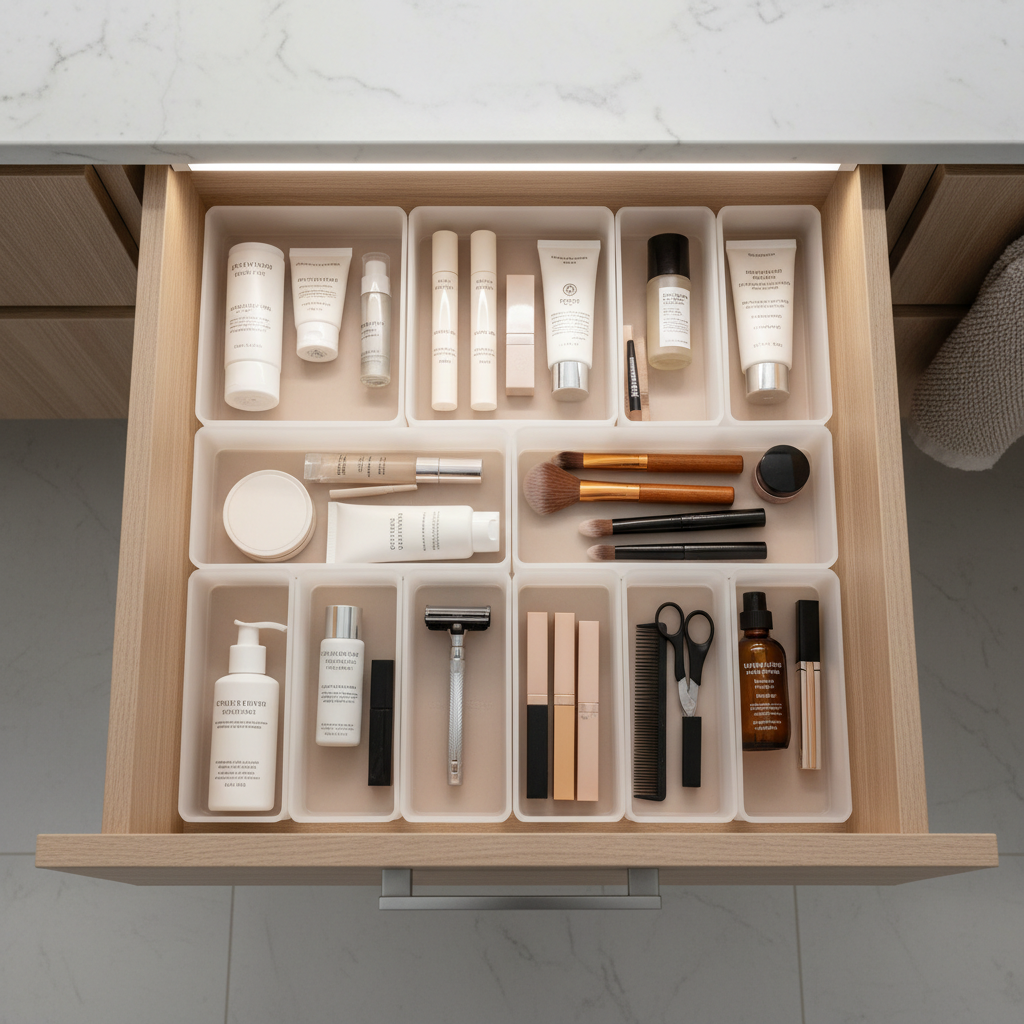
Zone 2: Getting-ready kit (top drawer)
- Group by routine: AM, PM, hair, shave, makeup, contacts.
- Add dividers so each routine has a “lane,” not a pile.
- Keep cotton rounds, floss picks, and small refills here, not on the counter.
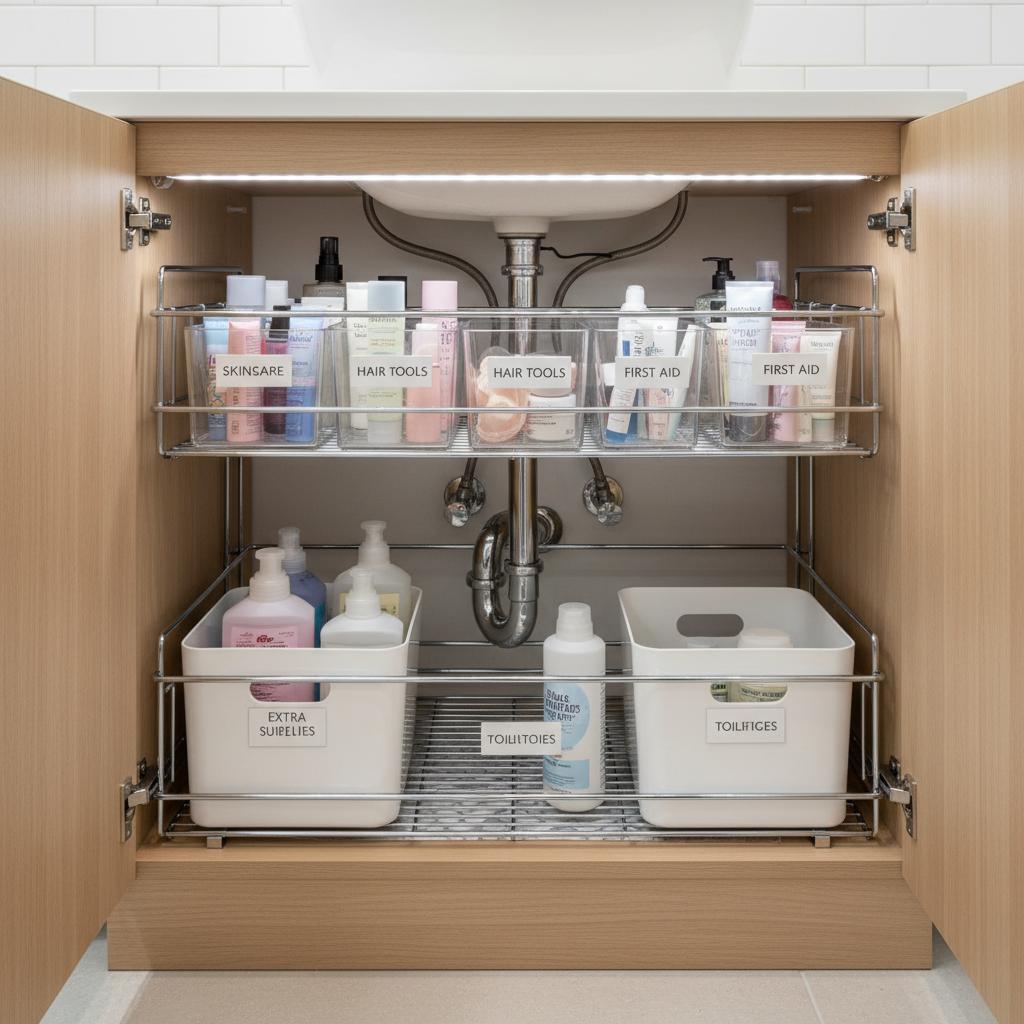
Zone 3: Bulk + backups (under sink)
- Use two bins: Backups and Cleaning/Tools (plunger, wipes, gloves, etc.).
- Keep leak-prone items in a bin with sides, especially around plumbing.
- Store chemicals separately from skincare; if you have sensitivities, consider asking a professional about safe storage choices.
2026 upgrades that feel “smart” without being gimmicky
You don’t need tech everywhere, but a few modern tweaks can remove daily friction.
- Modular drawer inserts that expand and reconfigure when your products change.
- Vertical tool storage for hair dryer and hot tools, ideally heat-safe and mounted away from water.
- Magnetic strips inside cabinet doors for tweezers, nail clippers, bobby pins, if humidity won’t rust them.
- Refill-friendly bottles in the shower and at the sink, fewer mismatched containers, less visual noise.
- Charging zone that stays dry, keep electric items away from splash areas, and follow manufacturer guidance.
According to U.S. Food and Drug Administration (FDA), cosmetics can become contaminated over time, especially with moisture exposure. Practically speaking, vanity organization is also about keeping products closed, dry, and easy to rotate.
Vanity organization ideas by layout (because one size never fits all)
Same “zones,” different execution. Use what your vanity gives you.
Single vanity with drawers
- Top drawer: daily routines, dividers, most-used items.
- Second drawer: hair tools, brush, styling products, heat mat.
- Bottom drawer: backups and less-used items, but cap it so it doesn’t become storage overflow.
Vanity with only cabinet doors (no drawers)
- Add stackable bins so you pull out a category at once.
- Use a small caddy as a “daily kit” and set it back under the sink after use.
- Consider a shelf riser to separate tall bottles from short items.
Pedestal sink or floating vanity (tiny bathroom)
- Go vertical: wall shelves, recessed cabinet, or a narrow over-toilet unit.
- Limit countertop items to one tray and one cup.
- Use a slim rolling cart if you need flexible storage, then park it away from splash zones.
Double vanity (shared space)
- Give each person a defined drawer and a defined counter section.
- Duplicate “shared bottlenecks” like floss, hand cream, hair ties, so they don’t migrate.
- Agree on a 60-second nightly reset, tray cleared, sink wiped, towels rehung.
A practical shopping guide (with a simple table)
If you buy organizers that don’t match your space, you’ll end up with pretty bins that still don’t solve anything. Measure first, especially drawer depth and under-sink height around the P-trap.
| Problem | What usually helps | What to watch for |
|---|---|---|
| Counter clutter | One tray + vertical cup + wall hook | Too many “daily” items sneaking back |
| Messy drawers | Adjustable dividers, shallow bins | Inserts taller than drawer height |
| Under-sink chaos | Pull-out bins, turntable for tall bottles | Moisture, leaks, items blocking shutoff valves |
| Too many small items | Lidded mini bins, magnetic strip | Rust in humid bathrooms, unlabeled containers |
| Shared vanity conflicts | Assigned zones, duplicates of essentials | “Floating” items with no owner |
Step-by-step setup you can do in an hour
If you want a quick win, do this once, then maintain it with tiny resets. This is where most bathroom vanity organization ideas become real, not aspirational.
- Empty everything from the counter, drawers, and under-sink into one pile so you can see volume.
- Trash and recycle obvious empties, old samples, broken caps, crusty hair ties.
- Sort by routine: AM, PM, hair, makeup, shaving, first aid, backups.
- Choose the counter “allowed list”: tray items only, anything else must earn a spot.
- Fit organizers to the products, not the other way around; tall bottles need tall bins.
- Label two things: backups and travel, so you stop rebuying what you already own.
Key takeaway: if an item doesn’t have a home, it will live on the counter. That’s not a personality flaw, it’s gravity.
Mistakes that waste money (and how to avoid them)
- Buying containers before decluttering: you’ll just “organize” excess into nicer boxes.
- Overcommitting to clear acrylic: it looks great, but shows every smear and may feel visually busy in small baths.
- Storing heat tools under the sink: humidity and cords don’t mix well, and it invites clutter tangles.
- Ignoring water exposure: wood trays and cardboard dividers warp fast near the sink.
- Filing everything upright when items are different heights: mix upright storage with shallow bins for stability.
According to American Cleaning Institute (ACI), cleaning products should be used and stored according to label directions. In real homes that often means keeping them capped, separated from personal-care items, and not stuffed where they tip easily.
When it’s worth getting extra help
Most vanity organization is DIY, but a few situations justify outside help.
- Recurring leaks or musty smells: fix moisture first, a plumber or qualified contractor can help diagnose the source.
- Mold concerns: if you suspect mold, consider consulting a remediation professional before deep cleaning, especially if anyone has respiratory conditions.
- Major layout frustration: if storage is genuinely insufficient, a designer or contractor can suggest drawer retrofits or cabinet modifications.
Conclusion: keep it simple, keep it honest
The best setups aren’t the fanciest, they’re the ones that match your morning. Start by choosing a small daily zone on the counter, give your routines a home in the top drawer, then contain backups under the sink so they stop competing with what you actually use.
If you do only two things this week, make it this: set a “counter allowed list” and add dividers to one drawer. Those two moves usually create enough breathing room to keep everything else in place.
FAQ
What are the easiest bathroom vanity organization ideas if I rent?
Focus on removable solutions: tray on the counter, tension rod under the sink for spray bottles, and drop-in drawer dividers. Avoid permanent adhesive near humid areas unless the product is rated for bathrooms.
How do I organize a bathroom vanity with no drawers?
Use pull-out bins under the sink and create a portable daily caddy that you can take out, use, and put back. It feels a little extra on day one, then it becomes automatic.
How many items should be on the vanity countertop?
For most people, 5–10 daily-use items is the sweet spot. If you routinely need more, switch to one tray so the surface still cleans quickly and looks calmer.
How do I stop family members from mixing their stuff in my drawers?
Assigned zones help more than rules. Give each person one drawer section or one bin, label it, and keep shared items in a separate “community” spot so they don’t drift.
Are clear organizers always better?
They’re great for visibility, but they also show residue and can feel visually loud. In small bathrooms, opaque bins with labels often look cleaner day-to-day.
What should not be stored under a bathroom sink?
Avoid anything that can be damaged by moisture or heat tools that you might put away while still warm. If you store medications there, consider safety and access, and if children are around, store them up and away.
How often should I “reset” my vanity organization?
A 60-second nightly reset keeps it stable. A deeper reset every month or two, mostly tossing empties and moving backups forward, usually prevents the slow creep back to clutter.
If you’re trying different bathroom vanity organization ideas but your space still feels tight, it may help to map your routine first, then choose organizers that match your most-used items, not your aspirational ones, it’s a small mindset shift that makes buying and maintaining storage much easier.