
Coastal home decor beach style can look effortless, but most homes end up in one of two traps, either everything turns into a themed “beach shop” vibe, or it gets so neutral you lose the coastal feeling entirely.
The sweet spot for 2026 is calmer and more livable, less obvious anchors and rope, more texture, light, and a few well-chosen references that feel collected over time. If you want the look without a full renovation, you can get there with paint choices, textiles, lighting, and a tighter edit of what stays on display.
One more thing that helps, coastal style reads “real” when it respects your region and your budget, a Florida condo and a New England colonial won’t use the same materials in the same way. This guide breaks down what’s trending in 2026, how to diagnose what your rooms actually need, and what to change first for the biggest visual payoff.
What’s actually “in” for coastal style in 2026
In 2026, coastal interiors lean into natural materials and softer contrast, the goal is relaxed polish, not beach clichés. The rooms that look best usually have three things, a light base, varied textures, and a small dose of color that feels coastal without screaming “nautical.”
- Quiet coastal palettes: warm whites, sand, putty, sea-glass green, smoky blue, muted navy used sparingly.
- Texture over theme: linen, cotton canvas, jute, seagrass, white oak, limewash-style walls, handmade ceramics.
- Organic shapes: rounded coffee tables, soft-edge mirrors, pebble-like décor forms.
- More matte, less shiny: brushed metals, aged brass, matte black in small accents, fewer glossy chrome moments.
According to the American Society of Interior Designers (ASID), wellness and comfort remain central to residential design decisions, and coastal homes fit that direction when you prioritize breathable fabrics, daylight, and uncluttered surfaces.
Why coastal rooms go wrong (and how to spot it fast)
Most “off” coastal rooms aren’t missing beach objects, they’re missing cohesion. Coastal home decor beach style needs a point of view: modern, traditional, cottage, or boho. Without that anchor, you get a random mix of driftwood signs, gray floors, and bright turquoise that never looks settled.
Common reasons it looks dated or messy
- Over-theming: too many literal references, anchors, coral sculptures, rope baskets everywhere.
- Flat neutrals: everything beige and white, no contrast, no depth, no texture.
- Wrong scale: tiny art on big walls, undersized rug, small mirror over a wide console.
- Cool gray overload: gray floors and gray walls can fight coastal warmth unless balanced with wood and creamy whites.
- Mixed wood tones with no plan: five finishes in one sightline makes the room feel like a showroom clearance aisle.
If you’re nodding at two or more items, that’s good news, it means you don’t need “more,” you need better editing and a tighter palette.
A quick self-check checklist (pick your room type)
Use this to decide what to change first, because the right fix depends on what’s driving the problem.
- Type A: Theme-heavy — you own lots of beach décor items, but the room feels like a vacation rental.
- Type B: Too sterile — it’s light and neutral, but it feels blank, almost like a staged listing.
- Type C: Color chaos — you tried blues and aquas, and now the room looks busy or juvenile.
- Type D: “Good bones, still not coastal” — furniture works, but lighting, art, and textiles feel generic.
Key takeaway: Coastal home decor beach style is more about material choices and repetition of a few elements than it is about seaside objects.
Room-by-room beach style ideas you can actually execute
Start where you spend time, and keep changes visible. A guest room can wait; your living room and entry set the tone.
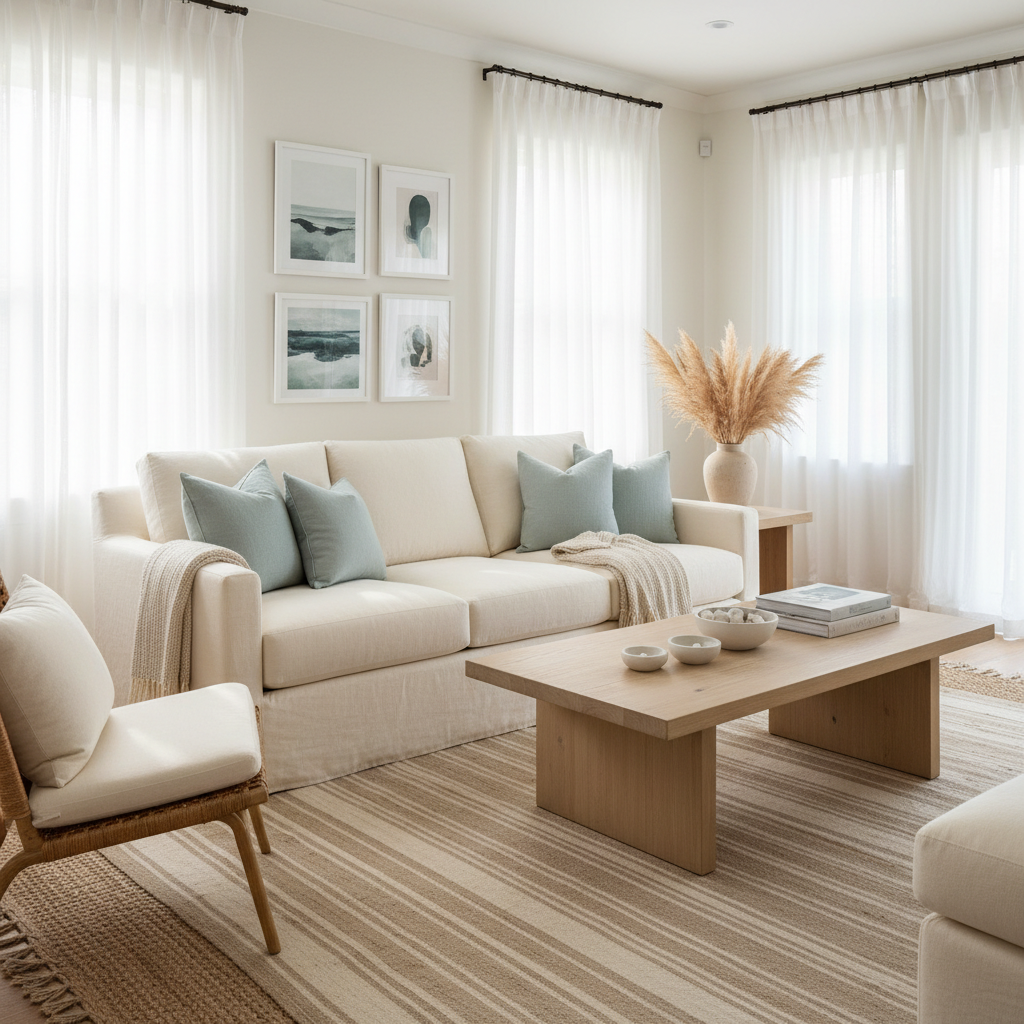
Living room
- Swap the rug first: choose a larger jute or low-pile wool rug in sand tones to ground the space.
- Do “one blue”: pick one coastal blue family and repeat it 2–3 times via pillows, a throw, and art.
- Replace table lampshades: linen or woven shades instantly warm cool rooms.
Kitchen and dining
- Barstools matter more than you think: woven seats or light wood frames add the coastal cue without clutter.
- Countertop edit: keep one tray with soap and a small plant, remove the rest for the “breezy” feel.
- Dining light fixture: a simple woven pendant or soft-white glass brings beach style without resort vibes.
Bedroom
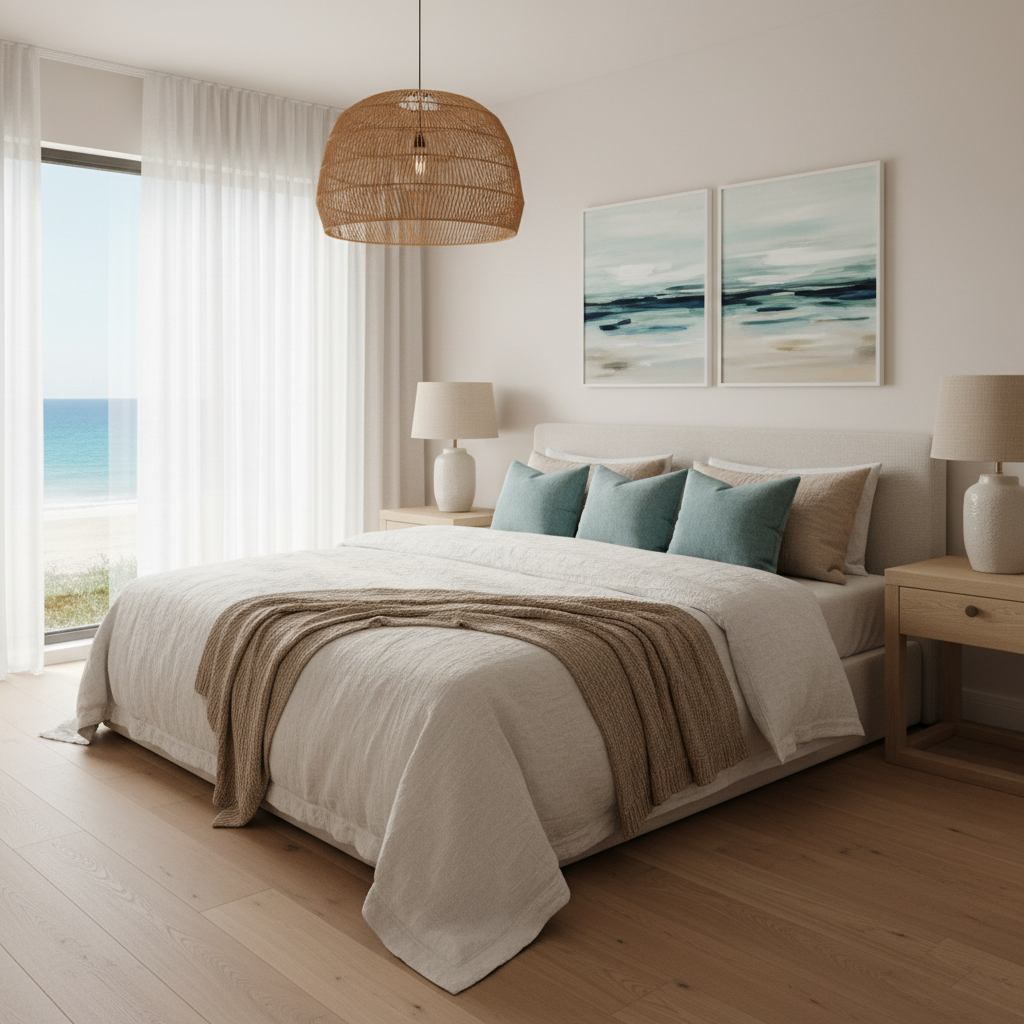
- Layered bedding: crisp cotton sheets plus a linen duvet cover and a textured throw reads coastal and upscale.
- Art that isn’t literal: seascape photography, coastal abstracts, or horizon lines work better than signs.
- Window treatment: sheer panels or woven shades, heavy drapes usually fight the look.
Bathroom
- Hardware and mirror: swapping to aged brass or matte black can modernize quickly, but match finishes within the same sightline.
- Textiles: white towels plus one muted stripe or sea-glass accent looks cleaner than busy prints.
- Natural accessories: a teak stool or stone soap dish feels coastal, shells everywhere rarely does.
2026 coastal color palettes and materials (with an easy mapping table)
If you want coastal home decor beach style that doesn’t date fast, treat color like seasoning. Most rooms look balanced when the base stays light, the wood stays warm, and color shows up in textiles and art.
| Look | Base | Accent colors | Materials that sell it |
|---|---|---|---|
| Modern Coastal | Warm white, soft putty | Smoky blue, muted navy | Light oak, linen, matte ceramics, black accents |
| Classic Beach House | Creamy white | Denim blue, sea-glass green | Beadboard, sisal, brass, striped cotton |
| Coastal Cottage | Soft ivory | Sage, dusty aqua | Painted wood, slipcovers, woven baskets, vintage art |
| Boho Coastal | Sand, warm white | Terracotta, faded teal | Rattan, macramé (minimal), chunky knits, handmade pottery |
According to the U.S. Environmental Protection Agency (EPA), improving indoor air quality often involves ventilation and mindful material choices, so if you repaint or refinish, many homeowners prefer lower-VOC options and adequate airing out, and in sensitive situations it may be smart to ask a professional painter what products fit your home.
Practical step-by-step plan (weekend friendly, no renovation required)
This is the order that usually gives the most visible change for the least money. If you try to “decorate” before you pick a palette and lighting temperature, you can waste time and still feel stuck.
- Pick a tight palette: 1 base neutral, 1 wood tone, 1 accent color, 1 metal finish.
- Fix lighting color: keep bulbs consistent room-to-room, many coastal interiors feel best around a warm soft white, but test in your space.
- Update textiles: rug, curtains, pillows, bedding, this is where the coastal texture lives.
- Rework wall art scale: one larger piece often beats a cluster of small prints that look scattered.
- Edit surfaces: clear 30–50% of visible objects on consoles, counters, and shelves.
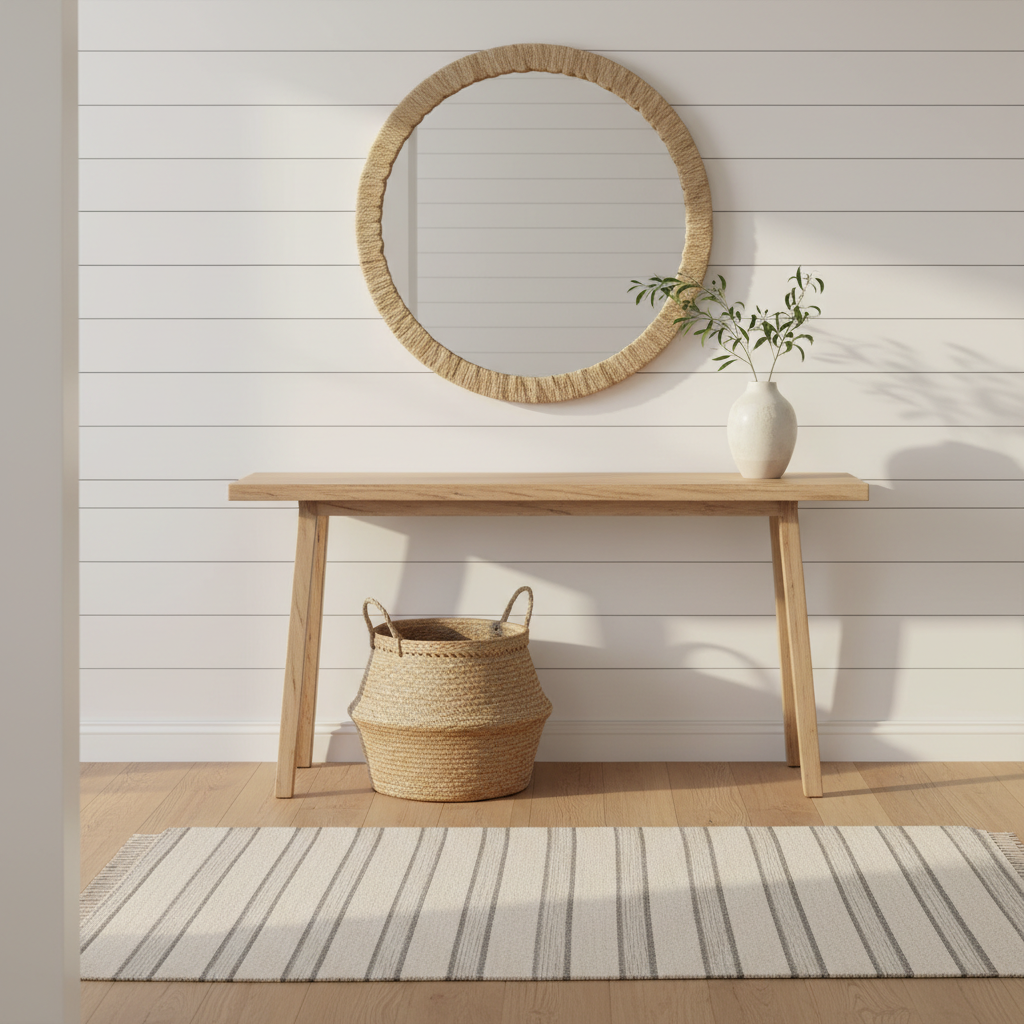
Quick win: If your room feels cold, add warm wood and linen before you add more blue. Many people do the opposite and wonder why it looks icy.
Mistakes to avoid (the stuff that quietly ruins the vibe)
Some choices look coastal on Pinterest but don’t hold up in real homes, especially when kids, pets, or small spaces enter the chat.
- Too many stripes: one stripe pattern is often enough, a rug plus striped pillows plus striped curtains gets loud.
- Decor sets: matching shell collections, identical prints, and “beach word art” tend to look mass-produced.
- Ignoring undertones: cool white paint can clash with warm flooring, sample first and check at night.
- Rattan overload: mixing woven pieces is great, but vary the weave and balance with solid materials.
- Open shelving clutter: coastal style needs air, if you can’t keep it edited, use closed storage.
Also, if you live in a humid coastal area, some natural materials may warp or mildew in certain conditions, so it’s worth checking care requirements and asking local pros what holds up best in your climate.
When it’s worth getting professional help
If you keep buying items and nothing clicks, the issue might be layout, scale, or finish coordination, not “taste.” A designer, decorator, or even a paint consultant can be useful when you face any of these:
- You have an open floor plan and the rooms feel disconnected
- You’re choosing flooring, tile, or major fixed finishes and fear expensive mistakes
- Your home has low natural light and every white paint looks gray
- You’re furnishing from scratch and need a plan to avoid costly returns
Many professionals can work virtually with photos and measurements, which keeps the scope manageable if you only need help with a coastal home decor beach style direction and a shopping list.
Conclusion: make it coastal, then make it yours
The most convincing coastal spaces in 2026 look calm, not themed, and they feel intentional even when the budget stays reasonable. If you do one thing this week, tighten your palette and upgrade textiles, that’s where the beach style mood shows up fastest.
If you want a second action, take a hard look at lighting and wall art scale, those two fixes quietly elevate everything else.
FAQ
How do I make coastal decor look modern instead of like a beach rental?
Use fewer literal coastal objects and lean on texture, linen, oak, woven accents, plus one or two large art pieces. Modern coastal is more about materials and negative space than décor clusters.
What colors work best for coastal home decor beach style in 2026?
Warm whites and sandy neutrals stay foundational, then add muted blues or sea-glass greens in smaller doses. If your home has cool-toned floors, warmer whites can keep the room from feeling icy.
Can I do coastal style in a small apartment?
Yes, and it often looks better when you keep it simple. Prioritize light-filtering window treatments, a cohesive palette, and a couple of woven pieces, then limit décor to avoid visual crowding.
What’s the easiest budget update that actually changes the room?
Textiles, especially a larger rug and new pillow covers, usually create the quickest shift. Paint also helps, but it takes more prep and the “right white” can be trickier than it seems.
Is shiplap still a good idea for coastal interiors?
It can be, but it depends on the house style and how much you use. A single accent wall or subtle paneling often feels more current than covering every wall, and smoother finishes can read more modern.
How do I mix coastal style with farmhouse or traditional furniture?
Keep the larger furniture if it fits your lifestyle, then steer the coastal cue through color, lighting, and accessories. Traditional shapes plus coastal textiles can look polished, while too many rustic signs can pull it off course.
What materials should I avoid in humid coastal climates?
Some natural fibers and unfinished woods may not hold up well in high humidity. If you’re near salt air or deal with damp seasons, it’s smart to ask local suppliers or a contractor about sealants and maintenance.
If you’re trying to refresh a space but feel stuck between “too beachy” and “not coastal enough,” a simple mood board and a short shopping list usually get you moving faster than another scroll session, and it keeps your choices consistent across rooms.