
how to decorate a small hallway usually comes down to one thing: making it feel intentional without making it feel crowded. If your hallway is narrow, dark, or constantly collecting shoes and mail, decorating can feel like you’re just rearranging the same mess.
The good news is that small hallways respond fast to a few smart moves, because there’s not much square footage to fight. A better runner, the right wall color, and one well-placed mirror can change the whole first impression.
What trips people up is treating a hallway like a “mini room.” It’s not. It’s a transition zone, so the decor has to earn its keep: guide traffic, add light, and hide the everyday clutter.
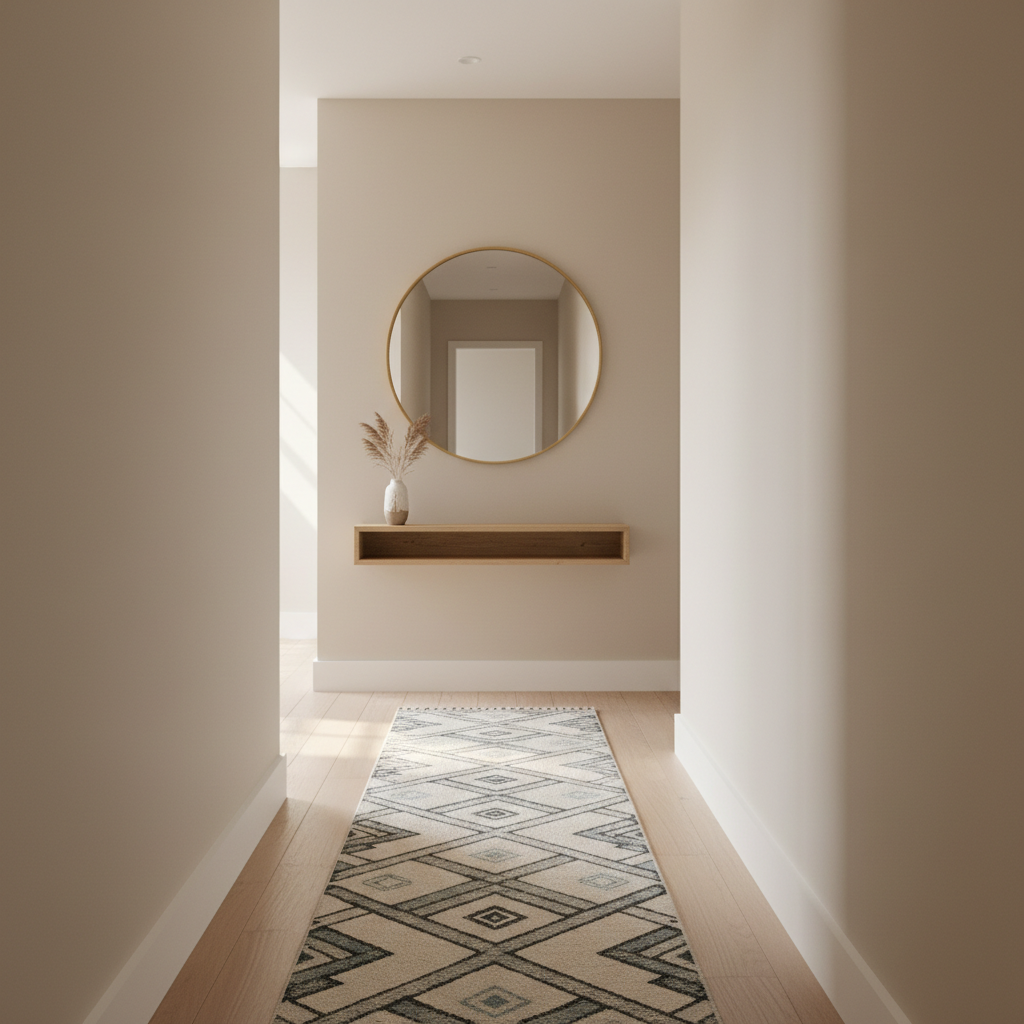
Below is a practical, room-by-room approach, what to measure, what to buy, what to skip, and how to get a hallway that looks styled on purpose, even on a normal weekday.
Start with constraints: measure, map the traffic, pick your “no-fail” zone
Before shopping, get honest about the constraints. In a small hallway, the layout matters more than the decor, because anything that sticks out becomes a shoulder-check.
Quick measurements that actually matter:
- Clear walking width: measure wall-to-wall, then subtract anything that protrudes (radiators, trim, vents).
- Door swing: open every door fully and note where furniture or hooks would conflict.
- Landing spots: where do keys, packages, bags, and shoes naturally end up right now.
A helpful rule of thumb is to protect a clean “lane” down the center. Many homes do best when decor stays either fully wall-mounted or very slim, so the hallway stays easy to pass through even with groceries or kids.
Key takeaway: If you can’t keep at least a comfortable pass-through, prioritize wall solutions over floor furniture.
Choose a color plan that brightens, not flattens
Paint and finish choices can make a narrow corridor feel wider, but the trick is avoiding the sterile, tunnel look. You want bounce and depth at the same time.
Color strategies that tend to work in tight hallways:
- Light neutrals with warm undertones to prevent a gray, chilly feel under artificial light.
- One subtle contrast element, like a slightly deeper door color or a matte black sconce, to add shape.
- Satin or eggshell walls if the hallway takes scuffs; high-gloss can highlight every bump.
If your hallway has zero natural light, your wall color may read darker than you expect. Testing paint on multiple walls helps, because the same shade looks different under different fixtures and angles.
According to U.S. Department of Energy, switching to LED lighting can reduce energy use and also improves perceived brightness when you choose the right color temperature, which matters a lot in windowless halls.
Lighting: fix the “cave effect” with layers (even in rentals)
If you’re stuck on how to decorate a small hallway, look at lighting before you buy more art. A hallway with better light instantly looks cleaner, taller, and more welcoming.
A simple lighting stack:
- Ambient: ceiling fixture or flush-mount that spreads light evenly.
- Task-ish: wall sconces or a plug-in picture light to brighten art and reduce shadows.
- Guiding light: a subtle night light or motion sensor for nighttime trips.
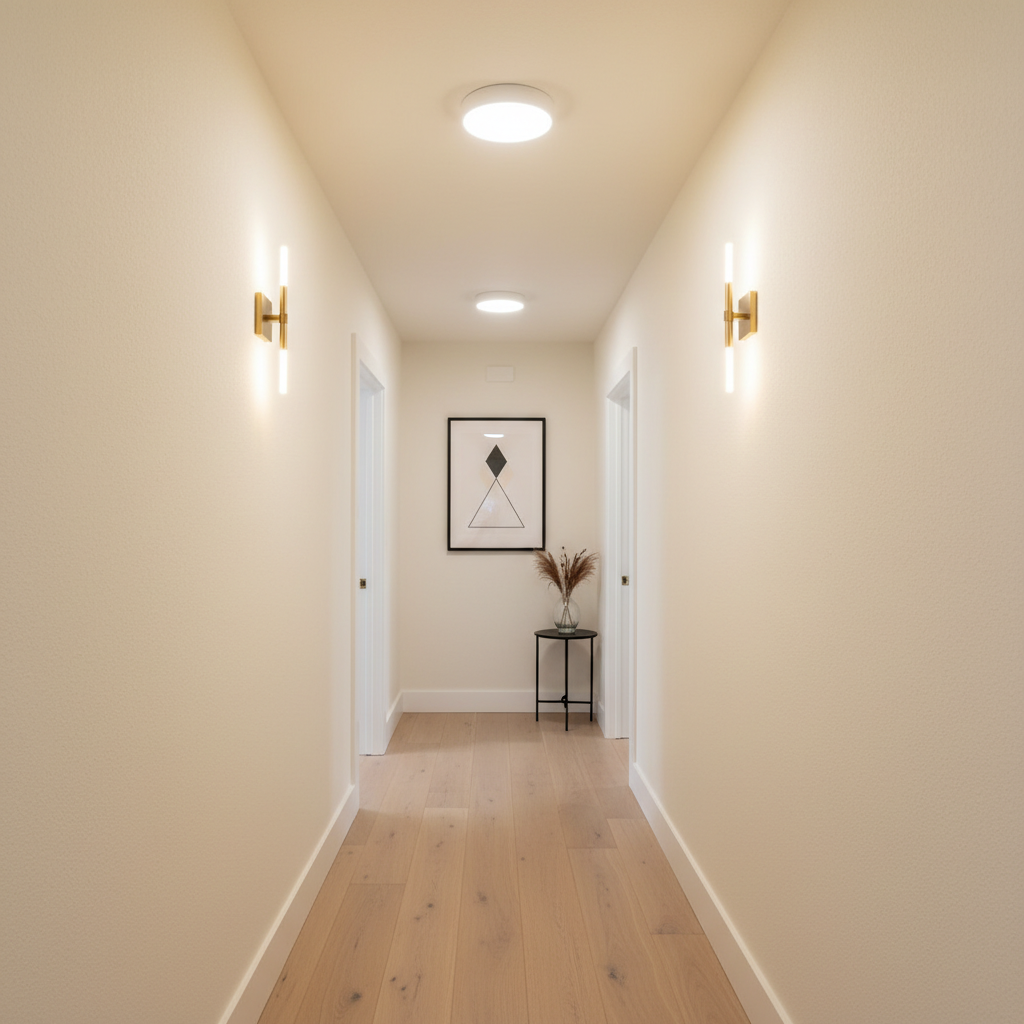
Bulb choice matters more than people think: many households like 2700K to 3000K for a warm, not-yellow glow. If your walls are crisp white, 3000K often keeps it from feeling dingy. If you’re unsure, buy one bulb first and test at night.
For renters, plug-in sconces and battery picture lights can deliver the “designer hallway” look without rewiring. If you’re dealing with old wiring or flickering fixtures, a licensed electrician is the safe route.
Mirrors, art, and wall decor: make it vertical, keep it coherent
Wall decor is where a small hallway can look expensive or chaotic, and the difference is usually cohesion. Too many tiny frames and mixed finishes can read like visual clutter.
What tends to look good in narrow spaces:
- One large mirror to reflect light and create depth, especially opposite a light source.
- A short gallery run with matching frame color and consistent spacing.
- Vertical pieces that pull the eye upward, making ceilings feel higher.
Spacing tip that saves you: hang art so the center lands around eye level, then adjust slightly for ceilings and furniture height. If your hallway has chair rail or heavy trim, align edges with that line for a calmer look.
And yes, you can use wallpaper in a small hallway. In many cases, an accent wall at the end of the hall works better than wrapping every wall, because it adds personality without turning the space into a pattern tunnel.
Rugs and runners: the fastest upgrade, with the highest failure rate
A runner is often the “instant makeover” item, but it’s also where people accidentally make the hallway feel narrower. Scale and placement decide whether it looks tailored or squeezed.
Runner checklist before you buy:
- Leave visible flooring on both sides so the hall reads wider, not fully carpeted.
- Keep it long (most of the run), but avoid jamming it into door thresholds.
- Choose a pattern that hides life: speckles, vintage motifs, or subtle geometrics handle dirt better than solid light colors.
- Add a rug pad for slip resistance; if someone trips, it’s not worth the “pretty” factor.
According to the Consumer Product Safety Commission (CPSC), slips and falls are a major source of household injuries, so it’s worth treating a runner like a safety decision, not just decor. If you have seniors, kids, or pets, consider low-pile options and strong grip pads.
Key takeaway: A runner should guide you through the hall, not fight the doors.
Storage that doesn’t steal space: hooks, ledges, and “shallow only” furniture
Hallways collect clutter because they’re convenient. The fix usually isn’t more baskets, it’s giving everyday items a clear home that doesn’t protrude into the path.
Low-profile storage ideas that fit most small hallways:
- Wall hooks for jackets and bags, mounted at heights that match who lives there.
- A picture ledge for small frames and a tiny catch-all tray, slimmer than a console table.
- Floating shelf + key rail near the entry for the “drop zone.”
- Shoe storage with doors that’s intentionally shallow if you must put something on the floor.
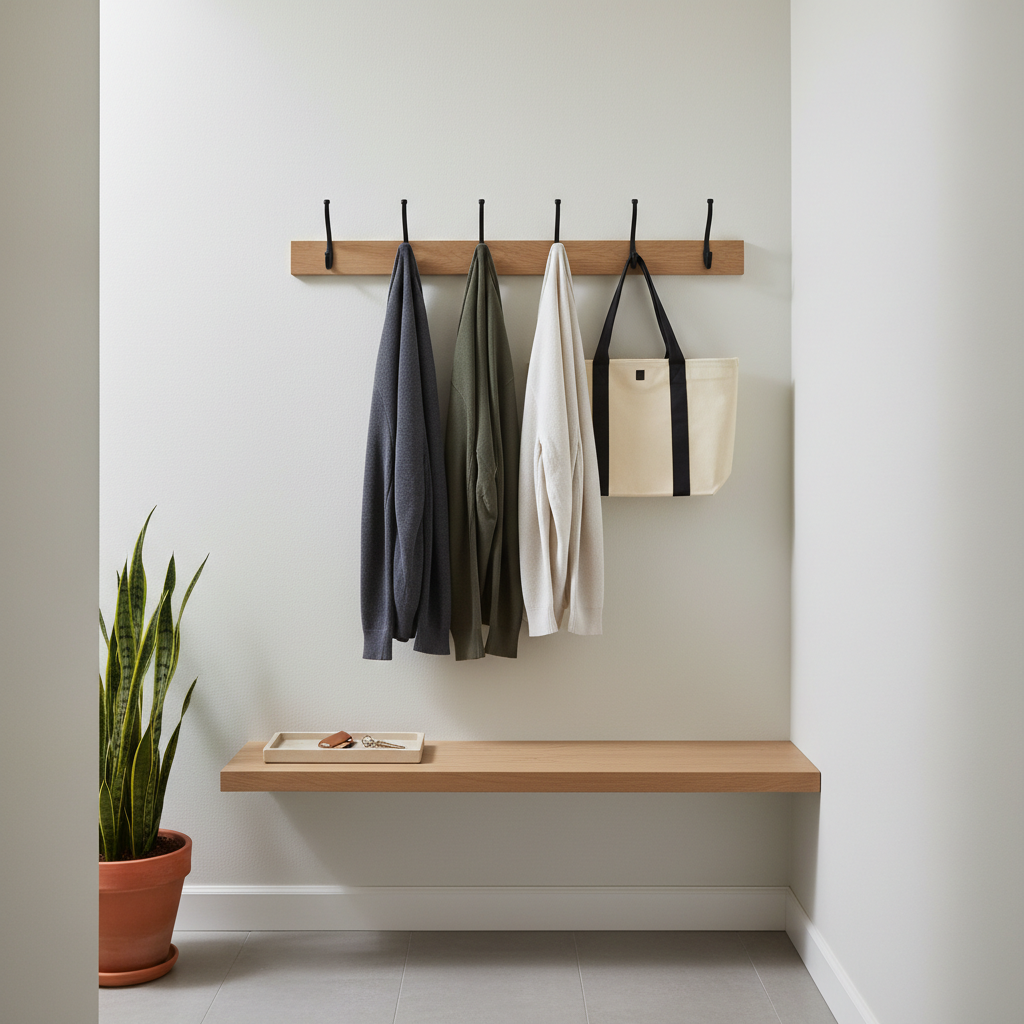
Reality check: if you want the hallway to look styled, you probably need to reduce what lives there. A seasonal coat purge and a smaller “one bag per person” rule does more than any organizing bin.
A simple plan by hallway type (use this instead of guessing)
Different hallways fail in different ways. This quick table helps you decide what to prioritize so you don’t over-decorate the wrong problem.
Small hallway decorating priorities
| Hallway type | Common pain point | Best first upgrades | What to avoid |
|---|---|---|---|
| Narrow and long | Feels like a tunnel | Runner + layered lighting + one large mirror | Bulky console tables, lots of small frames |
| Short entry hall | Clutter drop zone | Hooks + shallow shelf + tray system | Too many baskets with no rules |
| Dark / no windows | Feels dingy | LED bulbs (2700K–3000K) + brighter paint + reflective decor | Dark matte paint everywhere |
| High-traffic family hall | Scuffs, shoes, backpacks | Washable runner + durable paint finish + closed shoe storage | Light solid rugs, fragile decor at kid height |
Key takeaway: Pick two priorities, solve those, then add the “nice-to-haves.” This keeps the hallway from turning into a decor collection.
Common mistakes that make a small hallway feel smaller
Some hallway decor advice looks great online but backfires in real homes. If your goal is to make the space feel bigger, these are the usual culprits.
- Too many tiny objects on a ledge or console, which reads as clutter from every angle.
- One harsh overhead light that creates shadows along the walls and makes corners feel tight.
- Oversized furniture depth, even if it “fits” on paper.
- Glossy paint everywhere, which can highlight wall imperfections and feel busy under bright bulbs.
- A runner with no grip, which turns style into a safety issue.
If you’re debating between “more decor” and “less stuff,” the hallway usually rewards less stuff. You can still make it feel personal, just be picky.
Practical step-by-step: a weekend refresh you can actually finish
If you want a clear path to how to decorate a small hallway without spiraling into a full renovation, this sequence keeps decisions simple.
- Step 1: Clear the floor and decide what truly needs to live in the hall.
- Step 2: Fix lighting, swap bulbs, clean fixtures, add a plug-in sconce if needed.
- Step 3: Add one anchor, usually a runner or a large mirror, not both at once if you’re unsure.
- Step 4: Create a drop zone with hooks and a slim shelf, then set a simple rule for what belongs there.
- Step 5: Finish with wall decor, keep frames consistent, stop before it feels busy.
Small but important: take a quick photo after each step. Hallways are hard to “see” while you stand in them, but photos make clutter and spacing issues obvious.
Conclusion: small hallways look better when every item has a job
Once you treat the hallway like a working transition space, decorating choices get easier. Light it well, keep the walking lane clear, pick one or two strong decor anchors, and use wall-mounted storage so daily life doesn’t take over.
If you’re choosing one action today, measure the space and decide whether your biggest problem is darkness, clutter, or blandness, then address that first. After that, the “pretty” part finally sticks.
Quick action idea: pick a runner you love and pair it with a mirror that reflects the brightest nearby area, that combo often delivers the biggest visible change for the least effort.