
how to clean stainless steel appliances without streaks comes down to two things most people miss, the direction you wipe and what you leave behind on the surface.
Stainless steel shows everything, fingerprints, dried cleaner, hard-water spots, even tiny lint trails. The frustrating part is you can spend ten minutes “cleaning” and end up with more haze than before.
This guide breaks the job into a repeatable routine, what to use, what to avoid, and how to troubleshoot when streaks keep coming back, plus a quick table you can reference the next time you wipe down the fridge.
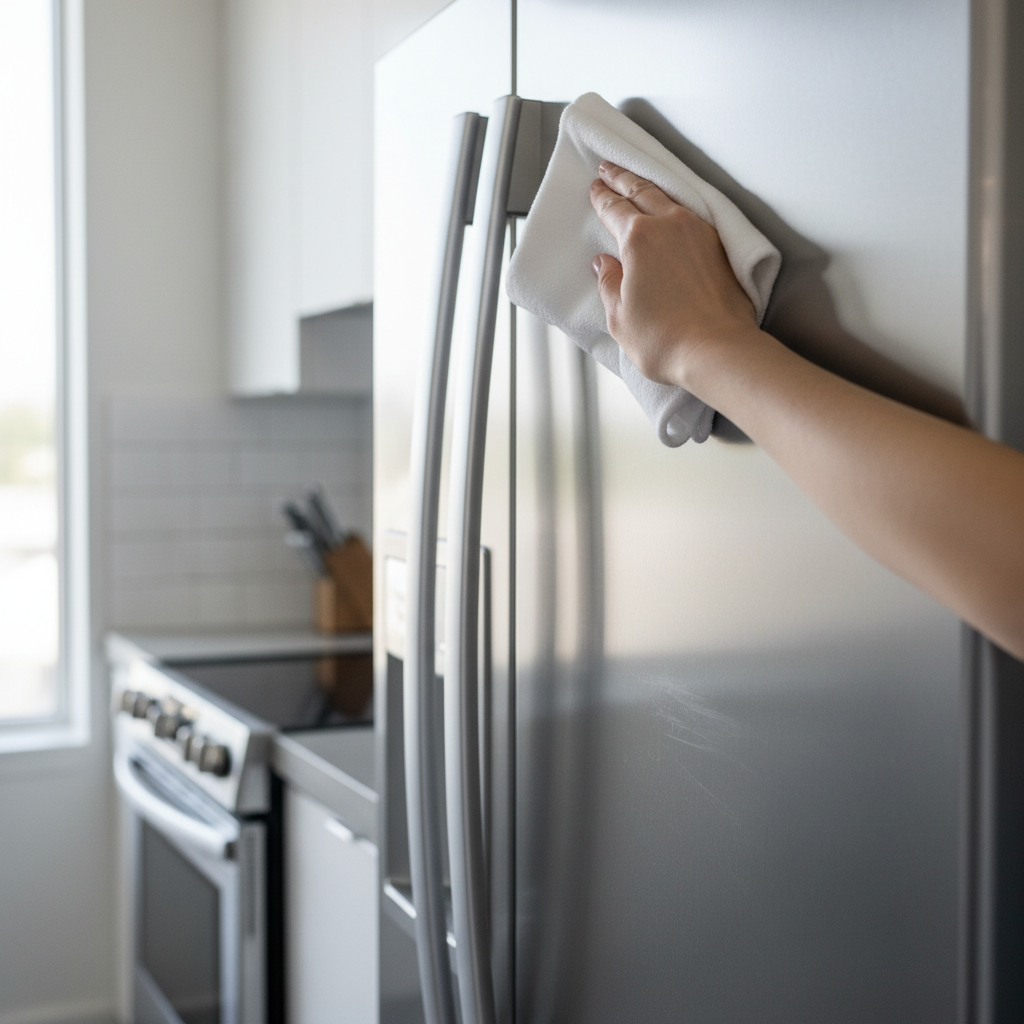
Why stainless steel streaks so easily (and why it’s not your fault)
Most streaks are not “dirt,” they’re residue. Stainless steel often has a brushed finish, that visible grain acts like tiny grooves, so anything you spread across it can dry unevenly.
- Cleaner residue, many sprays contain surfactants or waxes, if you use too much or don’t buff, it dries as a film.
- Hard water minerals, if you wipe with tap water and let it air-dry, minerals can leave faint lines.
- Grease smears, cooking oils and hand oils don’t lift well with plain water, so they smear.
- Wrong cloth, paper towels and rough rags shed lint and drag residue across the grain.
- Wiping against the grain, you can clean “enough” but still get visible lines because light catches cross-grain marks.
According to the American Cleaning Institute, reading and following product labels matters because misuse and overuse can create build-up and unwanted residue on surfaces.
Quick self-check: what kind of streaks are you seeing?
Before you change products, identify the streak pattern, it usually points to the cause.
- Rainbow or cloudy haze that returns after drying, often cleaner or polish over-application.
- Thin vertical lines after wiping, commonly wiping against the grain or using a damp cloth that dries mid-pass.
- Greasy smudges near handles and edges, skin oils and cooking film.
- White specks or trails, mineral deposits from hard water.
- Random fuzz lines, lint from paper towels or low-quality microfiber.
If you only remember one thing, streak-free stainless steel is less about “stronger cleaner” and more about remove residue, then dry and buff.
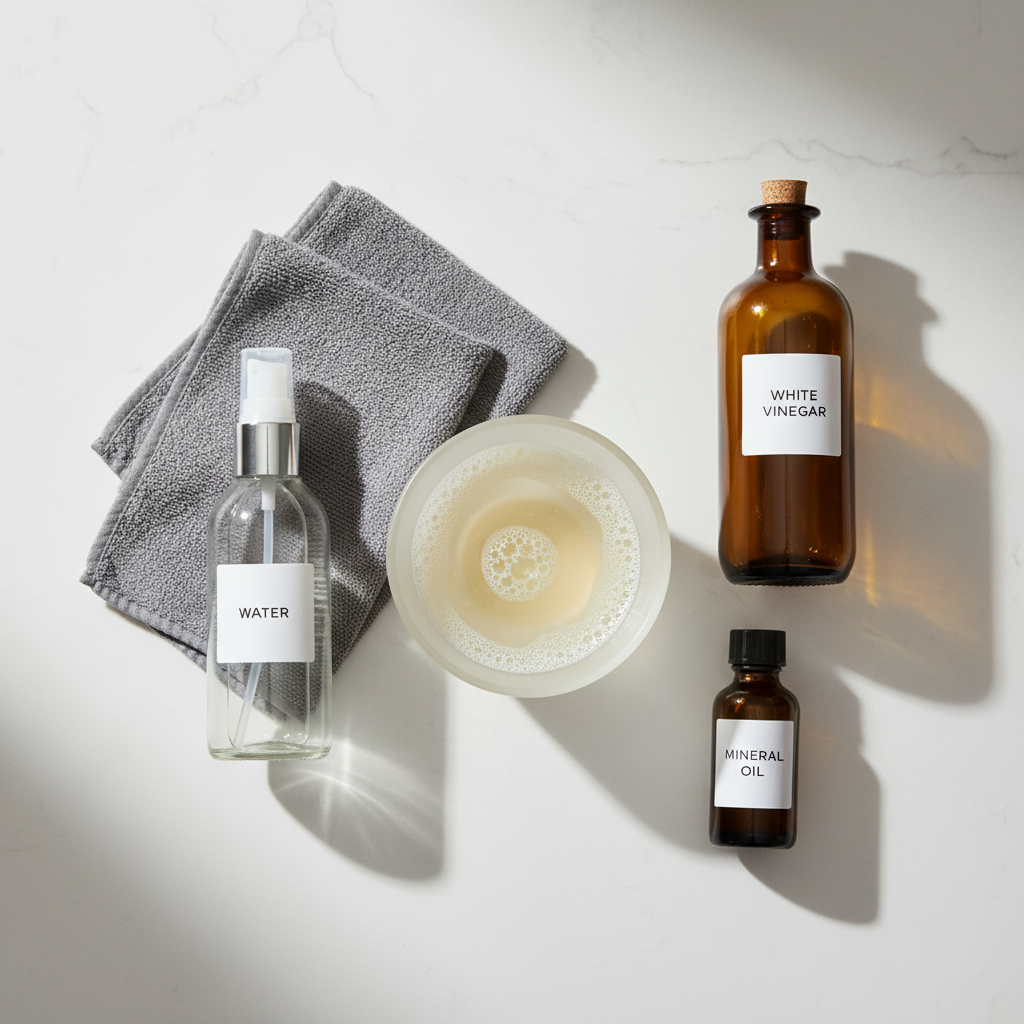
The streak-free method you can use every time (step-by-step)
This routine works for fridges, dishwashers, ranges, and microwaves. Adjust only for the level of grease.
Step 1: Find the grain, then commit to it
Look at the door under light, you’ll see faint lines. Wipe with the grain, not in circles. It looks fussy, but it’s the easiest way to avoid visible wipe marks.
Step 2: Wash first, don’t “polish dirt”
Mix a few drops of mild dish soap into warm water. Dampen a microfiber cloth, wring it so it’s not dripping, then wipe with the grain to lift oils and grime.
- For heavy grease near a stove, let the soapy wipe sit for 30–60 seconds, then wipe again.
- Avoid soaking seams, control panels, and vents.
Step 3: Rinse wipe to remove soap film
Use a second cloth dampened with clean water, again with the grain. This step is what most people skip, and it’s why they keep wondering how to clean stainless steel appliances without streaks.
Step 4: Dry immediately, then buff
Use a dry microfiber cloth to dry the surface right away. Finish with a light buff, same direction. If the cloth feels like it’s dragging, switch to a cleaner, drier one.
Best cleaners for stainless steel (and when to use each)
You don’t need a cabinet full of products. Pick based on the mess you’re actually facing.
| Situation | What to use | Why it helps | What to watch for |
|---|---|---|---|
| Everyday fingerprints | Warm water + a drop of dish soap | Breaks down skin oils | Rinse wipe or soap film may haze |
| Light streaks after cleaning | Damp cloth with clean water, then dry buff | Removes leftover residue | Don’t let it air-dry |
| Hard-water spots | Diluted white vinegar on cloth | Dissolves mineral deposits | Test first, avoid prolonged contact on sensitive finishes |
| Cooking grease film | Soapy water, repeated passes | Lifts oily buildup gradually | Abrasives can scratch, skip them |
| Add shine + reduce fingerprints | Small amount of mineral oil or stainless polish | Creates a thin protective layer | Overuse causes smears and attracts dust |
According to the U.S. Environmental Protection Agency, it’s smart to use the least hazardous effective cleaner and follow label directions to reduce unnecessary chemical exposure indoors.
How to polish without creating a greasy mess
Polish can help, but it’s also the fastest path to streaks when you apply too much. The goal is a thin layer you can barely feel.
- After the surface is fully clean and dry, add a pea-sized amount of mineral oil or polish to a cloth, not directly to the appliance.
- Spread with the grain, then buff with a second dry cloth until the surface feels dry to the touch.
- Keep polish away from handles and spots you touch constantly, otherwise you trap oils and dust.
If your appliance already looks “oily,” skip more product and do a soap-and-rinse reset, then buff dry. In many kitchens, that fixes the problem in one round.
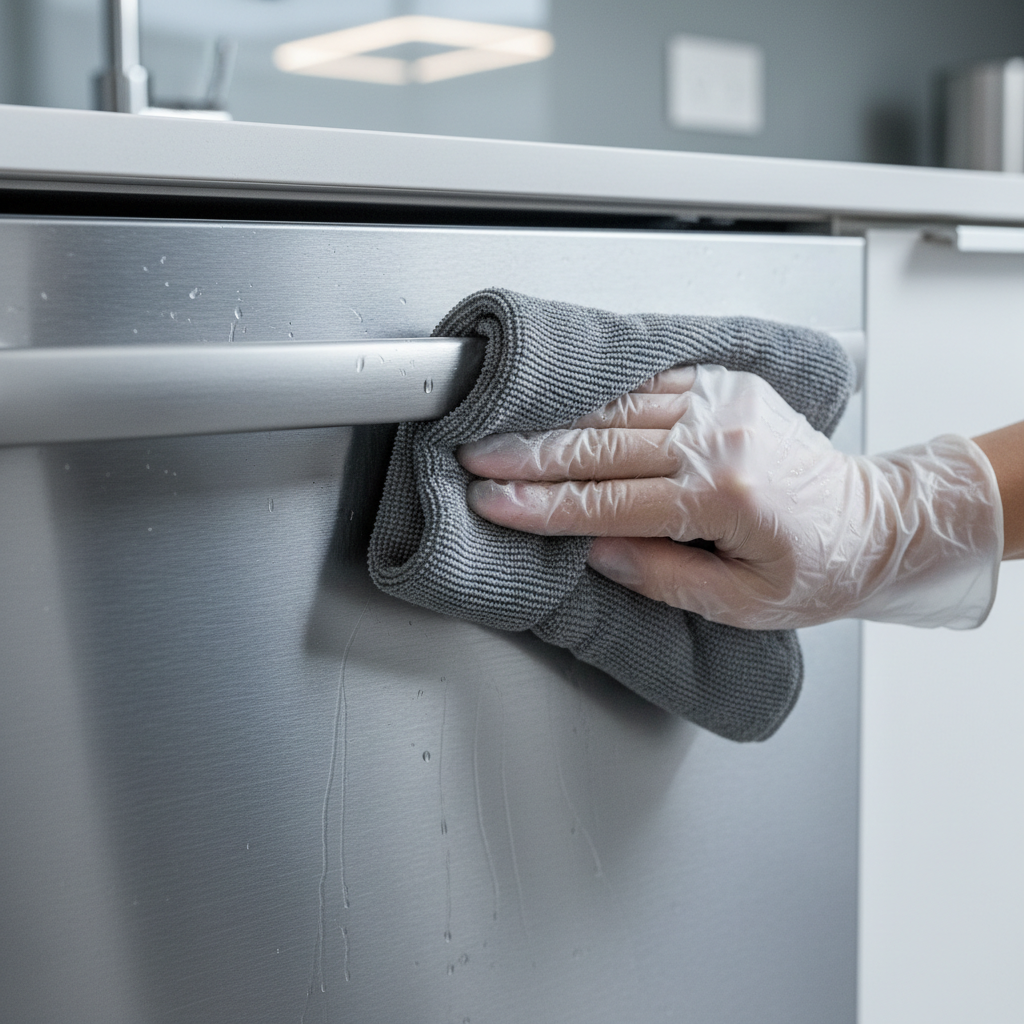
Mistakes that cause streaks (even with “stainless” cleaners)
Many stainless products work fine, the streaks come from how they’re used.
- Spraying directly onto the door, overspray pools near edges and dries into lines. Put product on the cloth instead.
- Using paper towels, they can leave lint and push residue around instead of lifting it.
- Skipping the rinse wipe, soap and cleaner films look invisible until they dry.
- Cleaning in circles, it fights the grain and makes light reflect unevenly.
- Letting it air-dry, evaporation highlights minerals and leftover surfactants.
- Mixing products, combining vinegar with some cleaners can create unpleasant fumes, when in doubt, rinse thoroughly and use one approach at a time.
Real-world routine: keep it streak-free all week
If you’re tired of re-cleaning, a small routine beats the occasional deep scrub. Here’s a practical cadence many households can stick to.
Daily (30 seconds)
- Dry microfiber wipe on the highest-touch areas, handles, edges, around the ice dispenser.
Weekly (5–10 minutes)
- Full soap wash, rinse wipe, dry buff, always with the grain.
- If you like polish, apply lightly every few weeks, not every time.
Monthly (as needed)
- Detail seams and corners with a damp cloth, keep water out of vents and electronics.
- Address any hard-water spotting with diluted vinegar on a cloth, then rinse and dry.
Key takeaway: when you wonder how to clean stainless steel appliances without streaks, the fix is usually fewer products, cleaner cloths, and a deliberate dry buff.
When you should stop DIY and get help
If you see discoloration, pitting, or rust-like spots that don’t improve after gentle cleaning, it may be finish damage or contamination from an abrasive pad used earlier. At that point, pushing harder can make it worse.
- If the appliance is under warranty, check the manufacturer care guide and consider contacting support.
- If you suspect a harsh chemical reaction or you smell strong fumes, ventilate the area and follow the product safety label, for ongoing concerns, consulting a professional cleaner can be the safer route.
Conclusion: a simple, repeatable way to get a clean, dry shine
Streak-free stainless is mostly process, clean with a mild degreaser, remove residue, then dry and buff with the grain. Once you do it this way a couple times, you spend less effort and get better results.
Action to take today, grab two microfiber cloths and do a quick soap wash plus rinse wipe on one door, then buff dry. If it looks better than your usual method, you’ve found your baseline, from there you can decide whether you even need polish.
FAQ
How do I clean stainless steel appliances without streaks if I only have paper towels?
You can, but it’s harder. If paper towels are your only option, use very little cleaner, wipe with the grain, and finish with a separate dry towel to buff. Expect some lint, switching to microfiber usually makes the biggest difference.
Is vinegar safe on stainless steel?
Many people use diluted white vinegar for mineral spots, but finishes vary by brand. Test a small, less-visible area, use it on a cloth rather than soaking the surface, then rinse wipe and dry so it doesn’t sit.
Why does my stainless look cloudy after I clean it?
Cloudiness usually means residue, either soap film, stainless polish buildup, or hard-water minerals. A reset wash with mild dish soap, then a clean-water rinse wipe and a dry buff often clears it.
Can I use glass cleaner on stainless steel?
Sometimes it works for fingerprints, but some formulas leave surfactants that streak on metal. If you use it, apply sparingly to a cloth, wipe with the grain, and buff dry, if streaks appear, switch back to soap-and-water.
What’s the best cloth for stainless steel?
A clean, high-quality microfiber cloth, ideally two, one damp for cleaning, one dry for buffing. If microfiber starts smearing, it often means it’s saturated with oils or fabric softener residue, wash it and skip softener.
How do I remove fingerprints without polishing?
Use warm water with a tiny bit of dish soap, wipe with the grain, then rinse wipe and dry buff. Fingerprints are oily, so plain water alone tends to move them around.
Should I polish stainless steel every time I clean it?
Usually no. Polish can reduce fingerprints, but frequent use builds a film that streaks. Many kitchens do fine polishing every few weeks, with regular clean-and-buff in between.
If you’re cleaning a whole kitchen and want a more predictable finish, set up a simple “two-cloth” kit, one for wash and one for dry buff, and keep a small spray bottle of clean water nearby, it’s the low-effort way to stay consistent without chasing streaks every time.