
Pet friendly home decor ideas work best when you treat your home like a high-traffic space, because it is. If your sofa looks “tired” after one shedding season, or your rug keeps sliding the moment your dog takes a corner fast, you do not need a full renovation, you need better material choices and a few layout tweaks.
The tricky part is that most “pet-proof” advice online stays vague, and real homes are messy. Cats climb, dogs dig, older pets have accidents, and even well-trained pets still bring grit, drool, and oils into the mix. It adds up fast.
This guide keeps it practical: durable fabrics that still look good, flooring that does not feel like a compromise, washable rugs that do not scream “utility,” and small changes that protect the pieces you already own.
Start with the real damage: what pets do to decor
Before shopping, it helps to name the problem. Most wear comes from a few repeat offenders, and each one has a different fix.
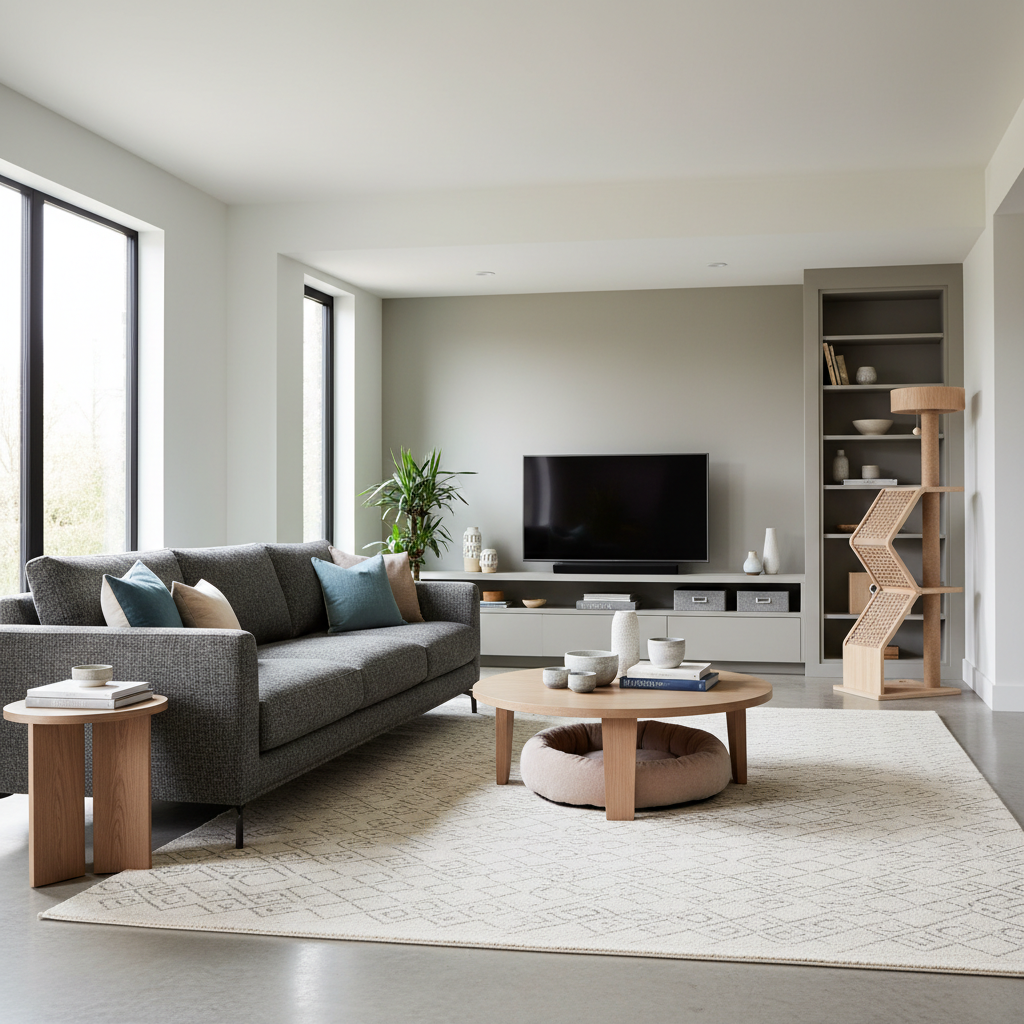
Scratches and pulls usually show up on upholstery, woven rugs, and wood finishes. Cats tend to snag loops and climb corners, dogs create “track marks” from nails and zoomies.
Stains and odor come from accidents, drool, muddy paws, and oil transfer from fur. Light, untreated fabrics show it quickly, and some cleaners can set stains if used wrong.
Shedding and dander becomes a cleaning workload problem, which is still a decor problem because it impacts how often pieces look fresh.
Noise and sliding is the underrated one: claws on hard floors, rugs that creep, furniture that shifts. It makes a space feel chaotic even when it looks styled.
A quick self-check: which home setup needs the most help
Use this to decide where to spend money, and where you can get away with small upgrades.
- High-shed pets (Labs, Huskies, longhair cats): prioritize easy-clean textiles, tight weaves, and colors that blend with fur.
- Scratching cats: avoid looped weaves, choose scratch-tolerant fabrics, add “approved” scratching zones near favorite targets.
- Puppies or senior pets: focus on washable rugs, stain-resistant upholstery, and low-stress entry clean-up zones.
- Multiple pets: plan for traffic flow, rug grip, and furniture spacing, the layout matters more than people expect.
- Renters: prioritize reversible changes like rugs, slipcovers, peel-and-stick protection, and freestanding gates.
Durable upholstery and textiles that still feel “home,” not “kennel”
For most households, the sofa is the make-or-break purchase. Pet friendly home decor ideas often fail because they ignore fabric structure, not just fabric label.
What tends to hold up well
- Performance fabrics (often acrylic blends or treated synthetics): usually resist staining and clean easier than untreated cotton or linen.
- Leather and high-quality faux leather: hair does not embed as much, but nails can scratch, so it fits calmer pets or homes that keep nails trimmed.
- Tight weaves (think: canvas-like texture, not loose boucle): less snagging, less fuzzing.
What often looks great but struggles with pets
- Looped fabrics like bouclé: cats can hook claws, and pulled loops can spread.
- Delicate linens: charming, but spot-cleaning can leave rings and wear can look uneven.
- Velvet: some performance velvets do fine, but cheaper velvet can show crush marks and cling to fur.
According to the American Kennel Club (AKC)... planning the home environment to fit your dog’s behavior can reduce destructive habits, which is a gentle reminder that durability is part materials, part setup.
Rugs that stay put, clean up fast, and do not trap odor
A rug can either absorb pet life gracefully or become a permanent problem. In many homes, swapping the rug is the fastest “upgrade” that makes the whole room feel calmer.
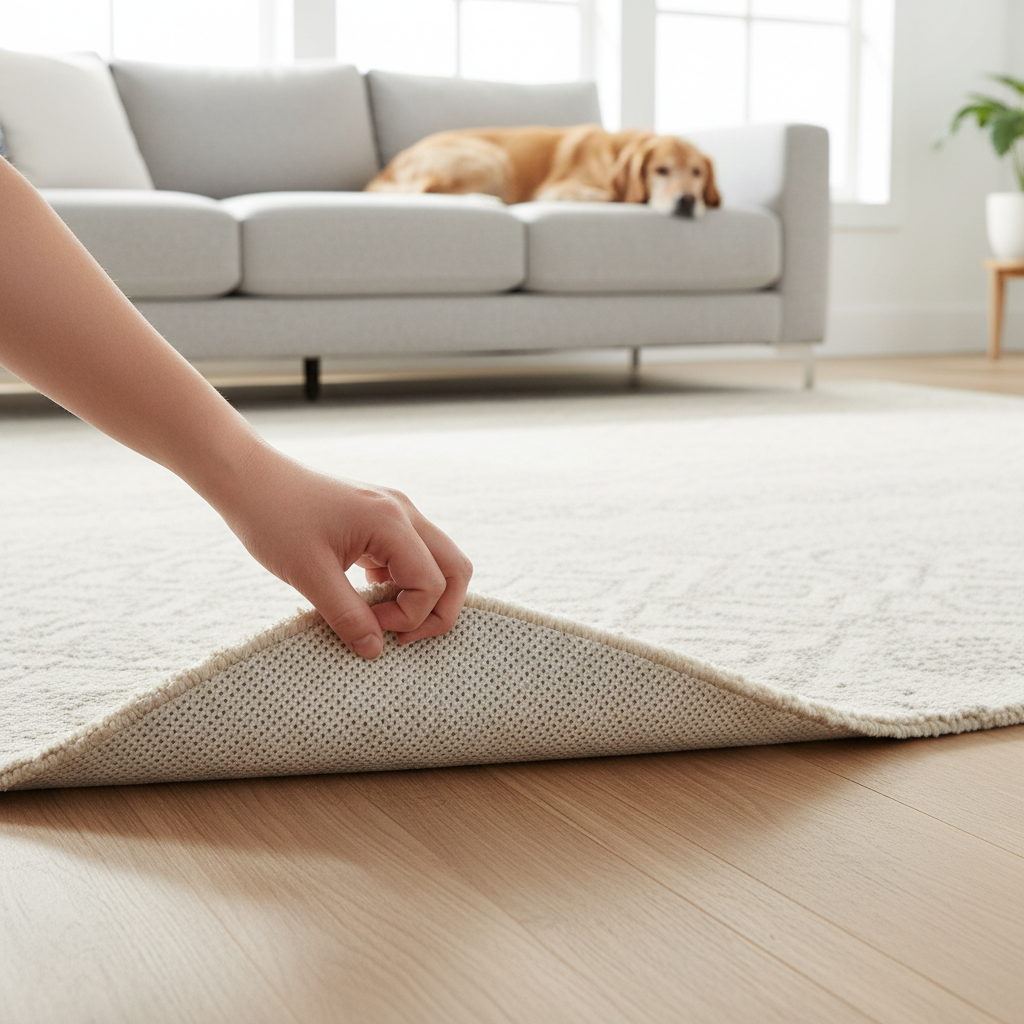
- Low-pile rugs usually clean easier than shag, and claws catch less.
- Washable rugs are worth it for accident-prone phases, but check size and washer capacity, many “washable” rugs are easier in smaller formats.
- Rug pad with grip reduces sliding and also cuts noise, which matters in apartments.
- Pattern beats solid if you want fewer visible paw marks, heathered and small-scale prints hide daily life without looking busy.
If odor has already settled in, a rug swap can be the most rational choice. Deep-cleaning helps, but some rug backings hold on to smells longer than people expect.
Floors and finishes: the “quiet” foundation for pet-friendly rooms
Flooring decisions are expensive, so it is worth being picky. The goal is a surface that resists scratching, handles spills, and does not amplify noise.
| Surface | Why people like it | What to watch with pets |
|---|---|---|
| Luxury vinyl plank (LVP) | Water-resistant, easy cleaning, softer underfoot | Quality varies, cheap wear layers can scuff |
| Tile | Durable, stain-resistant | Hard on joints, can be slippery, use rugs/runners |
| Sealed hardwood | Classic look, can be refinished | Scratches show, water can damage seams if finish fails |
| Laminate | Scratch resistance can be decent | Water at seams can swell some products |
For existing hardwood, the most realistic strategy is prevention: entry mats, nail trimming, felt pads on furniture, and accepting a little patina. Perfect floors and pets rarely coexist.
Layout tricks that protect your nicest pieces (without ruining style)
Even great materials lose the fight if your layout pushes pets into bad habits. These pet friendly home decor ideas are more about “nudges” than rules.
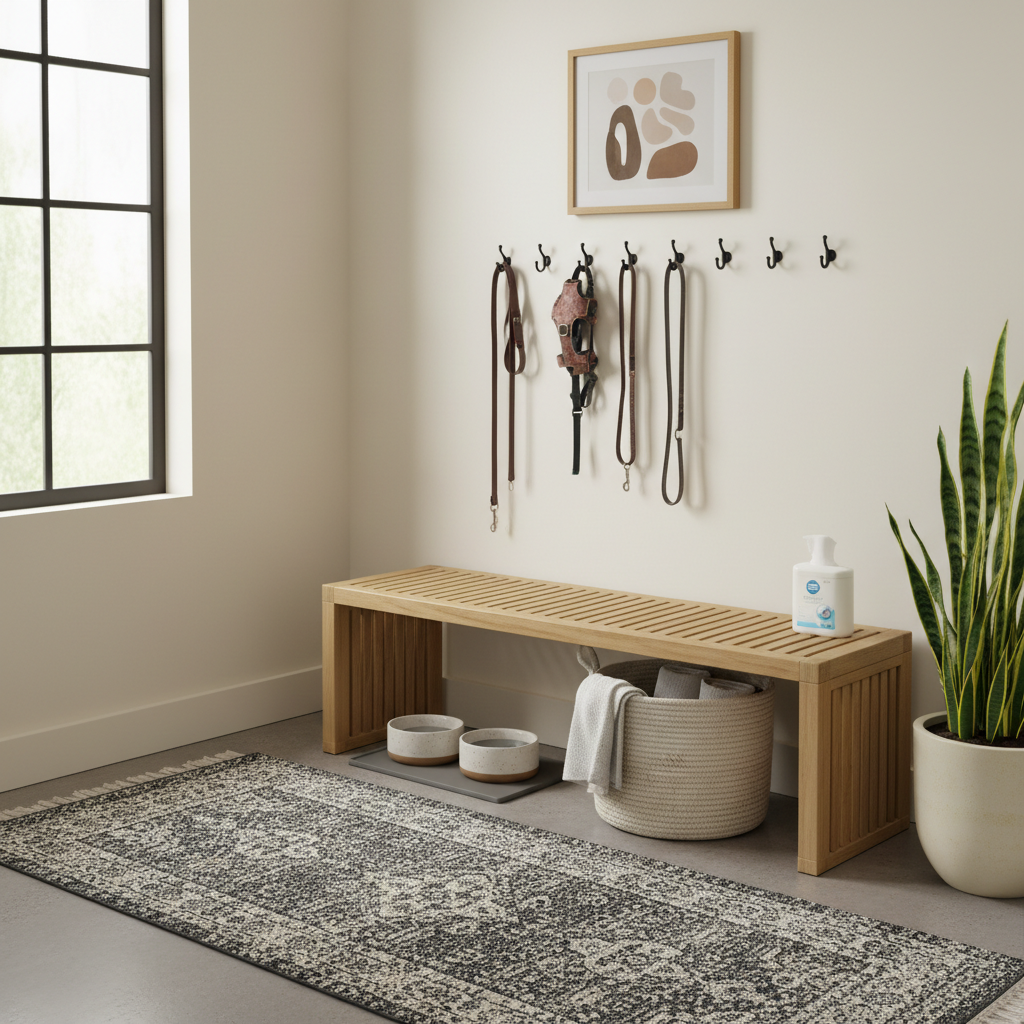
- Create a paw-clean zone near the entry: a washable runner plus a small basket with wipes and a towel reduces dirt spread.
- Give pets their own “yes spot”: a bed or blanket near where people sit can reduce sofa takeover.
- Move scratch targets: place scratching posts where cats already scratch, not where you wish they would scratch.
- Use closed storage for toys and chews if clutter stresses you out, visual calm matters as much as durability.
Small note: if chewing, marking, or destructive scratching escalates suddenly, it can be stress or health-related. According to the American Veterinary Medical Association (AVMA)... behavior changes can be associated with underlying medical issues, so discussing with a veterinarian is often a good idea.
Practical shopping checklist for 2026: what to ask, what to ignore
Labels can be vague, and store displays rarely reflect real life. Take a checklist, it keeps you from buying “pretty but fragile” twice.
- Ask for cleaning code and care instructions in writing, especially for upholstery.
- Look for removable covers or at least removable cushion cases, it changes your cleaning options.
- Check weave and snag risk by lightly rubbing fabric with your fingernail, if it catches easily, claws will too.
- Choose a forgiving color strategy: mid-tones, heathered textures, and patterns that hide lint buy you time between cleans.
- Ignore “pet-proof” as a promise; treat it as a starting point, then confirm with materials and care details.
Common mistakes that waste money (and patience)
Most frustrations come from good intentions paired with one wrong assumption.
- Buying white or very dark solids without considering fur color, it can turn into daily lint-rolling.
- Using the wrong cleaner on stains, some products can set discoloration; when in doubt, test a hidden area or consult a pro cleaner.
- Choosing thick shag because it feels cozy, then discovering it holds odor and traps debris.
- Skipping rug pads, then blaming the rug for sliding when it is really a grip issue.
- Putting scratchers in the “pet corner” far from the action, many cats want to scratch where people spend time.
Conclusion: make it durable, then make it pretty
Pet friendly home decor ideas work when you prioritize the surfaces that take daily hits, upholstery, rugs, floors, and entry zones, then layer in style on top. If you do one thing this week, pick a single trouble spot, usually the sofa fabric or the rug, and upgrade that with a tight weave, washable option, or better grip. The rest can evolve, and your home will still feel like yours, just less fragile.
FAQ
What is the best couch material for pets that shed a lot?
Look for tight-weave performance fabric or smooth leather-style surfaces, because hair sits on top instead of embedding. Color and texture matter as much as material, heathered mid-tones hide fur better than flat solids.
Are washable rugs actually worth it with dogs?
Often yes during puppy stages or for senior pets, but size matters. A smaller washable rug you can truly launder beats a huge “washable” rug that never fits your machine and ends up spot-cleaned forever.
How do I stop my cat from scratching the sofa?
Usually you need a better “yes” option placed near the sofa, plus a fabric that does not snag easily. If scratching is intense or new, it may be stress-related, a vet or behavior professional can help you rule out issues.
What flooring holds up best to dog nails?
LVP and tile tend to be practical for many homes, while sealed hardwood can work if you accept some patina and stay on top of water and grit. Product quality varies, so comparing wear layer specs and warranties can help.
Do slipcovers look cheap?
They can, but they do not have to. A tailored slipcover in a textured fabric often reads intentional, and it gives you a realistic way to wash, rotate, or replace without buying a whole new sofa.
What decor style is easiest to maintain with pets?
Styles that already embrace texture and layers, like modern organic, casual contemporary, or relaxed farmhouse, tend to hide daily wear better than ultra-minimal, high-gloss looks.
How can I keep my house from smelling like a pet without harsh chemicals?
Start with washable textiles, frequent vacuuming, and ventilation, then use cleaners that match the material and follow label directions. For persistent odor in rugs or upholstery, professional cleaning advice is often safer than experimenting.
If you are trying to balance style with real-world durability, it often helps to pick one room and build a “pet-ready” material palette first, then copy-paste those wins across the house, it is a calmer way to shop and a lot less wasteful.