
How to clean windows without streaks comes down to three things most people underestimate: the cleaner you use, the water you leave behind, and the light/heat on the glass while it dries.
If you have ever finished a “quick wipe” only to see cloudy lines the moment the sun hits, you are not alone, streaks usually show up when residue dries unevenly, or when you spread dirt instead of lifting it.
This guide breaks it into a repeatable process you can use on home windows, sliding doors, mirrors, even car glass in a pinch, plus a troubleshooting section for the annoying “why is it still hazy?” moments.

Why streaks happen (it’s usually not your effort)
Streaks are rarely about “not scrubbing enough,” they show up when something stays on the glass after you finish.
- Cleaner residue: too much soap, too much product, or a formula that leaves film can dry into lines.
- Dirty tools: a microfiber cloth that has fabric softener residue, or a squeegee blade with nicks, drags a thin trail.
- Hard water minerals: tap water can leave calcium and magnesium spots, especially on exterior panes.
- Heat and direct sun: solution flashes dry before you can remove it, so it “sets” unevenly.
- Grease build-up: kitchen windows and fingerprints need a degreasing step, not just glass spray.
According to the U.S. Environmental Protection Agency (EPA), better indoor air can be supported by reducing unnecessary chemical sources, so many households prefer simpler, low-fragrance cleaning methods when they work.
A quick self-check: what kind of streak are you seeing?
Before you change everything, identify the pattern, it points to the fix.
| What you see | Most likely cause | What to do next |
|---|---|---|
| Wide, cloudy haze | Too much product or soap film | Re-clean with minimal solution, finish with a dry microfiber buff |
| Thin straight lines | Squeegee blade issue or dirty towel | Wipe/replace blade, switch to a clean, lint-free microfiber |
| Dots or rings | Hard water spotting | Use distilled water, treat mineral spots with vinegar solution (test first) |
| Smears where hands touch | Oil and grease | Pre-wipe with a mild degreaser, then glass-clean |
If your streaks only appear at a certain time of day, that is a big hint the sun is drying your cleaner too fast.
Tools and products that actually matter
You do not need a closet full of supplies, but you do need the right few, especially if you want consistent, streak-free glass.
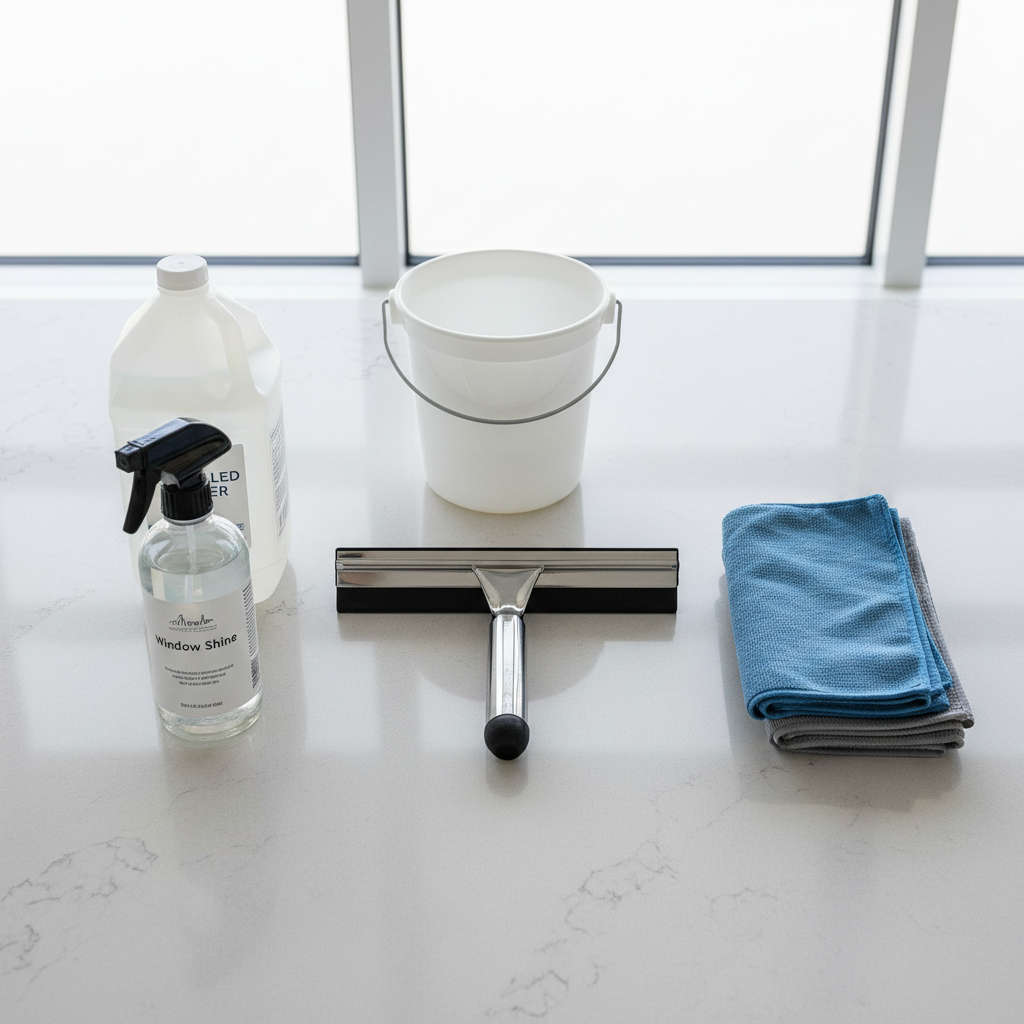
My “works in most homes” kit
- Microfiber cloths (glass-specific): keep a few that never touch oily surfaces like countertops.
- Squeegee: a 10–14 inch squeegee covers most window panes efficiently.
- Bucket with warm water: warm helps loosen grime, not boiling hot.
- Distilled water (optional but helpful): especially for hard water areas.
- Gentle dish soap: a few drops, not a squeeze bottle pour.
Paper towels can work for quick touch-ups, but they often leave lint and encourage over-spraying, which is how the “mystery haze” starts.
The core method: a streak-free window routine (indoors and out)
If you want a dependable answer to how to clean windows without streaks, this is the sequence that tends to hold up, even on big panes and sliding doors.
Step 1: Dry dust first
Start with a dry microfiber to remove dust and grit, skipping this step is how you end up “scratching and smearing” at the same time.
Step 2: Wash with minimal solution
Mix warm water with a couple drops of dish soap, then dip a cloth or washer sleeve, wring it well, and wipe the glass. You want it damp, not dripping.
Step 3: Squeegee top to bottom
- Begin at the top, pull in a smooth stroke.
- Wipe the blade edge with a clean cloth after each pass.
- Overlap each stroke slightly so you do not leave narrow bands behind.
Step 4: Detail edges and corners
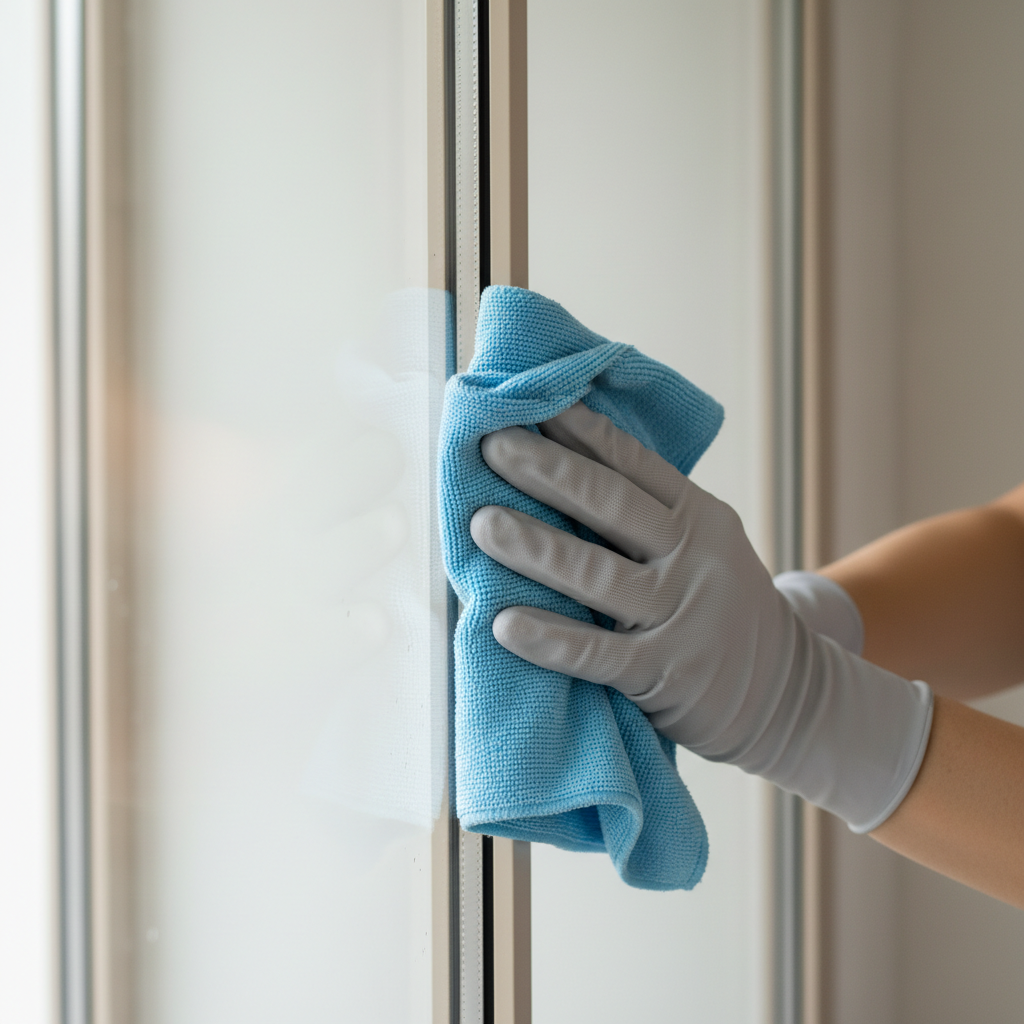
Use a dry microfiber to catch the thin line of moisture along the frame, that tiny edge puddle is responsible for a lot of “it looked fine, then it streaked.”
DIY vs store-bought cleaners (and when vinegar helps)
You can get clear glass with either approach, the bigger difference is how much residue the product leaves and whether it matches your situation.
Simple DIY mix for most windows
- Distilled water in a spray bottle
- Small amount of dish soap (or skip soap for lightly dirty interior glass)
Vinegar can help with minerals and light film, but it is not a universal “magic spray.” If you try it, test a small area first and avoid getting it on natural stone sills or sensitive coatings.
When a commercial glass cleaner makes sense
- Heavy fingerprints and smudges on interior panes
- Quick touch-ups where you are not pulling out a bucket
- Homes where vinegar smell is a dealbreaker
Whatever you choose, the key is restraint, over-applying product is one of the most common reasons people struggle with how to clean windows without streaks even after “doing everything right.”
Timing and technique tweaks that make a big difference
Small adjustments often beat switching products.
- Work out of direct sun: morning shade or an overcast day reduces flash-drying.
- Two-cloth rule: one damp for cleaning, one dry for final buff.
- Flip and fold microfiber: use fresh sides, once it feels damp it stops polishing.
- One direction inside, the other outside: if you wipe inside horizontally and outside vertically, you can tell where streaks are coming from.
Common mistakes that keep causing haze
These are the repeat offenders I see in real homes, because they feel harmless until you look at the glass in angled light.
- Using fabric softener on microfiber: it can leave a coating that smears on glass.
- Cleaning “just the glass”: frames and tracks hold grime, then it migrates back onto the pane.
- Skipping blade maintenance: a worn squeegee edge creates repeating lines that look like your technique failed.
- Mixing products: combining cleaners can create residue, and in some cases fumes, if you are unsure, rinse with plain water first.
If you are dealing with older windows, tinted films, or specialty coatings, play it safe, many manufacturers prefer non-abrasive methods and mild cleaners, and the wrong choice can damage the surface.
When it’s time to bring in help (or at least change the plan)
Sometimes “streaks” are not from cleaning at all, and you can scrub forever without fixing the real issue.
- Permanent etching: mineral build-up can etch glass over time, it may need professional polishing.
- Failed window seals: fogging between panes is a seal issue, not a cleaning problem.
- Hard-to-reach exterior glass: multi-story work can become a safety risk, consider a professional window service.
According to the Occupational Safety and Health Administration (OSHA), fall protection matters for elevated work, if a ladder setup feels sketchy, it usually is, and a professional assessment can be the better call.
Key takeaways (save this for next cleaning day)
- Use less cleaner than you think, residue is a top cause of streaks.
- Clean tools beat fancy sprays, dedicated microfiber and a good squeegee go far.
- Avoid hot sun, glass that dries too fast shows every line.
- Detail the edges, most “mystery streaks” start at the frame.
If you want clearer results this week, try one change first: switch to a clean microfiber and distilled water for your final wipe, it solves a surprising amount of haze without turning window cleaning into a project.
And if you are still stuck, take a photo of the streak pattern in angled light and compare it to the self-check table above, it usually points you to the missing step faster than buying another bottle.
Conclusion: clear glass is mostly process, not pressure
Once you stop over-wetting the pane and start removing solution in a controlled way, how to clean windows without streaks becomes predictable, not a guessing game. Pick a shaded time, use clean tools, squeegee with intent, then buff the edges, you will spend less time “fixing” what you just cleaned.
Next action: choose one room, do one window with the full routine, then repeat it exactly, consistency is what makes the streak-free result feel easy.